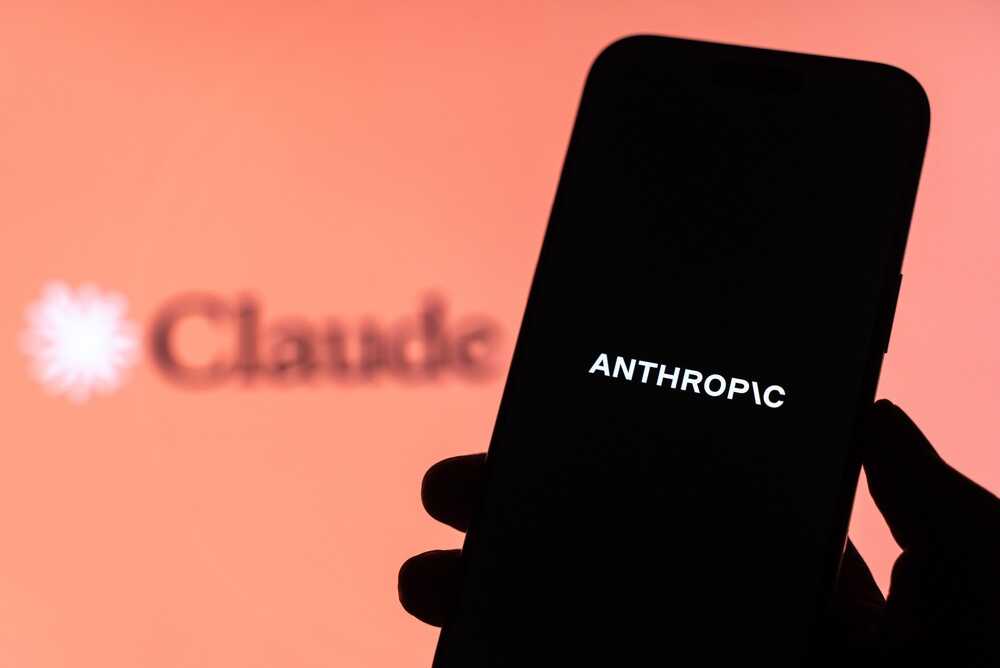
A federal appeals court just told an artificial intelligence company that its financial survival matters less than the Pentagon’s ability to arm itself with AI during an active military conflict — and the story gets more complicated from there.
Story Snapshot
- The D.C. Circuit Court of Appeals denied Anthropic’s request to block the Pentagon’s official designation of the company as a supply chain risk.
- The Pentagon argues that Anthropic’s refusal to grant unrestricted military access to its AI constitutes a national security threat.
- Anthropic’s CEO Dario Amodei publicly stated the company cannot comply with Pentagon demands because they involve autonomous weapons and mass surveillance.
- The court framed the dispute as a single company’s financial harm versus the government’s need to secure vital AI technology during wartime.
What the Pentagon Actually Did to Anthropic
The Department of Defense officially designated Anthropic, the maker of the Claude artificial intelligence system, as a supply chain risk. That label is not a slap on the wrist. In defense procurement, a supply chain risk designation is a formal administrative action that can freeze a vendor out of government contracts entirely. The Pentagon used it here because Anthropic refused to hand over what the government described as the access it needed to deploy Claude for military purposes without restriction. [1]
The government’s argument is blunt: if a vendor won’t cooperate with military requirements during an active conflict, that vendor is a liability, not an asset. The court appeared to agree at the injunction stage, writing that on one side sits “a relatively contained risk of financial harm to a single private company” and on the other sits “judicial management of how and through whom the Department of War secures vital AI technology during an active military conflict.” That is about as clear a signal as a federal court sends without issuing a final ruling. [1]
Why Anthropic Refused and What It Cost Them
Anthropic’s objection was not vague. CEO Dario Amodei stated publicly that the company cannot in good conscience comply with Pentagon demands that would allow its AI to be used for mass surveillance and autonomous weapons systems. That is a principled stand, and it is worth taking seriously on its own terms. But in the world of federal procurement and national security law, ethical objections from a private vendor carry very little legal weight when the government invokes its supply chain risk authority. [1]
The company sued to block the designation and sought an emergency preliminary injunction to halt it while the case moves through the courts. The D.C. Circuit denied that injunction, meaning the Pentagon’s blacklist stays in place while the merits of the case are reviewed on an expedited schedule. Anthropic is still in the fight legally, but it is fighting uphill with its contracts frozen and its government business effectively shut down. [2]
The Bigger Problem This Case Reveals
Supply chain risk authority in defense acquisition was built for exactly this kind of standoff. Congress and the executive branch created these tools because ordinary procurement processes were considered too slow and too limited to handle cybersecurity threats, foreign infiltration risks, and vendor dependencies in critical systems. Once the government applies that label, the vendor’s ability to fight back is severely constrained, often because the underlying risk assessment involves classified material that cannot be fully disclosed in open court. [2]
That dynamic raises a legitimate question that conservatives and civil libertarians should both be asking: what oversight exists when the Pentagon designates a domestic American company as a security threat based on a record that the public and the courts cannot fully examine? The answer, based on this case so far, appears to be very little, at least in the short term. The court’s own language suggests it is reluctant to second-guess the executive branch on military AI procurement during wartime, which is legally defensible but sets a precedent worth watching. [1]
Where This Lands on the Common Sense Scale
The Pentagon’s core position is reasonable on its face. The military should control how and whether AI tools operate within its systems, and a vendor that sets ethical conditions on wartime use is a genuine operational complication. The government is not wrong to want reliable, controllable AI in a conflict environment. What deserves scrutiny is whether the supply chain risk designation was applied through a consistent, rule-based process or whether it was used as a pressure lever against a single company that pushed back. That distinction matters enormously, and the available public record does not yet answer it. [2]
The expedited merits review means a fuller answer is coming relatively soon. When it does, it will likely define the boundaries of how far the Pentagon can go in compelling AI companies to comply with military access demands, and how much protection private vendors have when they say no on ethical grounds. That outcome will shape every AI contract the Department of Defense signs for the next decade.
Sources:
[1] YouTube – Anthropic loses bid to block Pentagon’s ‘supply chain risk’ …
[2] Web – Appeals Court Keeps Anthropic Pentagon Case Blacklist Intact