

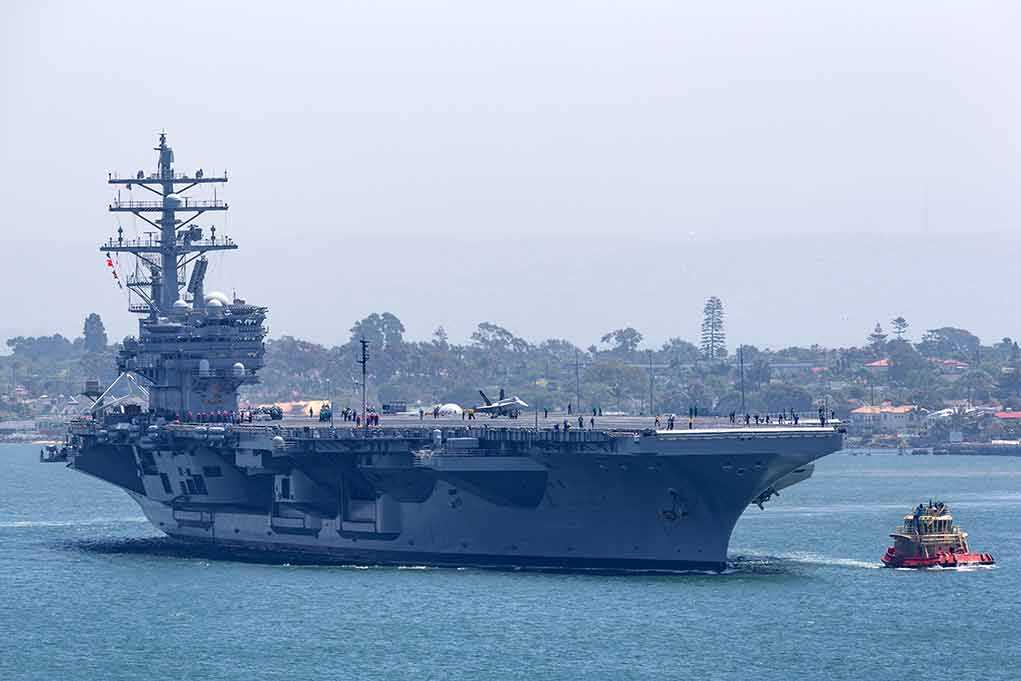
Families say multiple sailors on the USS Abraham Lincoln tried to go overboard after months at sea, pushing Congress to demand answers on conditions and mental health aboard the carrier.
Story Highlights
- Families report several overboard attempts during a prolonged deployment.
- Coverage describes up to roughly 250 straight days without a port call.
- Lawmakers seek clarity on living conditions, food, and crew support.
- Navy incident categories show confirmation of events without full public details.
What Families And Reports Say Is Happening On The Lincoln
Military Times reported that Annabelle Loma said her husband was “repeatedly overextended” before he tried to jump from the carrier. A separate incident involved a sailor stopping a shipmate from going overboard, according to another spouse’s account. The Guardian said the ship’s crew entered a ninth month at sea and described about 250 straight days without touching land, adding fuel to fears about a growing mental health crisis. These reports center on strain, sleep, and morale.
India Today and Moneycontrol repeated family claims about food shortages, broken toilets, and moldy showers, while cautioning that details come from relatives and media, not official logs. Such accounts match the pattern seen in long deployments, where small problems stack up and wear down crews. Families say sailors are stretched thin by repeated tasking, long watches, and uncertain timelines. The combined message is simple: time at sea without relief can break even tough teams.
Why Lawmakers Are Pressing The Navy Now
Members of Congress are asking for basic facts: how long the deployment will last, what the daily living conditions are, and what mental health care is available at sea. Lawmakers want to know if command decisions, maintenance issues, or supply gaps are making stress worse. They also want to ensure sailors have working phones, steady food, clean berthing, and access to chaplains and counselors. These are standard readiness checks with urgent stakes in a crisis.
The push reflects a wider national worry. People across the political spectrum think too many leaders serve systems, not citizens. When a crew on a flagship carrier struggles, it looks like another sign that large institutions protect themselves first. Voters see the same trend in high prices at home and long, open-ended missions abroad. Lawmakers’ demands echo a shared view: government must prove it can manage people, money, and missions with care and accountability.
How The Navy Confirms Incidents And Why Details Lag
Official Navy language often confirms an event without quickly sharing causes. During man-overboard cases, the Navy may list a sailor as “Duty Status Whereabouts Unknown,” which signals a verified incident while searches continue and facts develop. In March, the Navy publicly noted a non-combat injury aboard the Lincoln and moved the sailor for care, another example of brief, careful statements during operations. This approach protects investigations but leaves families and the public waiting.
260+ days at sea. No return date. Multiple sailors reportedly trying to jump overboard.
The USS Abraham Lincoln crew is being ground down — moldy showers, broken toilets, rationed food, 12-16 hr shifts with no relief — for a war with Iran that never should’ve happened.
The…
— Webba (@WebbaBroadside) August 13, 2026
That delay can widen the trust gap. Families talk. Posts spread. Media fill blanks with what they can verify from spouses and past patterns. Critics on the right and left say this opacity hides preventable failures. Supporters say it shields crews and operations. The best fix is clear, prompt, bounded updates: what happened, what is being done now, and what sailors can expect next. That clarity helps morale on board and confidence at home.
What To Watch Next: Relief, Repairs, And Support
Watch for three near-term signals. First, a firm timeline for the ship to get rest, resupply, and repairs. Second, visible steps to boost food quality, fix heads and showers, and improve berthing. Third, more counselors and chaplains on board, plus better call time to families. These are basic, not political, needs. If the Navy meets them fast, it can steady a tired crew and show Congress real progress. If not, pressure will rise.
Sources:
realcleardefense.com, theguardian.com, militarytimes.com, reddit.com, moneycontrol.com