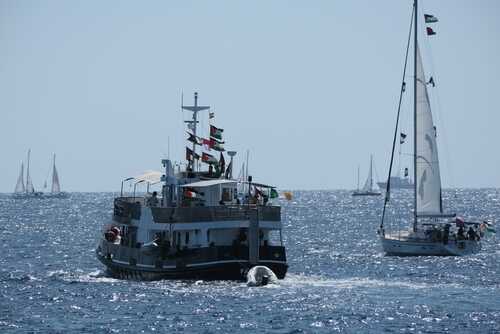
A massive international flotilla aims to challenge Israel’s blockade on Gaza, igniting tensions and potential conflict at sea.
Story Snapshot
- The Global Sumud Flotilla (GSF) is the largest civilian-led maritime convoy in history.
- Over 50 vessels and thousands from 44 countries seek to deliver humanitarian aid to Gaza.
- Israel has declared its intent to intercept the flotilla, citing security concerns.
- The flotilla’s mission is framed by Israel as a security threat with alleged ties to Hamas.
Largest Civilian-Led Maritime Convoy in History
The Global Sumud Flotilla (GSF), comprising over 50 vessels and thousands of activists from more than 44 countries, is nearing the Gaza Strip with the aim of breaking Israel’s blockade and delivering humanitarian aid. This massive international endeavor highlights the persistent global criticism of the blockade, which has been in place since 2007. The flotilla draws inspiration from previous attempts, such as the 2010 Gaza Freedom Flotilla, which resulted in deadly confrontations and international condemnation.
Formed in July 2025, the GSF is a consolidation of various activist and humanitarian movements responding to the ongoing Gaza war and humanitarian crisis. Despite the flotilla’s declared humanitarian intentions, Israeli authorities have publicly stated their readiness to intercept the convoy, citing alleged ties to Hamas and the Muslim Brotherhood. The Israeli Navy has announced plans to stop the flotilla, even after offering alternative docking options that were refused by the organizers.
Watch: Global Sumud Flotilla entering ‘danger area’ near Gaza
Israeli Blockade and Security Concerns
Israel’s government and Navy have consistently maintained that the blockade is crucial for national security, preventing weapons smuggling into Gaza. The Israeli Ministry for Diaspora Affairs has framed the GSF as a cover for extremist groups, leading to heightened tensions and potential confrontation at sea. This framing has been disputed by flotilla organizers, who insist that their mission is strictly humanitarian, aiming to deliver much-needed aid to the residents of Gaza, who continue to suffer under severe restrictions.
The ongoing standoff has sparked demonstrations within Israel, with groups like the Radical Bloc and Hadash party expressing solidarity with the flotilla. Internationally, the flotilla has garnered widespread support from human rights advocates and organizations critical of the blockade, further polarizing opinions on the legitimacy and humanitarian implications of Israel’s security measures.
Potential Consequences and International Reactions
The imminent interception of the flotilla poses potential risks of conflict, which could have far-reaching diplomatic repercussions. The situation is being closely monitored by international observers, with some countries whose citizens are participating in the flotilla expressing concern over their safety. The outcome of this confrontation could set a precedent for future attempts to challenge the blockade and influence international policy regarding Gaza.
The broader implications of the GSF’s mission extend beyond its immediate goals. It highlights the ongoing humanitarian crisis in Gaza and the complex power dynamics between state and non-state actors. The international community remains divided on the blockade’s legality, with debates continuing over the balance between security and humanitarian needs. As the world watches, the unfolding events underscore the enduring challenges in the region and the global call for a resolution that respects both security and human rights.
Sources:
Wikipedia: Global Sumud Flotilla
Current Affairs: Dispatches from the Global Sumud Flotilla
Middle East Monitor: Diplomatic and Historical Significance of Aid Flotillas for Gaza
Global Sumud Flotilla official site