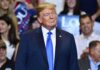
President Trump moved to hold a major network to account, saying NBC’s Kristen Welker will be reported to federal regulators after she downplayed his endorsement wins.
Story Highlights
- Trump said NBC’s Kristen Welker will be reported to the Federal Communications Commission for “rebuke or punishment.”
- Trump disputed Welker’s “mixed results” line and touted near-perfect endorsement success claims.
- NBC defended Welker and stood by her reporting amid the dispute.
- Trump’s FCC push fits a broader effort to scrutinize media practices like polling.
What Sparked The Clash Between Trump And NBC
Reuters reported that President Trump posted that NBC’s Kristen Welker will be reported to the Federal Communications Commission for “rebuke or punishment,” after he said she described his endorsements as having “mixed results.” The reports said the remark came around a local pre-show segment tied to Meet the Press, not the main broadcast, but Trump still framed it as a public airwaves issue. NBC responded by backing Welker and her work during the uproar.
CNBC reported that an NBC spokesperson said, “Kristen is one of the best in the business and we stand by her.” That statement signaled the network would not retract or soften the “mixed results” framing. Trump’s post argued that the line was a “purposeful inaccuracy.” The disagreement turned a quick pre-show comment into a national fight about accuracy, fairness, and whether broadcast rules should address claims of slanted coverage on public spectrum.
Trump’s Claim: Endorsement Wins And Accountability
CNN and other outlets reported that Trump said his endorsement record was overwhelming, citing a “99% success rate” and “100% on senatorial endorsements.” He also named recent winning candidates as proof that the “mixed results” line was wrong. The available reporting does not include a full dataset to confirm those exact rates. The absence of a full ledger means the success-rate numbers rest on Trump’s assertion in these stories.
Trump tied this specific dispute to a larger campaign to examine media conduct. Fortune reported he called for the Federal Communications Commission to look at media polling practices and act against outlets that spread what he calls distorted narratives. That push lines up with long-standing conservative concerns about biased coverage that shapes public opinion. It also signals a message to networks that accuracy on politically charged claims will face public and possibly regulatory scrutiny.
Where The Law And The Airwaves Meet
The Federal Communications Commission’s own guidance says its power over news content is narrow. The agency says it cannot censor or interfere with how broadcasters choose or present news or commentary, and it can act only with documented proof of deliberate falsification. That bar is high by design. Any complaint about a journalist’s phrasing must clear legal limits that protect free speech while still guarding against outright fabrications on public spectrum.
President Trump said Sunday that NBC News' "Meet the Press" host Kristen Welker will be reported to the Federal Communications Commission (FCC) after reportedly saying that Trump-endorsed candidates have had mixed results this election cycle.https://t.co/I3ybFa8bcr
— WEAR ABC 3 (@weartv) August 30, 2026
Available reports do not show a filed complaint docket or the exact pre-show transcript. That gap makes it hard to test Welker’s precise words or context. The start of this fight is clear, though: Trump says “mixed results” misleads viewers about his wins, and NBC stands by its host. The legal question now is less about whether people disliked a line and more about whether any action fits the Federal Communications Commission’s rules and the First Amendment’s guardrails.
What Conservatives Should Watch Next
Conservatives should track two lanes at once. First, demand transparent data on endorsements so viewers can judge claims without spin. Second, press broadcasters to correct clear errors when they occur, especially on public airwaves. At the same time, remember the Federal Communications Commission’s constraints. Any remedy must respect free speech and the Constitution while insisting that large networks treat facts with care and avoid casual labels that mislead voters.
Sources:
facebook.com, theguardian.com, aljazeera.com, ua.news, reuters.com