

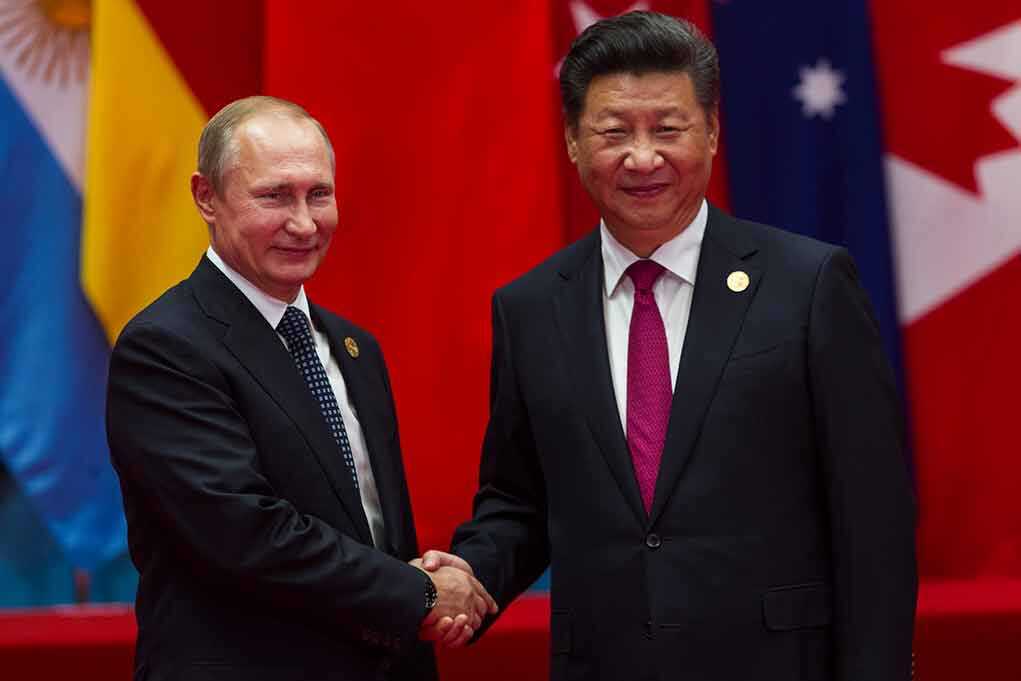
President Trump is set to meet Vladimir Putin and Xi Jinping in an unprecedented three-way summit focused on cutting nuclear risks.
Story Highlights
- The White House confirmed a first-of-its-kind Trump–Putin–Xi summit in Shenzhen.
- Trump plans to press nuclear-arms reduction as the top priority.
- Officials expect talks to start a dialogue, not deliver a treaty on day one.
- Ukraine and Taiwan are not on the stated agenda for this meeting.
White House Confirms Historic Trilateral Meeting
White House officials said President Trump will join Russia’s Vladimir Putin and China’s Xi Jinping for a trilateral meeting in Shenzhen. Reporters described the event as the first gathering of the leaders of the world’s largest nuclear powers. The administration framed the summit as a chance to lower nuclear dangers and reduce the risk of miscalculation. Associated Press and other outlets called the meeting unprecedented, and the White House confirmed the three-way format and location in China.
Reports said planning placed the summit alongside the Asia-Pacific meetings in November. The focus is on direct leader-to-leader talks. That structure gives each side clear lines to speak about nuclear posture. Coverage notes the format is unique because prior arms talks often stayed bilateral. The gathering brings all three major nuclear players to one table at the same time, something analysts have discussed for years but not seen before in practice.
Trump’s Priority: Nuclear Risk Reduction First
White House spokeswoman Olivia Wales said President Trump wants to discuss reducing global nuclear arsenals. Officials called nuclear proliferation a major danger that warrants urgent attention. Briefings signaled the goal is to open a steady channel, not to sign a sweeping treaty in one day. A United States official said the meeting is a starting point for productive talks and that no formal agreement is expected at this first session. That sets clear, realistic aims for the summit.
The practical targets could include basic confidence steps. Leaders can agree to keep talking, set a timeline, or explore data sharing. Those moves do not grab big headlines. But they lower risk by reducing surprise during tense moments. Historical patterns show summitry often begins with crisis management and agenda-setting. Concrete limits, if they come, tend to follow later. This meeting fits that pattern by focusing first on communication and guardrails rather than instant cuts.
Agenda Boundaries: What Is In and What Is Out
Officials and reports say Ukraine is not on the trilateral agenda for this meeting. Any diplomacy on that war would be separate. Reporting also does not place Taiwan on the official list. The stated focus is nuclear risk and related security issues. That boundary keeps the talks centered on the nuclear file, where each power has direct control. It also avoids turning a first-of-its-kind forum into a crowded fight over every hot spot at once.
US President Donald Trump, Russian President Vladimir Putin, and Chinese President Xi Jinping are scheduled to hold an unprecedented trilateral summit on November 19 in Shenzhen, China, on the sidelines of the APEC summit.
These leaders bring competing priorities to the table:… pic.twitter.com/bw4c8wS89O— Khadim Hussain مؤرخ (@Karima82312Jan) November 15, 2026
China’s stance on nuclear limits remains a key factor. Beijing has argued its force is far smaller than those of the United States and Russia and resists being bound by the same caps. That reality makes a grand bargain unlikely right away. Still, a three-way channel can improve transparency and reduce chance of an accident or false alarm. Analysts note the shift from two-power rivalry to three-power competition requires updated tools and steady talks to keep the peace.
Why This Matters for American Security
The United States faces a world with fewer arms-control guardrails than in past decades. Direct talks let America press for stronger verification, better warning lines, and clear rules of the road. President Trump’s team is placing nuclear risk at the top of the list, which aligns with protecting American families and deterring aggression. Even small steps, like test notifications or hotline upgrades, can prevent a crisis from spiraling. That is common-sense stewardship of American strength.
Conservatives expect results, not photo ops. The administration has set expectations that this is an opening round, not a final deal. That approach avoids empty promises and focuses on actions that serve our people. If follow-on working groups form, Washington can drive talks toward practical limits that do not weaken our deterrent. A careful, firm posture keeps pressure on Moscow and Beijing to act responsibly while America maintains peace through strength.
What To Watch Next
Watch for a clear readout on what the leaders discussed and whether they agreed to meet again. Look for signs of a working group on nuclear risk, test notifications, or crisis hotlines. Any mention of warhead or delivery-system transparency would mark progress. If those elements appear, it shows the summit built a runway for real steps that make America safer without giving up leverage. The first milestone is steady, structured dialogue among the three nuclear heavyweights.
Sources:
theamericanconservative.com, cbsnews.com, repubblica.it, channel4.com, newsday.com, fresnobee.com, apnews.com