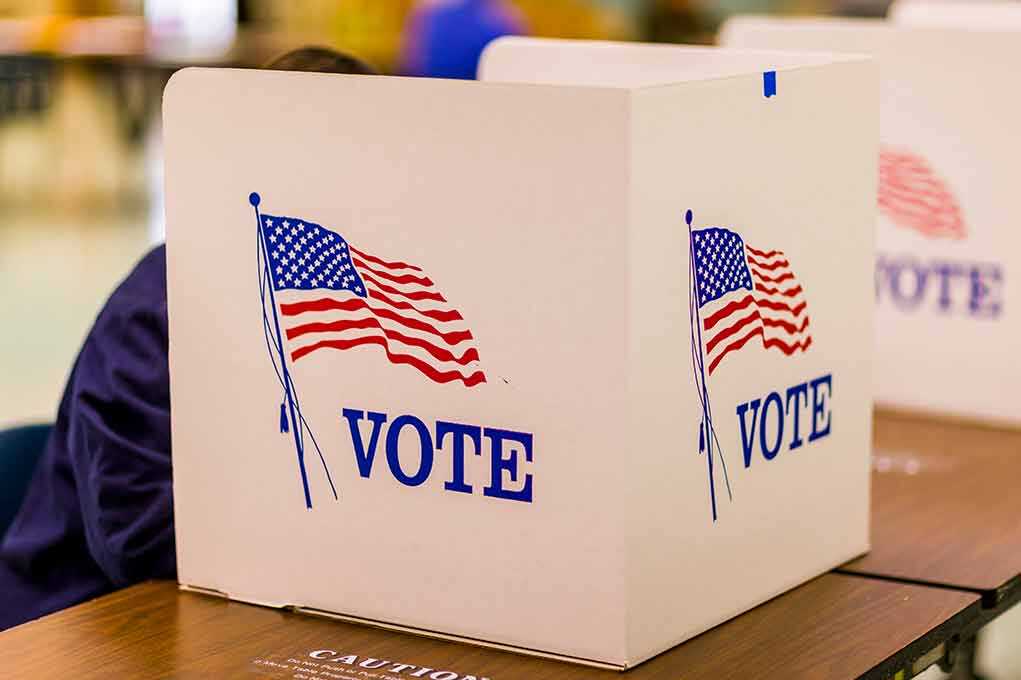
State election rules and write-in limits box out liberty-minded voters, turning many ballots into a choice between the lesser of two big-government options.
Story Snapshot
- Reason magazine says libertarians often face ballots without viable limited-government choices.
- Federal rules confirm states control ballot access standards and deadlines.
- Minor parties usually must prove support through petitions before appearing on ballots.
- Many states only count write-ins if the candidate files required paperwork first.
Reason’s Claim: Few Winnable Options for Small-Government Voters
Reason magazine frames Election Day as a recurring letdown for libertarians. The writer argues that in many races there is “rarely anyone worth voting for who might actually win,” reflecting thin choices for voters who want lower spending, lighter rules, and strong civil liberty protections. That frustration rings familiar for many conservatives who reject the left’s agenda and also watch some Republicans drift toward more spending and central control. The core grievance is not theory. It is what voters see on their ballots.
The point is not that there are no minor-party names anywhere. The point is competitiveness. Races often come down to two large parties, and neither may match a strict limited-government view. That reality shapes behavior at the polls. Voters who dislike big government can feel stuck. They can either hold their nose and vote major party, or cast a protest vote that likely will not affect the result. The Reason piece captures that bind in plain terms without complex charts.
How State-Controlled Ballot Access Narrows Choices
The Federal Election Commission explains that ballot access is not a single national rule. State laws and procedures decide who appears on each ballot. That patchwork creates dozens of different hurdles. Timelines, forms, and signature counts change by state. The same seat can be easy to reach in one place and hard in another. This is not about ideology alone. It is about process. When the gatekeepers are many, well-organized major parties usually clear the gates first and fastest.
The Federal Election Commission also notes that nonmajor parties generally must show a base of support before they qualify for the general ballot. States often require petition signatures or other proof of backing. Gathering signatures takes time, volunteers, and money. Early deadlines and strict verification can thin the field. These rules serve order and prevent clutter. But they also tilt the table toward the established teams that have paid staff, donor lists, and built-in media reach. That tilt shows up on the ballot long before voters enter the booth.
Write-Ins Sound Simple, But Many Do Not Count
Some voters try a write-in as a protest. That option can feel like a clean statement for principle over party. But many states only count write-ins if the candidate filed the right papers first. An Ohio sample ballot warns that only votes for candidates who filed as write-ins are countable. United States government guidance says many states require write-in candidates to file paperwork before the election as well. A write-in without filings may be a message, but it can also be a null vote.
This detail matters for liberty voters who want both voice and impact. If you plan a write-in, you need to check your state rules and the candidate’s filing status. Otherwise, your vote may get tossed aside. That is not fair to you or your cause. The rules are public, but they are complex. Big parties have lawyers to manage them. Regular voters do not. That gap is one more way process can mute small-government voices even when people are trying to be heard.
Why This Frustration Resonates With Conservatives
Conservatives and libertarians often meet on core goals: rein in federal power, cut waste, defend rights, and keep families free from elite social plans. When ballots offer only spend-more or regulate-more paths, voters feel cornered. State-by-state access rules, petition hurdles, and write-in traps make that worse by limiting real competition before a campaign starts. The fix is not to surrender. The fix is to know the rules early, support candidates who file on time, and push state lawmakers to simplify access without chaos.
President Trump’s second-term agenda stresses American energy, border control, and lower costs. Those aims depend on electing allies down the ballot who will cut red tape and stop runaway budgets. If freedom-minded candidates cannot clear access rules, voters lose leverage to check the left’s reach. Reason’s warning is a reminder: process shapes power. When rules favor the insiders, we get more government whether we asked for it or not. Smart engagement can keep our votes from getting buried in the fine print.
Sources:
reason.com, lookup.boe.ohio.gov, fec.gov, legalclarity.org