
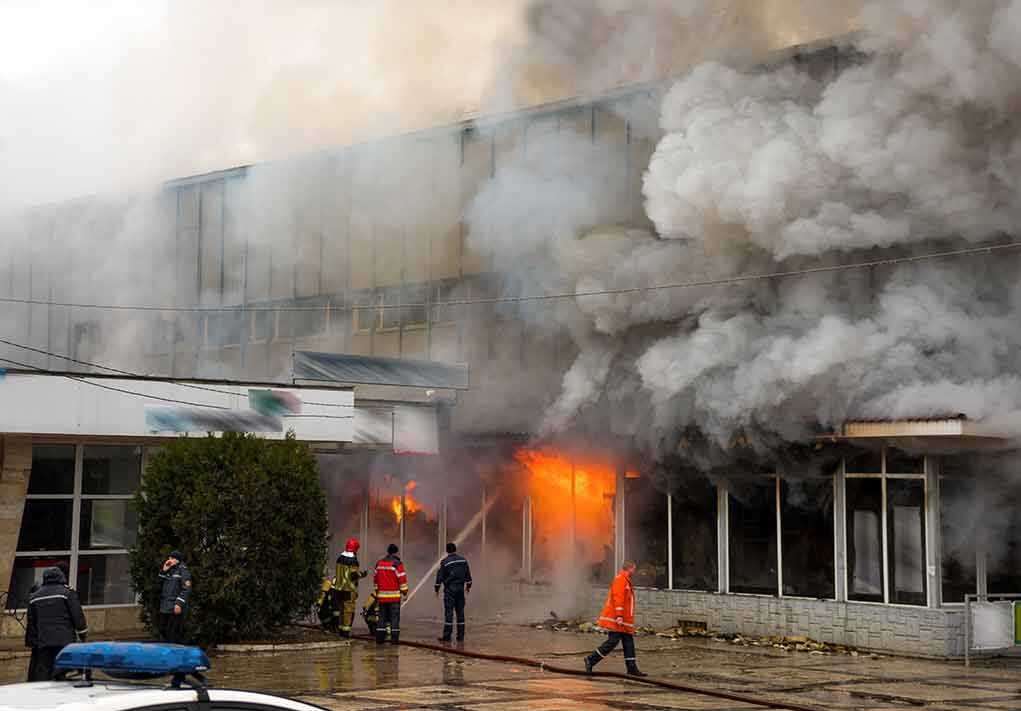
An explosion tore through the world’s largest oat milling plant in Iowa, sending flames and black smoke pouring into the sky over downtown Cedar Rapids.
Quick Take
- The Cedar Rapids Fire Department found evidence of an explosion followed by a fire at the Quaker Oats plant around 4:45 p.m.
- All plant workers were accounted for within about an hour, and officials confirm no injuries.
- PepsiCo, which owns Quaker Oats, says the cause of the blast is still under investigation.
- The Cedar Rapids facility is widely described as the world’s largest oat milling plant.
Blast Hits Downtown Cedar Rapids
Firefighters rushed to the Quaker Oats building in the 400 block of 2nd Street Southeast around 4:44 p.m. on a Saturday afternoon. The plant sits in the heart of downtown Cedar Rapids, a building that has milled oats for generations and helped put the city on the map for American food production. Crews arrived to find heavy smoke and flames pouring from the structure.
Cedar Rapids Fire Department officials did not mince words about what they found. “Cedar Rapids Fire Department personnel located what appears to be evidence of an explosion and subsequent fire,” the department said in a statement. That blunt confirmation matched video and photos already spreading online, showing thick black smoke rising over the city’s skyline and visible flames near the plant’s rear loading area.
Workers Accounted For, No Injuries Reported
Within about an hour, fire officials delivered the news every family in Cedar Rapids was waiting to hear. “As of 5:30 p.m., all plant workers have been accounted for,” the fire department confirmed. Mayor Tiffany O’Donnell echoed that relief in a video posted to Facebook, saying workers got out safely and no one was hurt among employees or the first responders who rushed to the scene.
Local news outlets, including WHO-13, reported no injuries or fatalities among either plant workers or emergency crews who responded. That outcome stands out given the scale of the fire and smoke visible for miles. Quick evacuation and a fast emergency response appear to have kept a dangerous industrial accident from turning into a tragedy for the hardworking men and women on shift that day.
PepsiCo Says Cause Still Under Investigation
Quaker Oats has been owned by food and beverage giant PepsiCo since 2001, making this blast a story with national stakes. PepsiCo Foods US confirmed that responders went to the scene and said the cause of the fire would be investigated. Fire officials separately described apparent evidence of an explosion, but neither the company nor local officials have announced a final determination of what triggered it.
That gap between what is known and what is still being studied is normal in early industrial-accident reporting. Officials have established the facts that matter most right now: an explosion happened, a fire followed, and everyone walked away. The technical question of exactly what sparked the blast inside America’s largest oat mill remains for investigators to sort out in the weeks ahead.
A Known Danger in Grain and Food Plants
Explosions at grain and food-processing facilities are not new to American industry. The Occupational Safety and Health Administration reports that a string of grain-dust explosions in the late 1970s killed 59 people and injured 49, pushing federal regulators to adopt a national grain-handling safety standard in 1987. Fine combustible dust, common in mills that process oats, corn, and other grains, can ignite violently under the right conditions.
The U.S. Chemical Safety and Hazard Investigation Board has tracked 281 combustible-dust incidents between 1980 and 2005 alone, resulting in 119 deaths and 718 injuries nationwide. A more recent example came at the Didion Milling facility in Wisconsin, where investigators determined that ignited corn dust inside processing equipment caused a deadly explosion and building collapse. Cedar Rapids appears to have avoided that fate this time.
https://twitter.com/linknchill17/status/2114335421630914619
For a Midwest town built on grain processing, and for a country that depends on plants like this one to keep breakfast tables stocked, the outcome in Cedar Rapids is a credit to fast-acting firefighters and workers who knew how to get out safely. Americans should expect a full accounting of what caused the blast, but tonight the story is one of a disaster narrowly avoided rather than a tragedy realized.