

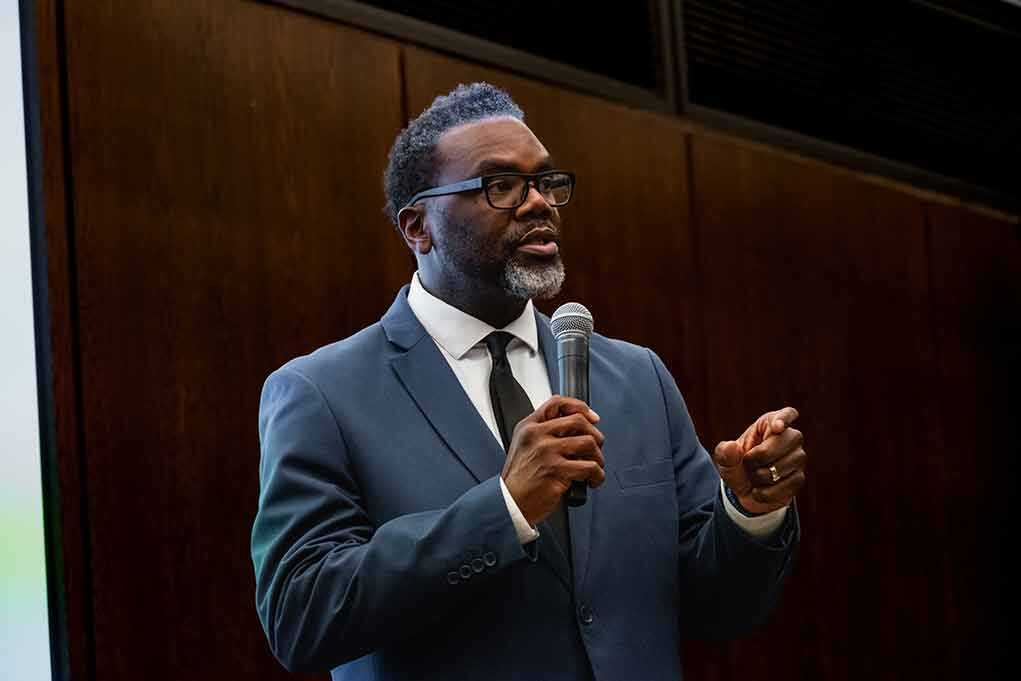
The White House told Chicago’s mayor to drop race-based payouts and fix violent crime first, drawing a sharp legal line against reparations tied to race.
Story Highlights
- Chicago’s mayor tied federal policy to unmet “demands” for descendants of enslaved people.
- White House said race-based government payouts are illegal and divisive.
- Chicago formed a 40-member reparations task force but has not released results.
- Federal government is moving against Evanston’s race-based reparations in court.
Chicago Mayor links federal policy to reparations push
Chicago Mayor Brandon Johnson argued that federal economic policy helped the rich and shortchanged descendants of enslaved people. He said education, housing, health care, transportation, and jobs remain unmet “demands.” He made the claims while pushing his city’s reparations agenda. He previously signed an order to create a 40-member task force to study harm to Black Chicagoans and propose remedies. The city also launched “Repair Chicago” to gather stories before drafting policy.
Johnson’s comments did not outline a plan with clear eligibility rules, costs, or proof standards. The record shows activity and intent, but not findings. There is no published task force report, dataset, or plan that sets who would qualify and why. That missing detail matters for law and policy. Remedies can be tied to race, ancestry, residence, income, or individual injury, and each path faces different legal tests.
White House rejects race-based payouts and spotlights crime
The White House pushed back on Johnson’s framing. A spokesperson said government programs that hand out money based on race are illegal. She said President Trump won a mandate to end divisive, racist policies and restore equal treatment under law. She also urged Johnson to focus on lowering Chicago’s homicide rate instead of demanding unconstitutional action. The message was clear: fix safety and follow the Constitution’s equal protection rules.
The administration’s legal stance is already in motion nearby. The United States Department of Justice moved to intervene in a lawsuit against Evanston’s reparations program. That program gives $25,000 housing benefits only to Black residents and certain descendants. Federal officials say that rule treats people differently because of race, which violates the Equal Protection Clause. A federal judge allowed the case to proceed in March 2026, and litigation continues.
Evanston case shows the legal risk for race-based designs
The Evanston fight offers a concrete example for Chicago. Evanston aimed to repair past housing bias with targeted aid. Critics argue the city used race, not proof of personal harm or residence in a harmed area. The Department of Justice aligned with that view, calling the program racially discriminatory. The court refused to dismiss the suit, giving plaintiffs their day in court. That result signals risk for any plan that uses race as the gatekeeper.
White House punches back at Chicago Mayor Johnson over reparations demandshttps://t.co/WZHrlgfrbS
— Spreading Fox News (@SpreadFoxnews) October 15, 2026
Chicago has choices that may lower risk. Lawmakers can tie remedies to documented harms in certain years, places, or programs, and make race-neutral eligibility that still captures those most affected. They can require proof of individual harm or ancestry linked to past government actions. They can target housing appraisals, lending, or zoning harms with narrow fixes. Those designs must rest on strong records and clear limits to survive court review and respect equal treatment.
What it means for families, taxpayers, and the Constitution
Taxpayers face two core questions. First, should government fix proven harms, and if so, how to do it fairly. Second, who pays for it, and under what rules. The White House answer is firm: do not sort Americans by race, and focus on safety and growth. The Chicago approach is still forming and lacks a public record of facts and costs. Without that foundation, broad claims will run into court walls and stall needed local reform.
Sources:
judicialwatch.org, youtube.com, noticias.foxnews.com, m.dailyadvent.com