

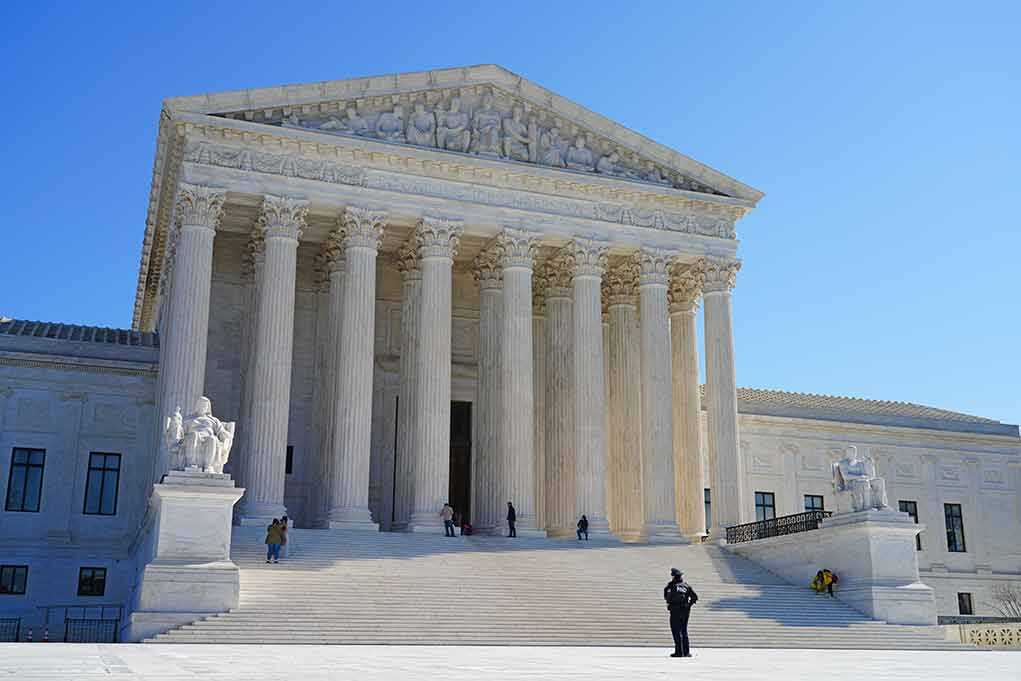
A Washington teen wrestler is asking the Supreme Court to let her compete on a girls’ team without being forced to face boys under a state policy that put her in harm’s way.
Story Highlights
- A Rogers High School student seeks emergency relief to avoid wrestling male athletes under Washington’s policy.
- Her lawsuit cites a December 6, 2025 match where she alleges sexual contact by a transgender opponent.
- Her filing argues requiring girls to face male athletes denies equal athletic opportunity under Title IX.
- Recent Supreme Court rulings upheld state laws separating sports by biological sex, shaping this fight.
What Triggered The Supreme Court Bid
Attorneys for Kallie Keeler, a Rogers High School wrestler, filed an emergency application asking the Supreme Court to permit her to wrestle on the girls’ team without being required to face male athletes. The request follows a December 6, 2025 state-sponsored tournament match where she alleges her opponent’s fingers penetrated her vagina during live action. A local prosecutor declined criminal charges, but she brought a civil Title IX claim naming school and state entities, alleging deliberate indifference to risk.
Her legal team argues that Washington’s participation policy leaves female athletes with an unlawful choice: accept matches against male athletes or forfeit girls’ competition. The filing seeks two forms of relief. First, it asks for sex-based placement in girls’ wrestling without male opponents. Second, if that is denied, it asks for parental notice before she must compete against a male in contact or skill-based sports. Her lawyers say the girls’ season starts in November and relief is urgent.
The Policy At Issue And The Counterargument
The Washington Interscholastic Activities Association states that its policy follows state law and permits student-athletes to participate consistent with gender identity. The association says its rules seek equal opportunity and a safe, supportive environment free from discrimination. It also notes that all students may compete in the boys or open category. The association says it will revise policies if state law changes, framing the policy as legal compliance rather than defiance.
The association’s stance highlights a core clash: inclusion rules versus safety and fairness in contact sports. Keeler’s case targets the impact of the policy in a specific match with alleged sexual contact, not just an abstract rule. That focus matters in court. Her claim argues the policy denies girls equal athletic opportunity when it forces them into contact against male athletes. Washington outlets reported disputes over when school officials received notice, an issue the civil case will test with records and timelines.
Title IX Stakes After Recent Supreme Court Rulings
Congressional research summaries report that Title IX bans sex discrimination in education programs and permits sex-separated sports when equal opportunities are provided. On June 30, the Supreme Court upheld West Virginia and Idaho laws that separate girls’ sports by biological sex, signaling that Title IX does not bar sex-based team distinctions. That development gives Keeler’s lawyers a stronger footing to argue that sex separation is lawful and protective for girls in contact sports.
Keeler’s emergency request asks the Court to apply that logic to school policies that compel girls to face male athletes. The question is narrow but vital: does a policy that forces girls into contact with male athletes, or out of competition, treat females worse than males under Title IX? Her team says yes, pointing to the alleged match incident and the start of the season. The Ninth Circuit reportedly denied earlier emergency relief, calling a broad notice demand too sweeping.
Safety, Process, And What Comes Next
Reporters say prosecutors declined to bring a criminal case over the match allegation. That does not resolve the civil Title IX claim, which asks whether schools acted with deliberate indifference and whether the policy itself creates unequal risks for girls. The federal government reportedly opened an investigation earlier this year, signaling the issue’s national reach. Court filings and sealed records may limit what the public sees, but the Supreme Court application puts the policy’s real-world effect front and center.
For parents and coaches, the stakes are clear. Contact sports require bright lines that protect girls’ safety, privacy, and equal chances to compete. President Trump has backed strong protections for women’s sports nationwide, and recent Supreme Court rulings affirm states can separate teams by sex. Keeler’s case now asks whether schools must, at minimum, give girls a fair lane and notice before forced mixed-sex contact on the mat. The Court’s answer will guide schools well beyond Washington.
Sources:
zerohedge.com, washingtonexaminer.com, foxnews.com, kpq.com, washingtontimes.com, applevalleynewsnow.com, lynden.wednet.edu, clarkcountytoday.com, genderdiversity.org