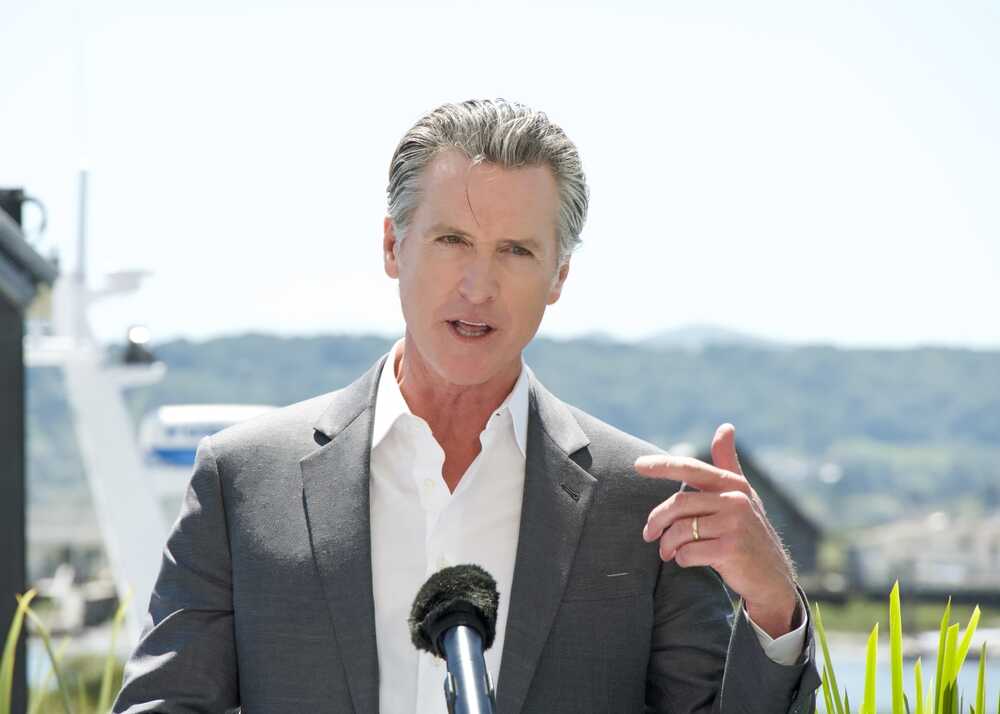
California Governor Gavin Newsom has refused to suspend the state’s 61-cent-per-gallon gas tax despite residents paying the nation’s highest fuel prices, instead pointing fingers at President Trump’s Iran policies while maintaining taxes that add billions to driver costs.
Story Snapshot
- Newsom rejects bipartisan calls to suspend California’s 61¢/gallon gas tax amid soaring prices exceeding $4.64/gallon
- Democratic gubernatorial candidates and Republicans push for tax relief while Newsom prioritizes $10+ billion annual road funding over immediate consumer relief
- California drivers face prices $1-2/gallon above national average due to state’s unique regulations, refinery closures, and import dependence
- Iran war-related oil disruptions amplify existing price spikes caused by California’s environmental policies and declining in-state refining capacity
Newsom Stands Firm Against Tax Relief
Governor Gavin Newsom and his Democratic allies in the California legislature have rejected proposals to suspend the state’s 61-cent-per-gallon gas tax, despite bipartisan pressure from both moderate Democrats and Republicans. Two Democratic gubernatorial candidates proposed suspending the tax and easing refinery regulations to provide immediate relief to voters facing record fuel costs. Newsom’s administration argues that suspending the tax would jeopardize over $10 billion in annual road funding protected under Proposition 1A, warning that reinstating it later would create political optics of a massive “tax hike” that voters historically reject.
California’s Unique Price Crisis
California drivers pay the highest gas prices in the nation, currently averaging above $4.64 per gallon—roughly $1 to $2 more than the national average. This premium stems from multiple state-specific factors: the nation’s highest gas tax, stringent California Air Resources Board fuel blend requirements, a 20 percent decline in in-state refining capacity since the 2010s, and dependence on imports for over 50 percent of fuel supply. The Iran war has disrupted global oil markets, but experts confirm that California’s regulatory environment and infrastructure vulnerabilities uniquely amplify price spikes beyond what other states experience from geopolitical events.
Political Finger-Pointing Intensifies
While available evidence does not confirm explicit 2026 statements from Newsom blaming Trump for gas prices, the governor has historically deflected criticism by targeting oil companies for alleged price gouging rather than addressing state tax and regulatory burdens. Republican Representative Kevin Kiley warned that California policies risk pushing prices to an “absurd $8 per gallon,” blaming Democratic environmental priorities for exacerbating affordability crises. The June 2026 gubernatorial primary has heightened these tensions, with moderate Democratic candidates breaking from Newsom’s approach by proposing the one-month tax suspension that establishment Democrats reject.
Failed Relief Efforts and Policy Alternatives
Multiple legislative attempts to provide relief have failed in the Democratic-controlled legislature. Senator Tony Strickland’s Republican-sponsored bill proposing a one-year tax suspension that would save drivers over $1 per gallon died in the Senate Environmental Quality Committee. Instead of tax cuts, Newsom has pursued alternative measures including $9.5 billion in rebates distributed in 2022 (capping at $1,050 per family), anti-gouging profit reporting mandates for oil companies, and signing AB 30 in October 2025 to expand E15 fuel availability. These alternatives preserve state revenue streams while providing what critics characterize as insufficient and politically-timed relief that fails to address root causes of California’s chronic price premium.
Impact on Working Families
The gas price crisis disproportionately impacts California’s working families, particularly in rural and suburban communities where commuting distances are longest and public transportation options are limited. Fuel cost increases ripple through the economy, raising prices for groceries, goods transportation, and services by an estimated 10 to 20 percent as trucking and agricultural sectors pass costs to consumers. With over 90 percent of California households dependent on vehicles, sustained high prices strain household budgets already pressured by the state’s high cost of living. The political calculus of prioritizing environmental goals and infrastructure funding over immediate affordability concerns risks voter backlash reminiscent of the 2003 recall election, though Newsom’s Democratic supermajority insulates him from legislative challenges that Republicans and moderate Democrats lack the votes to overcome.
Sources:
Rep. Kiley Urges Governor Newsom to Suspend the Gas Tax Increase
Governor Newsom Signs Bill Expanding Fuel Options to Cut Gas Prices
California Governor’s Race: Gas Taxes – CalMatters