New York City’s mayor is facing a fresh credibility test after welcoming a controversial activist into Gracie Mansion while insisting his family’s political speech should be treated as off-limits.
Story Snapshot
- Mayor Zohran Mamdani hosted Columbia-linked activist Mahmoud Khalil and his family for an iftar at Gracie Mansion, triggering sharp backlash from Jewish organizations and city officials.
- Reports that Mamdani’s wife liked social-media posts framing the Oct. 7, 2023 Hamas attack as “resistance” intensified concerns about the signals City Hall is sending.
- Major groups including the ADL and UJA-Federation warned the mayor’s choices undermine trust and complicate efforts to combat antisemitism in a tense city climate.
- Mamdani has condemned pro-terror chants publicly, but critics argue his staffing and public associations point in the opposite direction.
Gracie Mansion Iftar Becomes a Citywide Flashpoint
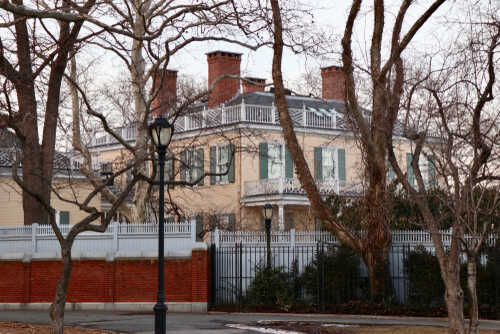
Mayor Zohran Mamdani said he and his wife hosted pro-Palestinian activist Mahmoud Khalil, Khalil’s wife, and their child for a Ramadan iftar at Gracie Mansion. The event quickly became controversial because Khalil has been described by critics and federal officials as sympathetic to Hamas and because he has been reported as refusing to condemn Hamas. Jewish organizations and some elected officials argued the mayoral setting made the meal a political symbol, not merely a private gathering.
Questions escalated after reporting that Mamdani’s wife, Rama Duwaji, had liked Instagram posts about Oct. 7, 2023 that portrayed the attack as “resistance” to “apartheid.” Mamdani responded by emphasizing that his wife is a private person with no formal role in City Hall. That defense may be politically convenient, but the underlying issue for many New Yorkers is public trust: the mayor’s household carries unavoidable civic symbolism, even when relatives hold no title.
Jewish Groups Say City Hall Is Sending the Wrong Message
Prominent Jewish organizations publicly pressed Mamdani to reaffirm a clear commitment to confronting antisemitism and protecting all New Yorkers. The ADL described the iftar decision as sending a “deeply troubling message,” especially amid reports that individuals close to the administration have amplified antisemitic content. UJA-Federation likewise raised concerns about the mayor’s repeated associations. In a city with one of America’s largest Jewish populations, that breakdown in confidence becomes a governing problem, not just a PR storm.
Former Mayor’s Office to Combat Antisemitism executive director Rabbi Moshe Davis criticized the hosting decision in particularly stark terms, framing it as an “endorsement” that could affect perceptions of safety. Davis also argued that social-media engagement celebrating violence against Jews sends a chilling signal when it comes from the mayor’s inner circle. The specific merits of each claim depend on documentation and context, but the broader point is straightforward: leadership choices can either cool tensions or pour fuel on them.
Staffing and Standards: The Real Test of “No Tolerance” Rhetoric
Mamdani has publicly condemned chants supportive of Hamas, saying support for a terrorist organization has no place in New York City. At the same time, reporting in early 2026 said he would not fire city employees tied to “ugly” pro-Hamas tweets from prior years, including a political consultant accused of spreading conspiracy theories about Jews and 9/11. That contrast—strong language paired with limited personnel consequences—raises a practical question: what is the administration’s enforceable standard for extremist political speech?
Additional scrutiny has focused on the mayor’s associations at public events. Reporting described Mamdani being introduced at a Staten Island Ramadan celebration by Khalid Akl, a Muslim American Society of New York political director linked to hardline anti-Israel activism, and tied by reports to chants and demonstrations critics describe as extremist. Mamdani described appearing with Akl as “a privilege and a pleasure.” For critics, that public warmth undermines the mayor’s insistence that he draws bright lines against extremism.
Free Speech vs. Government Signaling in a Polarized City
Supporters and critics often talk past each other by conflating two different questions: what speech is legally protected, and what a government leader should elevate with official attention. The research record notes that a headline framing about Mamdani invoking the First Amendment may be more editorial than a direct quotation, and available reporting does not clearly show him explicitly citing “free speech” to justify the iftar. Even so, the constitutional issue many New Yorkers see is not censorship—it is whether City Hall is using its platform in ways that deepen division.
From a conservative perspective, the minimum expectation for any mayor is consistent standards: condemn pro-terror advocacy, apply workplace rules fairly, and avoid symbolism that looks like official blessing of radicalism. That approach does not require restricting lawful speech; it requires disciplined governance. With New York still tense after years of protest politics and ideological pressure campaigns, the mayor’s next personnel and engagement decisions will likely matter more than any single dinner at Gracie Mansion.
Sources:
Mamdani won’t fire city employees with ugly pro-Hamas tweets
NYC Jewish groups raise concern about Mamdani’s gatherings with pro-Palestinian activists
NYC Jewish communal groups sound alarm over Mamdani’s latest controversies