A significant military deployment signals a new phase in U.S. and Iran relations, potentially escalating tensions in the Middle East.
Story Highlights
- The U.S. has deployed 12 F-15E Strike Eagles to Jordan amid rising tensions with Iran.
- This deployment follows President Trump’s promise of support to Iranian protesters.
- The U.S. aims to enhance regional stability while deterring Iranian aggression.
- Past actions by the same squadron include significant drone interceptions in 2024.
F-15E Strike Eagles Deployed to Jordan
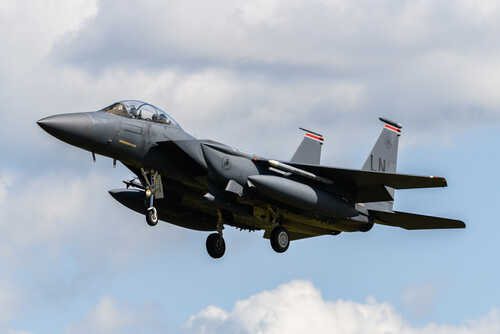
On January 17-18, 2026, twelve F-15E Strike Eagles from the 494th Fighter Squadron at RAF Lakenheath, United Kingdom, were deployed to Muwaffaq Salti Air Base in Jordan. This strategic move is part of a broader U.S. military buildup aimed at reinforcing airpower in the region amidst increased tensions with Iran. The deployment coincides with President Trump’s strong statements supporting Iranian protesters who face severe crackdowns by their government.
The deployment of these aircraft is a clear signal of the U.S.’s commitment to maintaining stability in the region. The Strike Eagles, known for their dual capabilities in both air-to-air and strike missions, serve as a powerful deterrent against both Iranian military actions and Daesh operations in the area. This move has been mirrored by the retasking of the USS Abraham Lincoln carrier strike group to the region, further emphasizing the U.S.’s strategic focus.
Watch;
Historical Context of the Deployment
The F-15E Strike Eagle has been a cornerstone of U.S. military operations in the Middle East since the Gulf War. Its versatility and firepower have made it a preferred choice for missions requiring precision and power. The 494th Fighter Squadron, in particular, has a storied history, having successfully intercepted over 80 Iranian drones during a 2024 engagement, marking one of the largest air-to-air battles in recent history.
Current events further underscore the importance of this deployment. Iranian protests have intensified over recent weeks, and the U.S. response aims to show support for these movements without direct intervention. This is in line with Trump’s statement last week, promising that “help is on its way,” a message that resonates strongly with the Iranian protesters looking for international support.
Potential Implications and Reactions
This latest military maneuver by the U.S. is not without its risks. While it aims to deter Iran and support regional stability, there is a possibility of escalating tensions leading to direct conflict. The presence of U.S. forces so close to Iranian borders could provoke a response from Tehran, which might lead to further military engagements.
The economic and political ramifications are also significant. Sustained military operations in the region place a strain on budgets and logistics, while also testing the Trump administration’s foreign policy strategies. The deployment is a message to both allies and adversaries alike about the U.S.’s resolve to maintain its interests and those of its partners in the region.
🇺🇸✈️ F-15E STRIKE EAGLES DEPLOY TO THE MIDDLE EAST — AND THE WORLD IS WATCHING
This morning, a dozen F-15Es took off from RAF Lakenheath (UK) to Jordan’s Muwaffaq Salti Air Base, escorted by 4 KC-135 tankers.
One jet instantly became the most tracked plane in the world on… pic.twitter.com/WrEAJwwP3Q
— WAR (@warsurveillance) January 20, 2026
As the situation develops, all eyes will be on how Iran reacts and how the U.S. balances its military presence with diplomatic efforts. The region’s stability remains precarious, and the actions taken now will likely shape the geopolitical landscape for years to come.
Sources:
Lakenheath F-15E Strike Eagles Deploy to the Middle East
Pentagon deploys F-15s to Middle East amid Trump’s Iran strategy
F-15E lands at base in the Middle East
Military buildup in the Middle East: What it means for regional security