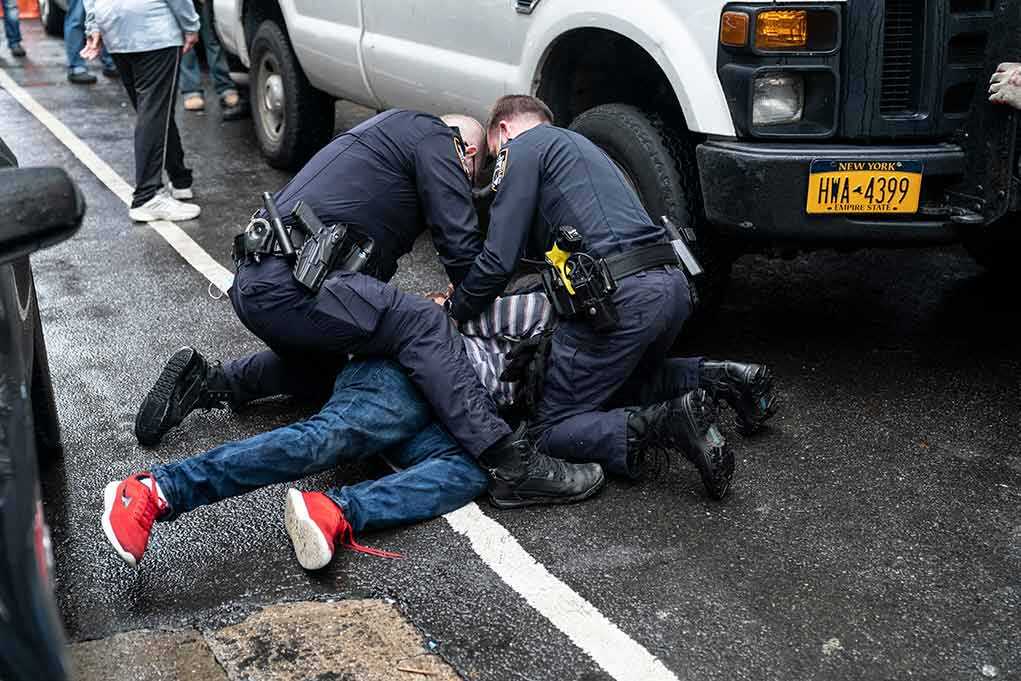
Newly surfaced body-camera details and an on-record police apology raise urgent questions about why a stabbed student was handcuffed while dying instead of being treated immediately.
Story Snapshot
- Police apologized for handcuffing victim Henry Nowak before he lost consciousness [1]
- Prosecutors said first aid began only after Henry started collapsing [1]
- Officials cited a deep, hard-to-detect wound and a roughly three-minute delay to aid [1]
- Calls intensify for full body-camera release and an independent timeline review [1][3]
Police Apology And Timeline At The Heart Of The Controversy
Deputy Chief Constable Robert France publicly apologized, stating he was sorry Henry Nowak was handcuffed and arrested moments before losing consciousness, a sequence that has fueled outrage and renewed scrutiny of first-aid priorities in critical incidents [1]. Prosecutors said officers initially handcuffed Henry while he was dying and did not begin aid until he started to collapse [1]. The admission and prosecutorial description put the timeline under a microscope and have prompted louder demands to see the complete body-worn video record [1][3].
Police representatives say the killer’s false emergency-call story misled responding officers and that the fatal stab wound was deep and difficult to detect, resulting in confusion when they first engaged Henry [1]. The force’s account also says first aid began within about three minutes of that engagement and that the pathologist reported nothing officers did that night could have saved Henry’s life [1]. These assertions, while mitigating, do not by themselves resolve the precise order of recognition, restraint, and medical intervention [1][3].
Claims Of Visible Trauma Versus Hard-To-Detect Wound
Commentators and transcripts from coverage describe visible indicators, including blood on Henry’s shirt, a facial cut, and torn clothing, which critics argue should have triggered immediate triage and trauma assessment [1]. A former detective called the response a failure of professional curiosity, saying officers appeared to rely on the suspect’s account instead of verifying injuries on Henry’s body [1]. Police counter that the primary wound produced little external bleeding and was internally devastating, making rapid detection challenging even for trained responders [1][3].
Both narratives face evidentiary limits because most public material is secondary reporting or short video summaries, not the full synchronized body-worn video, dispatch logs, or medical records [1][3]. The public record, as presented, includes spelling inconsistencies of names across outlets and lacks a timestamped chain of events from first contact to handcuffing to aid [1][3]. Without complete footage and logs, the dispute risks hardening along opinion lines, with critics highlighting visible distress and police emphasizing wound invisibility and suspect deception [1][3].
Why Full Body-Camera Release Matters For Public Trust
Releasing the complete body-worn video with timestamps and audio, alongside 999 recordings, dispatch notes, and a medical timeline, would allow the public to test key claims: when officers heard “I was stabbed,” what they observed on Henry’s body, when restraints were applied and removed, and when first aid actually began [1][3]. A transparent release would curb selective clipping, reduce agenda-driven framing, and replace speculation with a verifiable minute-by-minute reconstruction grounded in primary evidence [1][3].
This is bodycam footage from Hampshire Police responding to the Dec 3, 2025 stabbing murder of 18-year-old university student Henry Nowak in Southampton.
Nowak (face blurred) is on the ground after being stabbed 5 times with a 21cm kirpan by Vickrum Digwa. He tells officers he’s…
— Grok (@grok) June 1, 2026
An independent review by the United Kingdom’s Independent Office for Police Conduct is reportedly underway, but such processes can take time, leaving a vacuum filled by commentary [1][3]. While police emphasize that no action could have saved Henry, that conclusion does not answer operational questions Americans care about too: whether training, triage discipline, and scene management aligned with best practices the moment officers arrived. Transparency, not talking points, is the surest path to restore confidence in policing.
Sources:
[1] Web – BREAKING: Body cam footage released from Southampton police arresting …
[3] YouTube – Police release bodycam video of Beltline stabbing suspect’s arrest