The Vatican rolled out the welcome mat for Anglican clergy to conduct services in the Pope’s own cathedral while traditional Catholic pilgrims face mounting restrictions at sacred sites across Europe, exposing a troubling double standard that’s igniting fury among faithful Catholics who refuse to abandon centuries of tradition.
Story Snapshot
- Approximately 50 Anglican clergymen conducted unauthorized services on the high altar of St. John Lateran, the Pope’s official cathedral in Rome, despite not being in communion with the Catholic Church
- Pope Francis personally met with the Anglican group the day after their service, while the Vatican dismissed the canonical violation as merely a “failure in communication”
- Catholic doctrine officially declares Anglican holy orders invalid since the 1534 split, yet Vatican officials facilitated access to Catholicism’s highest-ranking basilica
- Traditional Catholic groups like the Society of St. Pius X face restrictions at various sacred sites while non-Catholic denominations receive papal audiences and basilica access
Vatican’s Contradictory Hospitality Standards
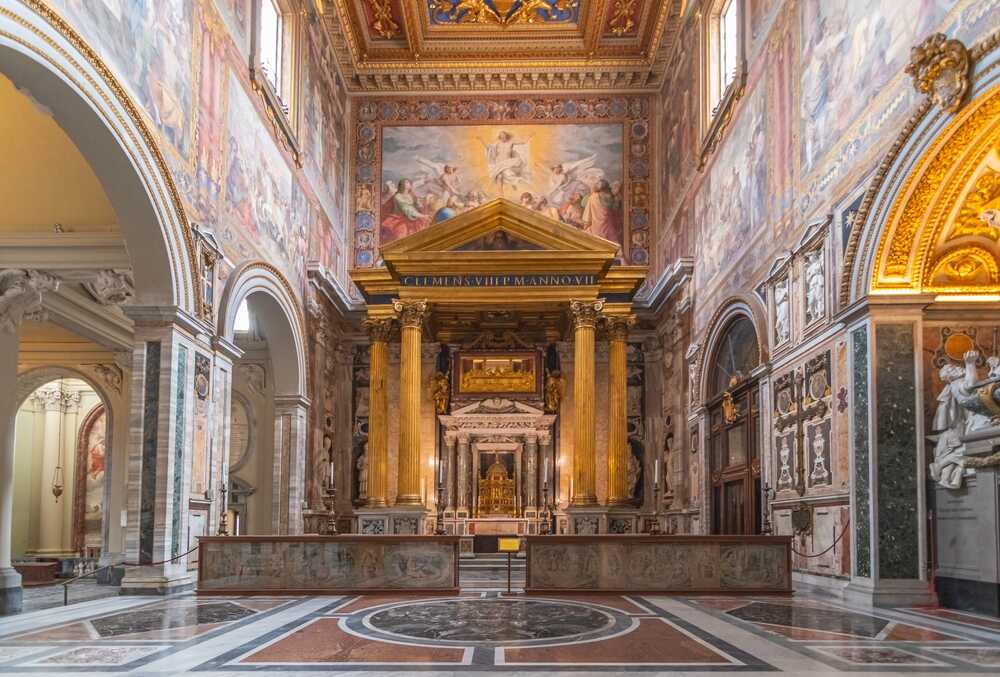
On Tuesday, April 18, Bishop Jonathan Baker led approximately 50 Anglican priests in conducting religious services on the high altar of the Archbasilica of St. John Lateran in Rome. This 4th-century basilica serves as the Pope’s cathedral and holds the distinction of being the highest-ranking papal basilica in the Catholic Church. The Church of England clergy performed their rites despite canonical restrictions against non-Catholic liturgies in such sacred spaces, and despite the Catholic Church’s official position that Anglican ordinations have been invalid since Pope Leo XIII’s 1896 declaration in Apostolicae Curae.
The following day, Pope Francis personally received Bishop Baker and the entire Anglican delegation in a formal meeting, signaling high-level Vatican approval despite the liturgical irregularity. By Thursday, Bishop Guerino Di Tora, vicar of the archpriest, issued a statement expressing “deep regret” for the incident while characterizing it as a “failure in communication.” The tepid response raises serious questions about whether Vatican officials genuinely considered this a regrettable mistake or a calculated ecumenical gesture that deliberately sidestepped established canonical norms.
Traditional Catholics Face Different Treatment
The contrast between the Vatican’s enthusiastic reception of Anglicans and its approach to traditional Catholics couldn’t be starker. While Pope Francis opened the doors of his own cathedral to clergy whose orders Rome officially deems invalid, traditional Catholic groups adhering to centuries-old liturgical practices frequently encounter obstacles at sacred sites across Europe. This discrepancy exposes an uncomfortable reality: Vatican officials under this pontificate appear more willing to accommodate Protestant denominations that broke from Rome nearly 500 years ago than Catholics who simply prefer the traditional Latin Mass and pre-Vatican II practices.
The incident highlights the broader tension within Catholicism between Pope Francis’ aggressive pursuit of ecumenical dialogue and the preservation of doctrinal integrity. St. John Lateran isn’t just any church—it’s the ecclesial seat of the Bishop of Rome, the Pope’s own cathedral, making the Anglican service particularly significant. The fact that this occurred on the high altar, the most sacred spot in the basilica, while Vatican officials later claimed it was merely a communication error, strains credulity among Catholics who’ve watched similar “mistakes” repeatedly favor progressive ecumenism over traditional orthodoxy.
Undermining Catholic Identity and Authority
The Anglican Communion separated from the Catholic Church in 1534 when King Henry VIII rejected papal authority to secure his divorce. For nearly 500 years, Rome maintained clear doctrinal boundaries regarding this schism, formally declaring Anglican holy orders “absolutely null and utterly void” in 1896. These positions weren’t mere administrative preferences but theological judgments about apostolic succession and sacramental validity. When Vatican officials facilitate Anglican services in the Pope’s cathedral while traditional Catholics face restrictions elsewhere, they undermine these longstanding doctrinal positions and blur the distinctions that define Catholic identity.
Catholic traditionalists have every reason to feel betrayed by this episode. They’ve remained faithful to Rome despite disagreements over liturgical reforms, maintained their adherence to traditional practices within the bounds of Catholic teaching, and sought only to preserve what the Church herself practiced for centuries. Yet they watch as the Vatican extends extraordinary privileges to denominations that explicitly rejected Catholic authority and doctrine. This isn’t about narrow-minded exclusivity—it’s about maintaining the integrity of what the Catholic Church claims to be and the coherence of her theological positions across time.
Sources:
BREAKING: Vatican Blames ‘Failure in Communication’ for Anglican Service in Pope’s Church in Rome
Tidings of Discomfort and Liturgical Abuse