
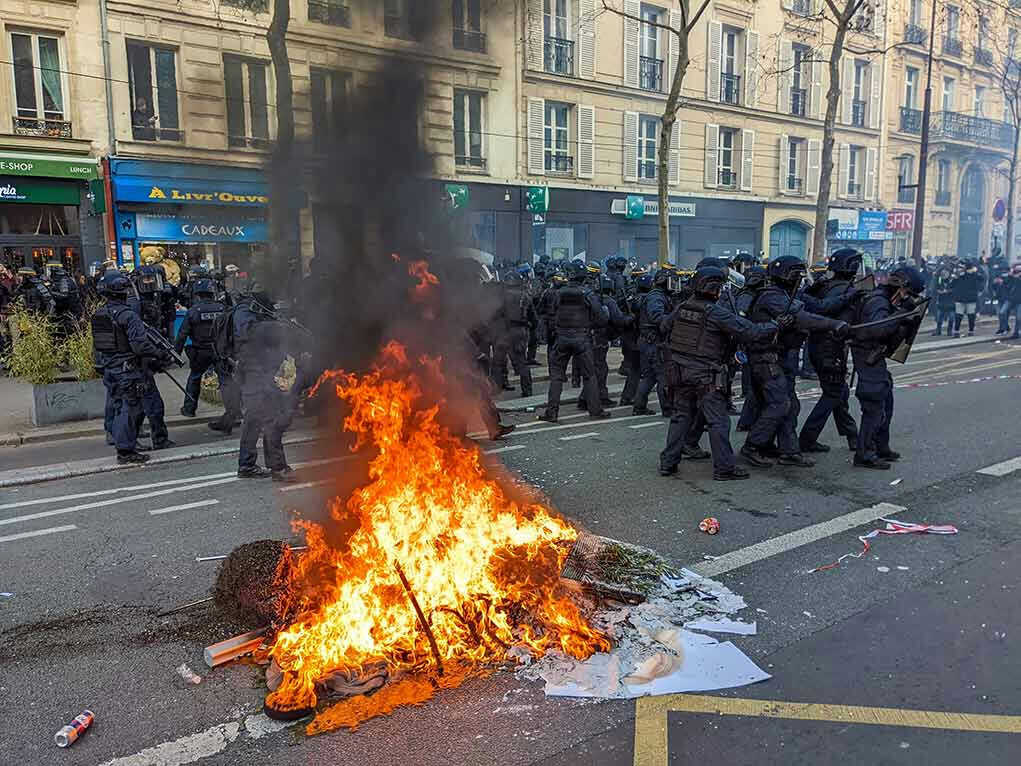
France’s government moved to restrict public gatherings after rioters torched city halls and attacked public buildings across multiple cities.
Story Highlights
- President Emmanuel Macron told officials they could prohibit protests when needed to protect buildings and businesses.
- Police reported widespread violence, arson, and looting during mass demonstrations across France.
- Authorities said most demonstrators were peaceful, blaming the worst violence on radical groups.
- Paris issued partial protest-route bans while still allowing modified marches to proceed.
Macron Authorizes Targeted Bans After Night of Nationwide Violence
President Emmanuel Macron instructed regional prefects to work with mayors to safeguard cities and, when necessary, prohibit certain gatherings after violent unrest swept France on October 17–18, 2026. His order followed major demonstrations over living costs that turned ugly in several areas. Police reported arson, smashed storefronts, and attacks on civic buildings. The violence included fires at city halls and looting that stretched police resources. Macron said the state would prosecute those responsible and restore order.
Reporting from the scene showed flames and street battles that went beyond routine protest policing. BBC accounts described more than a thousand arrests and significant property damage, including a city hall roof collapse in Limoges after a fire. Those incidents fueled a security push focused on protecting public institutions. The government framed the approach as a balance: defend the right to peaceful protest while stopping organized rioters who targeted symbols of the Republic and threatened local services and businesses.
Scale of Unrest and The Government’s Case for Restrictions
News outlets documented hundreds of thousands marching nationwide, while a smaller subset fought police, set fires, and looted shops. The government argued that ordinary tools were not enough in some areas. It directed prefects to take steps to shield public buildings and control routes, including bans where risk was high. That position came with a legal focus. Macron emphasized that those who attacked prefectures, businesses, or town halls would face the full force of the law for their crimes, not be treated as protesters.
Officials also underscored that most demonstrators remained nonviolent and had real grievances, such as rising prices and school conditions. That distinction underpinned selective restrictions rather than a blanket shutdown. It aimed to isolate violent actors while preserving lawful assembly. Still, targeted bans carry a political cost. Any curb on gatherings in a democracy invites scrutiny. The move may calm streets in the near term but risks claims of overreach if used too broadly or for too long.
How Paris Implemented Partial Route Bans While Allowing Marches
Paris offered a concrete example of the “targeted” model. The police prefect issued orders that partially prohibited parts of planned routes under the internal security code. The orders still allowed modified demonstrations to proceed on safer paths with tighter controls. That approach tried to reduce flashpoints near key buildings while maintaining space for speech. It mirrors a U.S.-style time, place, and manner rule, which many readers know from local event permits and parade planning.
Interior officials also backed stronger tactics for officers if urban violence reignites, including less-lethal crowd-control tools. The message is clear: peaceful protest can continue, but attacks on city halls, schools, or shops will draw swift action. For Americans watching from afar, the core tension is familiar. Governments must protect property and life without smothering civil rights. France now walks that tightrope. The coming weeks will show if narrow bans and prosecutions restore order without chilling lawful dissent.
Sources:
telegraph.co.uk, bbc.com, cnn.com, npr.org, euronews.com