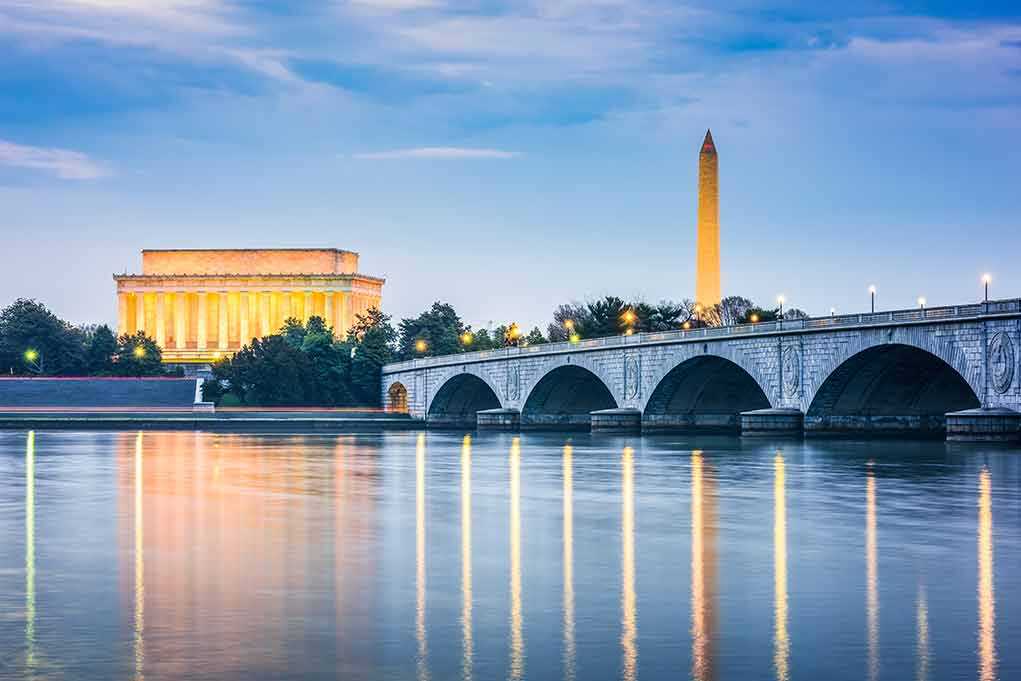
For a hundred years, millions stared up at Lincoln’s marble gaze, never guessing a massive, cathedral‑like vault lay hidden directly beneath their feet.
Story Snapshot
- A 50,000-square-foot undercroft beneath the Lincoln Memorial is finally opening as a public museum for America’s 250th birthday.
- The new 15,000-square-foot exhibit space turns a secret structural void into a walk-through story of Lincoln, civil rights, and American memory.
- Timed-entry tickets and donor-funded construction raise sharp questions about access, priorities, and who shapes our national story.
- This “hidden in plain sight” museum could either deepen civic understanding or become just another novelty stop on the tour bus circuit.
The hidden cathedral under America’s favorite statue
For a century, most visitors assumed the Lincoln Memorial began at the steps and ended at the ceiling. They saw the columns, the statue, the famous speeches carved in stone, and went home with the usual photos and T-shirts. Beneath them, however, sat a 43,800-square-foot vault supported by 122 concrete columns, a raw, almost otherworldly space that engineers knew intimately and the public never saw.[2] Now that hidden undercroft is being turned into a destination.
Washington insiders have whispered about the undercroft for years, but this is the first time ordinary Americans will walk into it as guests instead of imagining it as some forbidden bunker. The Department of the Interior and the National Park Service have spent years converting roughly 15,000 square feet of that vault into a finished museum, leaving the grid of columns visible through floor-to-ceiling glass.[1][2] Imagine stepping under Lincoln and finally seeing how the whole temple actually stands.
From utility void to 15,000-square-foot story engine
The plan is not a token display with a few dusty panels and a gift shop. Official materials describe a “world class exhibit space” that lets visitors learn how the memorial was built, how it shaped Americans’ understanding of Abraham Lincoln, and how its meaning has evolved over generations.[1] Recreation.gov highlights educational displays on engineering and craftsmanship, turning structural guts into a kind of three-dimensional blueprint you can walk through. For a country with crumbling civics knowledge, that is no small choice.
Media coverage, of course, gravitates to the spectacle. Words like “hidden,” “vault,” and “secret underbelly” dominate headlines because they hook attention in a five-second scroll.[2][3] The sensational framing is understandable; it is also incomplete. The institutional goal is not just to show off concrete columns but to use them as the backbone of a narrative about how national myths get literally built. That is a far more serious project than a mere tourist stunt, and it aligns with a conservative instinct to look past slogans to the underlying structure.
Lincoln, civil rights, and who owns the symbolism
The undercroft museum will not stop at bricks and mortar. Smithsonian reporting underscores that exhibits will also explore the memorial’s role in pivotal civil-rights moments, from Marian Anderson’s 1939 concert to Martin Luther King Jr.’s “I Have a Dream” speech in 1963. That focus acknowledges an uncomfortable truth: the Lincoln Memorial has long been a stage where America argues with itself about freedom, race, and the meaning of the Constitution.
For many right-of-center Americans, the concern is not that these stories are told, but how. Done well, they can highlight Lincoln’s actual achievements, the Constitution’s self-correcting design, and the moral courage of citizens who demanded the country live up to its founding promises. Done poorly, they drift into presentist scolding that treats the monument as a prop for whatever today’s elites want to say. Because the detailed exhibit script is not yet public, we are being asked to trust the curators without seeing the full lesson plan.[1]
America250, money, and the politics of access
The timing is no accident. The undercroft’s opening is synced to America’s 250th anniversary, giving officials a showcase project to point to when they promise renewed civic education and national reflection.[1][2] On paper, that sounds like exactly what many conservatives have demanded: real history in real places, not abstract ideology in PowerPoint slides. The question is whether the execution will honor that intent or dilute it in focus-grouped messaging.
🚨 NEW: Secretary Doug Burgum releases photos ahead of the opening of the Lincoln Memorial Undercroft.
The undercroft will open to the general public for the first time on June 25th. The previously unseen 15,000-square-foot space will feature a museum that shares the story of… pic.twitter.com/CNyRGYtgZ8
— America First Policy Institute (@A1Policy) May 31, 2026
The price tag—about $69 million, with a major early gift from billionaire David Rubenstein and additional foundation donors—also raises the modern question lurking behind every new museum: who pays and who decides.[1] The National Park Service contributed tens of millions, and the National Park Foundation and private donors supplied the rest.[1] There is no evidence of impropriety, but the concentration of influence should keep citizens alert. Heritage is not neutral; it is curated, and money affects what gets built and what gets left on the cutting-room floor.
A “public” vault with a velvet rope
Public access will come with gatekeeping. The undercroft museum runs on timed-entry tickets, with reservations available through Recreation.gov and a limited number of same-day passes at a kiosk.[2] Opening-day group tickets are already sold out in early coverage.[1][2] Operationally, that kind of control makes sense; anyone who has suffered through the crowds upstairs understands the need for order. Symbolically, though, an attraction marketed as a grand act of “unprecedented access” that quickly books out can feel less like a civic commons and more like an exclusive club.[1][2]
That tension goes to the heart of the project. On one hand, there is no visible organized opposition, no lawsuits, no preservation revolt; the record shows implementation, not controversy.[1] On the other hand, absence of protest does not equal deep public buy‑in or educational success. We simply do not yet know whether visitors will leave the undercroft with a richer grasp of Lincoln, the memorial, and the American story—or just a cool Instagram shot of eerie concrete pillars. The vault is opening. What we do with what lies beneath is still up to us.
Sources:
[1] Web – What Lies Beneath: Massive Secret Vault Under Lincoln Memorial to Be …
[2] Web – NEW Lincoln Memorial Undercroft to Open June 25
[3] Web – The Vaults Under the Lincoln Memorial Are Finally Opening to the …