
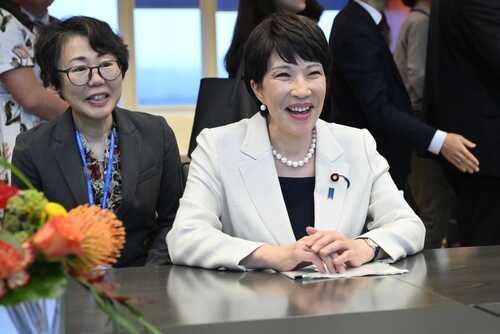
Japanese Prime Minister Sanae Takaichi issued a stark warning that the U.S.-Japan alliance would “collapse” if Tokyo failed to defend American forces conducting joint evacuations during a Taiwan crisis.
Story Snapshot
- PM Takaichi warns U.S.-Japan alliance would collapse if Tokyo abandons Americans during Taiwan crisis evacuations
- Statement comes ahead of Japan’s February 8 election, clarifying legal bounds for Self-Defense Forces amid China tensions
- China retaliates with travel advisories and rare-earth export restrictions targeting Japanese defense and tech sectors
- Taiwan sits just 110 km from Japan, making crisis scenarios directly relevant to Japanese national security interests
Alliance Credibility on the Line
Prime Minister Sanae Takaichi declared on January 26, 2026, during a televised debate that Japan’s security alliance with the United States would crumble if Tokyo stood idle while American forces came under attack during joint citizen evacuations from Taiwan. Her remarks, delivered on TV Asahi ahead of the February 8 Lower House election, emphasized the impossibility of maintaining alliance credibility without mutual defense commitments. Takaichi framed the scenario around rescuing Japanese and American nationals from Taiwan, which lies approximately 110 kilometers from Japan—a distance comparable to Tokyo to Atami—making any crisis there a direct threat to Japanese security and sovereignty.
Japan PM says US alliance would collapse if Tokyo ignored Taiwan crisis https://t.co/Y3YsLVAb1g pic.twitter.com/mcy8H3KCeU
— Insider Paper (@TheInsiderPaper) January 27, 2026
Legal Framework and Strategic Clarification
Takaichi carefully clarified that Japan’s Self-Defense Forces would operate “strictly within the bounds of the law,” distancing her remarks from broader military intervention in a U.S.-China conflict. Her statement refined earlier November 2025 comments in the Diet, where she suggested potential SDF involvement in Taiwan “existential crises,” which triggered Chinese diplomatic protests and demands for retraction. The Prime Minister emphasized that responses would depend on comprehensive judgments based on specific circumstances, reflecting Japan’s post-WWII constitutional constraints under Article 9, which renounces war while allowing limited collective self-defense since 2015 reinterpretations for allied protection.
Beijing’s Economic Retaliation
China responded to Takaichi’s positioning with economic countermeasures designed to punish Japan for its alliance stance. Beijing issued travel advisories warning Chinese citizens about safety concerns in Japan and imposed rare-earth export restrictions specifically targeting Japanese electric vehicle production and missile manufacturing capabilities. These measures, continuing from the November 2025 controversy, demonstrate China’s willingness to leverage economic dependencies to deter Japan from supporting Taiwan or deepening U.S. military cooperation. The rare-earth curbs particularly threaten Japan’s defense industry and advanced technology sectors, which rely on Chinese supplies for critical components in military and civilian applications.
Indo-Pacific Security Implications
Takaichi’s statements arrive amid escalating Indo-Pacific tensions, with ongoing U.S.-Japan missile cooperation drills, North Korean provocations, and expanding economic ties between Washington and Taipei, including semiconductor investments. Japan’s defense white papers from 2021 through 2025 have increasingly referenced Taiwan as central to regional stability, reflecting bipartisan recognition that Taiwan’s fate directly impacts Japanese security due to geographic proximity and shared democratic values. The 1960 U.S.-Japan security treaty obligates mutual defense, yet Japan’s pacifist constitutional traditions create domestic political tensions that Takaichi navigates by emphasizing citizen protection over offensive action.
The Prime Minister’s pre-election declaration reinforces Japan’s commitment to the U.S. alliance despite Chinese pressure, signaling to both Beijing and Washington that Tokyo will not abandon its security responsibilities. This stance aligns with conservative principles valuing steadfast partnerships, deterrence through strength, and recognition that abandoning allies in crisis invites broader threats to freedom and stability.
Sources:
Japan Times – Japan Takaichi Taiwan US Alliance
France24 – Japan PM says US alliance would collapse if Tokyo ignored Taiwan crisis
TRT World – Japan PM Taiwan US Alliance
Chosun – Japan PM Taiwan Crisis US Alliance