
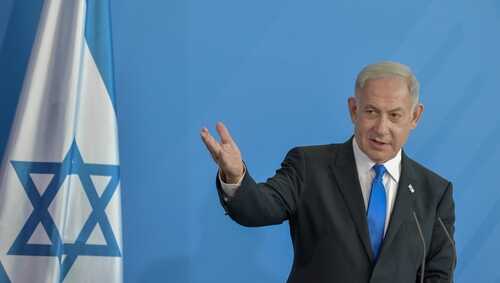
Netanyahu’s optimism clashes with expert skepticism as US-Israel military actions are positioned as a deterrent against Iran’s nuclear ambitions.
At a Glance
- The U.S. conducted strikes on Iranian nuclear facilities at Isfahan, Natanz, and Fordow.
- Iran faces a dilemma between retaliating or consolidating internally.
- Netanyahu expressed confidence that Iran will not pursue a nuclear program following strikes.
- U.S. strikes might influence nuclear proliferation in the region.
Military Actions and Political Calculations
Recent U.S. military actions at key Iranian nuclear facilities mark a significant policy shift. The strikes targeted Isfahan, Natanz, and Fordow, aiming to curb Iran’s advancing nuclear capabilities. While Netanyahu praises these actions as a deterrent, complexities arise around their effectiveness. Many experts warn that military action alone cannot eliminate Iran’s nuclear capabilities. Iran must weigh responses carefully, facing the risk of political instability and a potential broader conflict.
Watch a report: Netanyahu Says Iran Will Not Have A Nuclear Weapon
While Netanyahu stresses Iranian fear of U.S.-Israeli might, the extent of deterrence remains uncertain. Iran, adept at tactical repositioning, allegedly moved enriched uranium from Fordow before the strikes, complicating assessments. Israeli intelligence clashes with denials from the Trump administration, reflecting fragmented narratives. U.S. policy underpins these military measures, yet rebuilding trust diplomatically appears even more challenging amidst heightened tensions.
🔴 EVENING RECAP
Here are the day's key developments:
– The office of Israeli Prime Minister Benjamin Netanyahu has acknowledged that Israel struck a radar installation near Tehran hours after the start of the ceasefire on Tuesday, but said that it refrained from further…
— Middle East Eye (@MiddleEastEye) June 24, 2025
Iran’s Calculated Responses
Iran’s options for retaliation or rebuilding are limited yet pivotal. The country’s internal credibility wanes, challenged by its failure to protect nuclear sites. While military responses risk a broader conflict, the pursuit of regional nuclear ambitions remains a critical question. The International Atomic Energy Agency reported Iran’s uranium enrichment nearing weapons-grade, raising proliferation fears. Meanwhile, Iran’s parliament has halted cooperation with the IAEA, further muddying waters for international oversight.
“Enriched uranium is not enough to make atomic bombs. Okay, it’s a necessary component, but it’s not sufficient.” – Israeli Prime Minister Benjamin Netanyahu – foxbusiness.com
The U.S. insists on Iran abandoning enrichment to rebuild diplomatic channels, yet Iran’s willingness to negotiate remains variable. Some suggest Iran might exit the Nuclear Non-Proliferation Treaty, highlighting the gravity of its ambitions. These moves signal significant developments, testing the resolve of U.S. and Israeli foreign policy. Amidst murky waters, the U.S. strikes may reassure Taiwan of U.S. support, although impacting China’s strategies remains debatable.
An Uncertain Path Forward
The muted responses from major players like China, Russia, and North Korea suggest no strong anti-Western alignment currently. Experts caution, however, that without negotiations, military actions may recur if Iran resumes nuclear activities. Netanyahu appeals for an international resolution demanding Iran’s nuclear cessation and isolation of terror networks. Yet, his assertion paints a bleak picture of a regime inherently opposed to U.S. and Israeli interests.
“I think the Iranians understand that what the U.S. and Israel did once, we could do twice and thrice.” – Israeli Prime Minister Benjamin Netanyahu – foxbusiness.com
Ultimately, while Netanyahu exudes confidence in the strikes’ deterrent impact, broader implications necessitate sharp scrutiny. International oversight and diplomatic readiness are crucial in managing the ongoing conflict, while ensuring regional stability remains an arduous goal. The world watches closely to determine if the posturing will succeed in quelling an emergent nuclear threat or simply fuel further volatility.