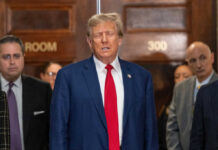
A high-profile assassination attempt at a Florida golf course underscores the ongoing threats to national security and political stability.
Story Overview
- Ryan Routh allegedly attempted to assassinate President Donald Trump in September 2024.
- Routh’s trial began in September 2025, with dramatic courtroom exchanges.
- The prosecution characterizes the plot as a meticulously planned attack.
- Routh has chosen to represent himself, adding complexity to the trial.
Alleged Assassination Attempt
On September 15, 2024, Ryan Routh, a construction worker, allegedly attempted to assassinate former President Donald Trump at his West Palm Beach golf course. Secret Service agent Robert Fercano spotted Routh in the tree line, armed with an AK-47, prompting immediate security action. Routh fled but was caught shortly after, leaving behind his weapon and body armor. Despite the swift intervention, the incident highlighted significant security concerns during Trump’s presidential campaign.
The trial for this high-stakes case began on September 11, 2025, in Fort Pierce, Florida, under U.S. District Judge Aileen Cannon. The prosecution framed this as a politically motivated and meticulously planned assassination attempt, posing serious implications for national security. The courtroom has seen dramatic exchanges, especially given Routh’s decision to represent himself. His unpredictable statements and self-defense strategy have drawn significant media attention, intensifying public interest in the proceedings.
Today, posed some setbacks for Ryan Routh in his defense. He was only allowed about 5 of the allotted 45 minutes for not following the guidelines. The judge gave him a few attempts and then moved right along to the first witness. pic.twitter.com/CayqksiYbV
— Sarah Winkelmann (@SarahWinkelmann) September 11, 2025
Trial Developments and Testimonies
The trial’s opening days were marked by compelling testimonies from key witnesses, including Secret Service agent Fercano and a bystander who helped apprehend Routh. Agent Fercano described the event as a “textbook ambush scenario,” emphasizing the threat’s severity. Meanwhile, Routh’s courtroom behavior has been erratic, with philosophical monologues and an incoherent defense strategy, challenging the judicial process and testing the limits of self-representation in serious criminal cases.
Routh’s motivations remain unclear, though his conduct hints at possible mental instability, a factor that could influence the trial’s outcome. The case has drawn parallels to previous assassination attempts on U.S. presidents, underscoring the persistent risks faced by political figures in a highly polarized climate. The trial continues to unfold, with national media closely monitoring each development.
Watch: Courtroom drama: Ryan Routh clashes with judge
Implications and Security Concerns
The attempted assassination has prompted immediate scrutiny of Secret Service protocols and could lead to changes in security measures for political events nationwide. With heightened public anxiety about political violence, there may also be legislative responses concerning gun control and security regulations. This case serves as a stark reminder of the challenges facing political figures and security agencies amid increasing threats.
The broader impacts extend to the legal sector, as the trial raises questions about self-representation and mental health considerations in high-profile cases. Security experts commend the rapid response by the Secret Service, while legal analysts highlight the difficulties posed by Routh’s unconventional defense. The trial’s outcome could influence future security protocols and public discourse on political violence.
Sources:
Secret Service Agent Testifies In Trump Assassination Trial