With Israel’s ground offensive now underway in Gaza City, the humanitarian crisis has reached a new peak, raising urgent questions about the fate of civilians caught in the crossfire.
Story Snapshot
- Israel launched a major ground offensive in Gaza City on September 15, 2025, targeting Hamas strongholds.
- Tens of thousands of Israeli soldiers are involved, with heavy air support and significant destruction reported.
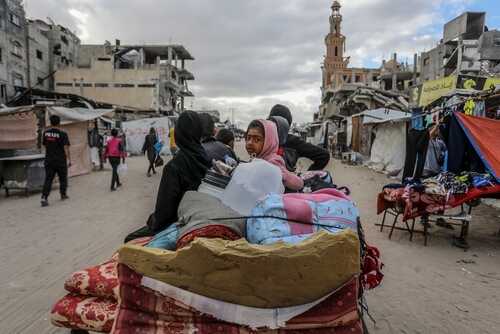
- Palestinian civilians are fleeing en masse, facing immediate displacement and dire humanitarian conditions.
- International observers, including the UN, have raised concerns about potential genocide and legal violations.
Israel’s Ground Offensive: Scope and Strategic Aims
On September 15, 2025, the Israel Defense Forces (IDF) began a large-scale ground assault in Gaza City as part of Operation Gideon’s Chariots B. The operation was launched after weeks of intense bombardment and follows preliminary maneuvers that started in August. Israeli leadership cites Hamas’s military activities and use of civilian areas as shields as justification for the offensive, aiming to dismantle Hamas’s infrastructure and restore security for Israeli citizens. The mission involves tens of thousands of soldiers and extensive air support, marking a significant escalation compared to previous operations in the region.
🔥 ISRAEL LAUNCHES MAJOR GROUND OFFENSIVE IN GAZA CITY, STRIKES HOUTHI PORT IN YEMEN, INTERCEPTS MISSILE, AND TARGETS HEZBOLLAH IN LEBANON WHILE HOSTAGE CRISIS REMAINS CENTRAL
🕑 September 16, 2025 | 7:00 PM
🔥 The IDF has launched a new phase of its ground offensive in Gaza… pic.twitter.com/ysm8syXqPC
— Israel Realtime (@IsraelRealtime) September 16, 2025
The IDF’s stated objective is to defeat Hamas, secure hostages, and reassert control over contested territory. This strategy has led to widespread destruction in Gaza City, including the demolition of homes in neighborhoods like Sheikh Radwan. In response, Hamas declared its own counteroffensive, Operation Moses’ Staff, intensifying combat inside urban areas. The scale of the operation and the speed of Israel’s advance have distinguished it from earlier conflicts, with ongoing clashes reported and portions of the city now claimed under Israeli control.
Humanitarian Crisis and Civilian Displacement
The offensive has triggered a mass exodus of Palestinian civilians, who face immediate threats of violence, displacement, and scarcity of basic resources. Humanitarian organizations and the United Nations are sounding alarms over the severe conditions, including lack of food, water, medical supplies, and shelter. The destruction of infrastructure and forced migration have created an acute crisis, with entire neighborhoods emptied and families left searching for safety. While the IDF emphasizes efforts to minimize civilian casualties, international observers report mounting humanitarian violations and warn of long-term consequences for Gaza’s population.
Watch: Palestinians flee Gaza City as Israel launches major ground offensive | BBC News
Previous conflicts, such as the 2014 Gaza War, demonstrated the devastating impact of prolonged military operations on civilian life and infrastructure. The current offensive, however, is distinguished by its scale, speed, and the intensity of international scrutiny. Calls for ceasefire and humanitarian corridors have grown, though ongoing military actions continue to hinder relief efforts.
Legal, Political, and International Reactions
The United Nations and human rights organizations highlight concerns over the legality of Israel’s actions, particularly the potential for genocide and violation of international humanitarian law. Allegations center on the use of civilians as human shields and the proportionality of military force. Israeli officials maintain that the campaign is necessary for national security and is consistent with military ethics, while Hamas accuses Israel of excessive force and endangerment of noncombatants.
Political tensions are escalating both within Israel and across the international community. The operation’s economic impact includes the destruction of Gaza’s infrastructure and the potential for further isolation. Social effects are profound, as displacement and trauma reshape Palestinian communities. The offensive’s outcome will likely influence regional stability and future peace negotiations, with experts stressing the urgent need for sustainable solutions that address underlying grievances and protect civilian rights.
Sources:
2025 Gaza City offensive – Wikipedia
Timeline of the Gaza war – Wikipedia
Israel launches ground offensive in Gaza City – Los Angeles Times
UN experts press release on Gaza offensive – United Nations