

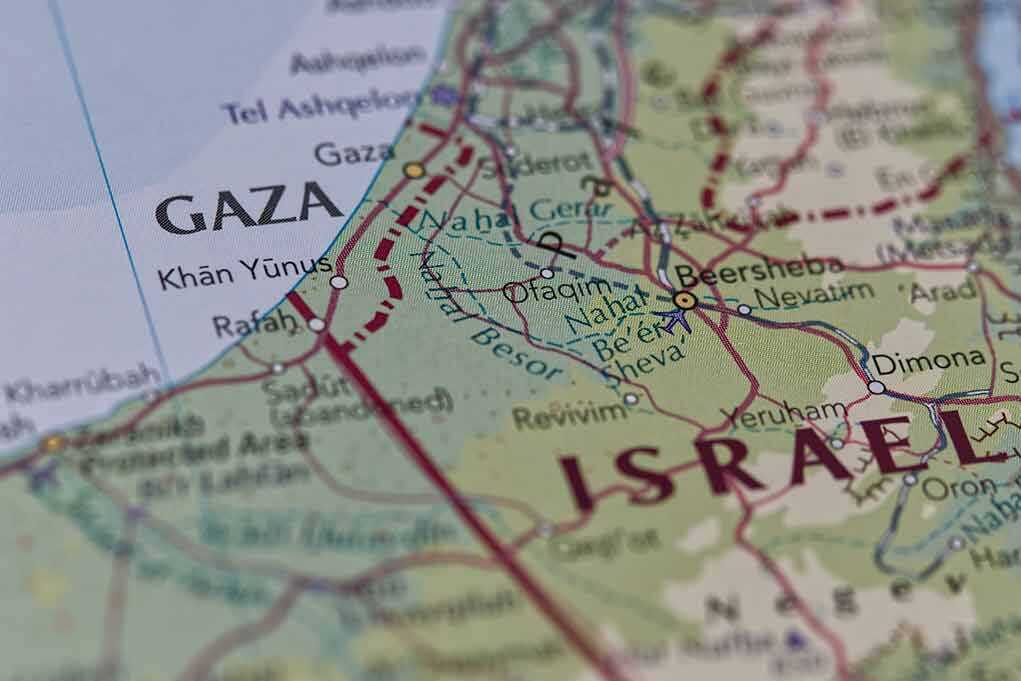
President Trump’s announced deal for Hamas to disarm and Israel to withdraw has sparked a mix of hope, fear, and deep skepticism on the streets of Gaza.
Story Snapshot
- Trump’s peace team says it has a phased deal for Hamas to give up weapons and for Israel to pull out of Gaza.
- Many Gazans welcome any chance to end the war but doubt leaders on both sides will truly follow through.
- Hamas ties disarmament to Israel fully ending attacks, lifting the blockade, and allowing real reconstruction.
- Israel’s government and security officials question the plan and refuse withdrawal without “genuine” disarmament.
Trump’s Deal: What He Says Has Been Achieved
President Trump announced that his Board of Peace reached a “historic” agreement for the complete disarmament of Hamas and other armed groups, along with a phased Israeli withdrawal from Gaza. Reports say a four-page outline describes weapons being handed over in stages while Israeli forces pull back over time. For many Americans, especially conservatives, the idea of a terror group laying down its arms sounds like long-awaited justice after years of rocket attacks and tunnel warfare. Trump’s team frames this deal as a key step in a broader plan to end the war and rebuild Gaza under a technocratic local government rather than Islamist rule.
In Washington, this fits President Trump’s promise to push real deals instead of endless talks. The plan centers on disarmament first, then reconstruction and political changes later. That sequence matters for U.S. interests. A Gaza stripped of rockets, tunnels, and Iranian-backed militias means fewer threats to Israel and to American allies, and less pressure for U.S. troops or taxpayers to step in later. But by putting weapons at the center of the deal, Trump has also stirred a fierce debate, because Hamas has always treated its arsenal as leverage to demand broader concessions.
How People in Gaza Are Reacting on the Ground
On the streets of Gaza, the mood is split between tired hope and hard doubt. Some residents tell reporters they will support almost any plan that truly ends the war and removes Hamas from power because they are exhausted, homeless, and desperate for normal life. One Gazan said he backs the American plan even though it has “bad terms,” simply because it could stop the nightmare of bombings and fighting. Others flood journalists’ phones asking if the conflict is really over or if this is “fantasy,” showing how broken trust has become after years of failed ceasefires and broken promises.
Many displaced families in camps say they heard Trump’s words but “are not seeing any agreement at all.” They point to past deals that never delivered safety, freedom of movement, or the right to return home. Hamas itself fuels mixed feelings. Some officials speak of accepting the plan “in principle,” but only if Israel signs on and fully honors its side. That leaves ordinary Gazans stuck in the middle, wondering if their leaders risk throwing away a chance to end the war, or if Israel will once again say no and keep the strip under fire and tight control.
Hamas’s Conditions and Israel’s Red Lines
Hamas’s public response shows why this deal is far from settled. Statements reviewed by the BBC and other outlets say Hamas will not begin any disarmament process until Israeli forces completely withdraw from Gaza and real reconstruction starts. Senior figures insist that weapons are a “legitimate necessity” for an occupied people and that resistance is essential. A Hamas representative described one formal proposal as “take it or leave it” and signaled the group wanted to wait on wider regional events before deciding. This posture looks like classic leverage: agree just enough to keep pressure on Israel and mediators, but hold onto guns unless they get major political wins.
Israel’s reaction is just as firm, but in the opposite direction. An Israeli official told the press there would be “no withdrawal” from key lines in Gaza until Hamas is truly disarmed and the strip is fully demilitarized. The Israeli government rejected one version of Trump’s plan, saying it did not “adequately address” their demand that Hamas’s weapons be removed from Gaza, not just stored under a committee. For Israeli leaders, anything less than full removal looks like a trick that lets Hamas rearm later. This clash over what “disarmament” really means is now a central obstacle, and it could easily stall Trump’s breakthrough.
Why This Matters for American Conservatives
For conservatives in the United States, this deal is about more than foreign policy. It tests whether an American president can push real peace without tying our nation to endless occupations, blank-check aid, or globalist schemes that never work. Trump’s Board of Peace model aims to use tough terms and clear phases, rather than vague United Nations resolutions, to force terror groups like Hamas to give up their weapons. That approach lines up with core values: defend allies, crush terror, avoid nation-building failures, and stop wasting U.S. tax dollars on wars that never end.
World Daily Brief — August 1, 2026
1. Gaza: Hamas confirms disarmament deal — with a major condition attached
Hamas confirmed Friday that it has agreed to the disarmament roadmap President Trump announced Thursday, with senior official Bassem Naim saying on social media the… pic.twitter.com/LeYxjhiggE
— ForeignAnalysis (@FAnalysis247) August 1, 2026
At the same time, the reactions in Gaza are a warning. When people on the ground say they barely believe their own leaders or the outside powers, it shows how years of broken deals erode trust. If Hamas keeps using its weapons as political leverage and Israel insists on complete demilitarization before any pullout, the risk is another round of stalemate, more strikes, and more suffering for civilians. For American readers, the key is to watch whether Trump’s team can hold firm on disarming terrorists while resisting pressure from global elites who prefer endless “process” over clear results. The future of this deal will reveal a lot about whether tough, America-first diplomacy can finally bring lasting security to Israel and a real chance at peace for ordinary families in Gaza.
Sources:
youtube.com, aljazeera.com, bbc.com, thenationalnews.com, reuters.com, facebook.com, longwarjournal.org