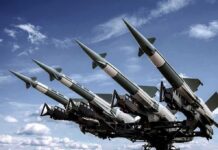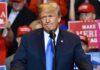


South Korea’s leader fast-tracked a bid to take wartime command from the United States just as President Trump pared back joint drills, raising fresh questions about alliance readiness.
Story Snapshot
- President Lee Jae Myung is pushing to reclaim wartime operational control and tie it to Korean sovereignty.
- U.S.-South Korea policy keeps any transfer “conditions-based,” with no fixed date set.
- Analysts say the plan would keep a combined command, led by a Korean four-star with a U.S. deputy.
- Timelines vary from late 2027 to 2030, showing the handover depends on proven readiness.
What Seoul Says It Wants: Sovereignty And Self-Reliance
South Korean President Lee Jae Myung reaffirmed that regaining wartime operational control is a priority during his term. He tied the goal to national sovereignty and self-defense, arguing Seoul should lead in war if it funds and fields its own forces. His government placed the transfer inside a formal policy agenda, signaling that he wants a decision window while he is in office. The message is clear: Seoul wants more control and fewer outside strings attached.
South Korea’s Defense Ministry has outlined a staged path to reach this goal. Officials described benchmarks for initial, full, and full-mission capability that must be met before any switch. Planning documents and press briefings suggest both countries are now working through the second stage. Some reports say the transfer could be possible as early as late 2027 if talks move without major snags, though that date is not locked.
What The Alliance Plan Actually Does: Combined Command, Not A Breakup
United States policy analysis explains that the plan would keep a single combined warfighting command. After transfer, a South Korean four-star would command, with a United States deputy, and both would answer to civilian leaders in Washington and Seoul. Neither country would give up command of its own troops. This arrangement reflects South Korea’s major military advances since the Korean War, but it sets no firm deadline.
United States Forces Korea and congressional testimony have stressed one point again and again: conditions first, politics second. Leaders say the handover depends on South Korea demonstrating it can lead combined forces, on strong strike and air defenses, and on a security environment that can support the change. Officials warn that timelines must not outrun real capability. Focusing on conditions, they argue, keeps Americans and Koreans safer.
Why The Timeline Keeps Moving: Readiness, Threats, And Politics
Public dates for the transfer have slipped for years. Current reports float a window that runs from late 2027 into the decade’s end. That spread shows the process is still driven by hard tests, not speeches. The record does not include the newest, detailed scorecards for command-and-control, joint fires, and air defense that would prove readiness today. Without those documents, outside observers cannot verify if each benchmark has been met.
The scaling back of South Korea-U.S. joint military drills, following U.S. President Donald Trump’s social media post calling for a reduction, has increased uncertainty in Seoul’s push for an earlier transfer of wartime operational control (OPCON) from Washington.…
— The Korea Times (@koreatimescokr) August 19, 2026
President Trump’s decision to scale back certain drills put a spotlight on this debate but did not change the rules. The alliance still follows a conditions-based path. South Korea’s push for control and America’s focus on proven readiness can fit together if both sides align on the same scorecard. The key is honest testing, clear standards, and joint sign-off before any switch, so deterrence against North Korea holds firm while command structures modernize.
What Conservatives Should Watch: Deterrence, Dollars, And Clarity
American taxpayers and service members deserve a clear plan that protects deterrence and avoids blank checks. A conditions-based transfer can work if it keeps pressure on real capability, not politics. The combined command model means America does not abandon the field, but it also means Seoul must carry more weight and meet every standard before taking the lead. Congress should demand transparent metrics and regular updates before any green light.
Bottom Line
South Korea’s leader is pushing hard to take wartime control, linking it to pride and independence. The United States is holding the line on readiness first. The alliance plan keeps a unified command with a South Korean commander and a United States deputy when conditions are met, with no set date. That approach fits conservative priorities: strong deterrence, clear accountability, and no shortcuts that could invite miscalculation on a nuclear-armed peninsula.
Sources:
english.hani.co.kr, bernama.com, chosun.com, inss.ndu.edu, en.yna.co.kr