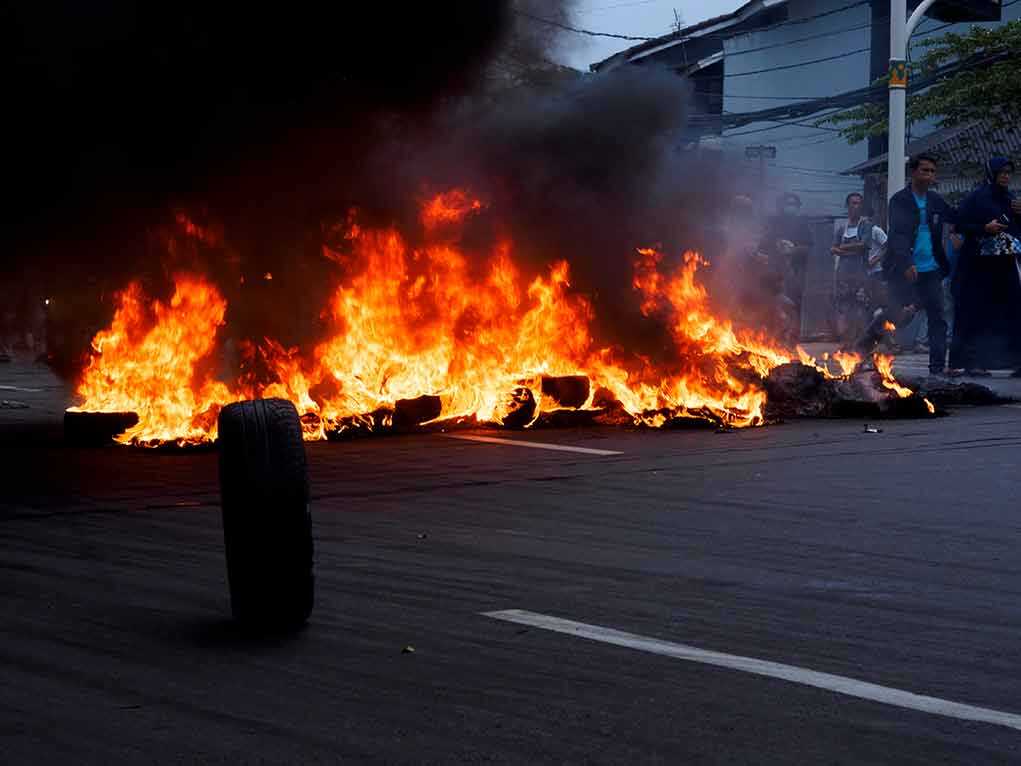
French cities burned for a third straight weekend as masked rioters torched a historic city hall, looted hundreds of businesses, and overwhelmed police while President Emmanuel Macron’s government scrambled to explain how peaceful marches kept turning into chaos.
Story Snapshot
- France’s Interior Ministry counted roughly 550,000 protesters on October 17, while the CGT union put the figure near 800,000.
- At least 2,400 people were arrested that weekend alone, with cars torched, shops looted, and a historic city hall set ablaze.
- President Macron vowed that vandals and looters “will be prosecuted and punished,” blaming violence on groups acting at the margins of the marches.
- Authorities deployed roughly 70,000 police and gendarmes for later protests and blocked access to landmark gathering points like Place de la République.
- Grievances began with students angry over crumbling schools and spread into broader anger over inflation and living costs.
A Movement That Started With Students Spiraled Into Chaos
The unrest began as high schoolers protested crumbling school buildings, teacher shortages, and an admissions system students called unfair to kids from poor families. Within weeks it ballooned into something far bigger, pulling in trade unionists and Yellow Vest supporters furious over rising prices and an austerity budget. What started as a narrow fight over education policy became a nationwide referendum on France’s cost-of-living crisis and government mismanagement.
Turnout numbers tell the real story. France’s Interior Ministry logged roughly 550,000 marchers nationwide on October 17, while the CGT labor union claimed closer to 800,000. Most of those people marched peacefully, demanding better schools and relief from inflation. But masked agitators hijacked the spotlight, torching cars, looting stores, and attacking police in Paris, Marseille, Lyon, Lille, and Bordeaux.
Burned Buildings and Overwhelmed Police
The damage was staggering. Rioters set a historic city hall on fire, smashed ATMs, and burned Lyon’s tourism office to the ground. Police were outnumbered in several cities as “ultra-left” extremists dressed in black clashed with officers using tear gas and water cannons. Interior Minister Laurent Nuñez later admitted officers faced “an extremely elevated level of violence” from groups operating separately from the main crowds.
Arrest totals swung wildly as the chaos unfolded, climbing from roughly 1,200 to nearly 2,400 people over a single weekend. Reported police injuries ranged from over 150 to nearly 1,000 officers hurt, depending on the source and timeframe. That kind of inconsistency makes it hard for anyone, including French officials, to pin down exactly how bad things got or who started it.
Macron Vows Punishment While Critics Question Readiness
President Macron condemned the destruction directly, saying those “who have vandalised and attacked prefectures and businesses and looted town halls will be prosecuted and punished.” Opposition parties accused his government of failing to see the scale of unrest coming, especially after similar chaos erupted the following weekend despite a massive security buildup of 70,000 police and gendarmes nationwide.
Even with that heavy police presence, a later Saturday protest still drew about 410,000 people and led to more than 1,300 additional arrests. Authorities blocked off key Paris locations, including Place de la République and Les Halles, to prevent repeat destruction. The strategy curbed some visible disorder, but it also fueled complaints that the government was choosing crowd control over addressing the underlying anger driving people into the streets.
A Warning Sign for Western Governments
France’s meltdown offers a blunt lesson for any government that lets inflation, failing schools, and economic frustration fester without accountability. When citizens lose faith that their government can control costs or protect public services, the anger doesn’t stay peaceful forever. Student union leader Alice de Brito insisted her group’s demonstrations were “pacifist” and condemned the looting, but that distinction got lost the moment buildings started burning.
Americans watching this unfold should take note. Years of reckless spending, inflation, and weak leadership create the exact conditions that turn legitimate grievances into street warfare. France’s crisis shows what happens when governments lose control of both their budgets and their streets, leaving ordinary citizens, shop owners, and law enforcement to pay the price for decisions made far above their heads.
France protests: Arrests climb past 560
FRANCE UPDATE: More than 560 arrests nationwide as some Saturday protests turned violent, AP reports.
Most of the estimated 320,000 demonstrators marched peacefully, but clashes and property damage spread after dark.— Green Wick Energy (@NoldeaReally) November 1, 2026
French officials now face mounting pressure to explain how a protest over school conditions turned into the country’s worst civil unrest in years, with no clear end to the demonstrations in sight.
Sources:
facebook.com, novaramedia.com, cbc.ca, irishnews.com, ynetnews.com, letemps.ch