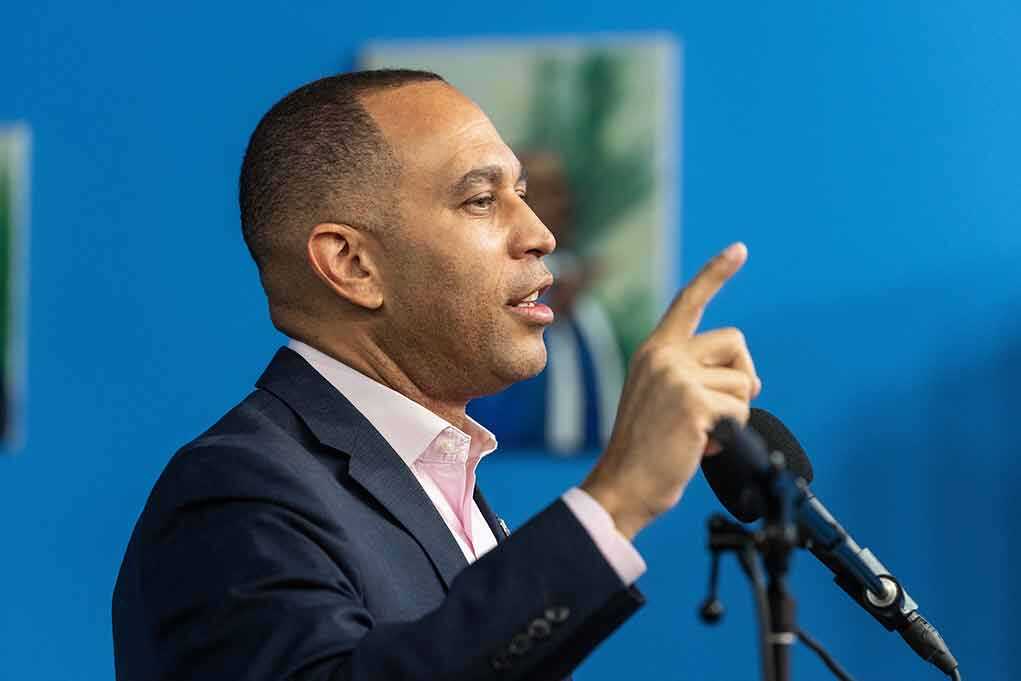
A progressive commentator called Hakeem Jeffries an “AIPAC monkey,” then claimed it was not racist—only to apologize after fierce backlash.
Story Highlights
- Rula Jebreal used a primate slur against House Democratic Leader Hakeem Jeffries, then denied racist intent.
- The Congressional Black Caucus and Rep. Pete Aguilar condemned the remarks as blatantly racist.
- Jebreal issued an unconditional apology for using “inappropriate and offensive” language.
- Jeffries has repeatedly affirmed support for Israel and condemned Hamas in official statements.
What Was Said And Why It Sparked Outrage
On a podcast, journalist Rula Jebreal labeled House Democratic Leader Hakeem Jeffries “a bought and paid for AIPAC monkey” and “an errand boy,” then added she did not mean it in a racist way. The language drew immediate condemnation because calling a Black leader a monkey is a well-known racial slur. After the pushback, Jebreal apologized unconditionally, calling her words inappropriate and offensive, while maintaining her political criticism of pro-Israel lobbying.
The Congressional Black Caucus stated there is no non-racist way to call Jeffries a “monkey” or “errand boy,” underscoring that intent claims do not erase the slur’s meaning. Representative Pete Aguilar called the attack “blatantly racist and dangerous,” echoing a wider reaction across social media and political circles. The quick and broad rebuke shows how some on the left police language when used by opponents yet excuse it when used against targets they dislike.
Jeffries’ Record On Israel That Fueled The Clash
Hakeem Jeffries has consistently condemned Hamas and affirmed support for Israel in formal statements. After the October 7 attacks, he said America stands firmly and unequivocally with Israel. He argued that Congress must stand with Israel until Hamas is crushed. Months later, he reiterated those views and raised concern about rising antisemitism. Those positions, common among many Democrats in leadership, have drawn attacks from anti-Israel activists who frame support as undue influence by lobbying groups.
Jeffries’ statements have not wavered as the conflict continued. He stressed Israel’s right to self-defense, accountability for terrorism, and the need to counter antisemitism at home. His stance places him at odds with progressive voices who demand harsh rhetoric against Israel and who portray support for the United States–Israel alliance as suspect. That tension helps explain why some critics reach for demeaning labels rather than arguments on policy or law, which only inflames division.
Free Speech, Racist Slurs, And Standards That Should Apply To Everyone
Public discourse often separates two questions: what a speaker meant and what the words do. In cases like this, institutions and audiences treat the word choice as central because slurs can wound even when a speaker claims a political aim. Courts and scholars have noted that racial epithets carry harm regardless of context, which is why apologies often focus on the words themselves, not only on intent. That is what happened after Jebreal’s remark and the fast backlash that followed.
🐍✨ 𝙎𝙝𝙚 𝙘𝙖𝙡𝙡𝙚𝙙 𝙃𝙖𝙠𝙚𝙚𝙢 𝙅𝙚𝙛𝙛𝙧𝙞𝙚𝙨 𝙖𝙣 “𝘼𝙄𝙋𝘼𝘾 𝙢𝙤𝙣𝙠𝙚𝙮.”
Oh—then she rushed to say she did not mean it in a racist way.
Rula Jebreal, on Wajahat Ali’s podcast, went after the House Democratic leader for Israel.
“His name is Hakeem. It means… pic.twitter.com/t29IgN1HUK
— Tosca Austen (@ToscaAusten) September 5, 2026
Conservatives see a double standard at work. The same progressive spaces that scold everyday Americans for stray words often fall quiet when one of their own crosses a bright line. When elites excuse vile language as “not racist,” it cheapens real debates and corrodes trust. A healthy culture defends free speech, but it also expects basic respect. Arguments about Israel, lobbying, and foreign policy should never sink into racial slurs. Hold the line on one standard for everyone—no exceptions.
Sources:
timesofisrael.com, nypost.com, nytimes.com, x.com, readsludge.com, thegrio.com