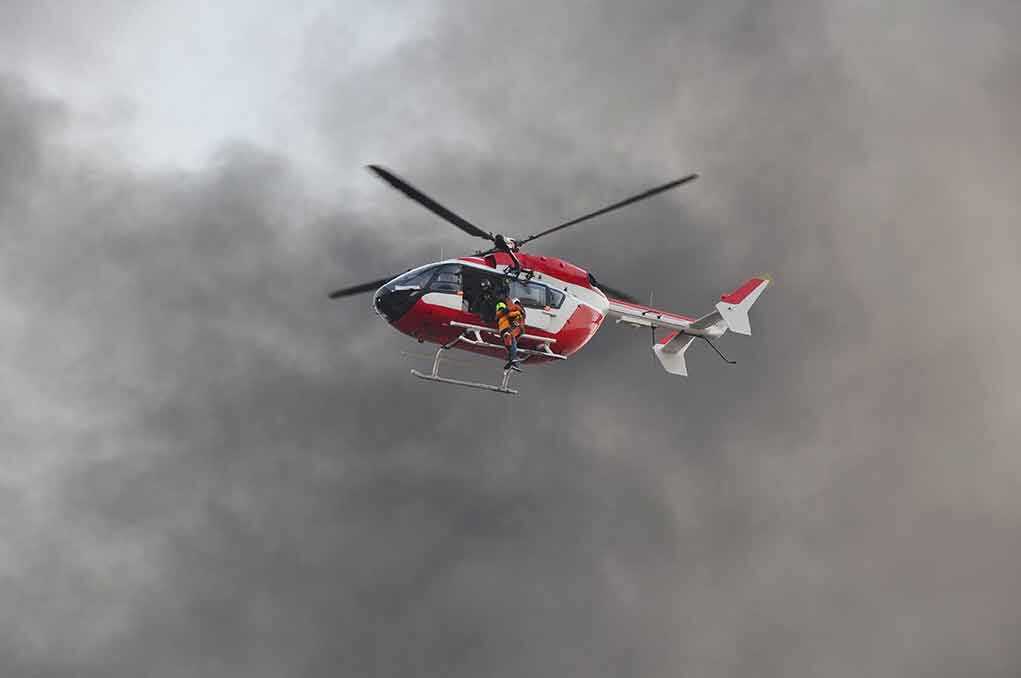
California Highway Patrol air crews hoisted two stranded climbers from a 600-foot Big Sur cliff in a precision rescue that showed why lifesaving aviation still matters.
Story Highlights
- Rescuers found two climbers stuck 600 feet below Highway 1 near Hurricane Point.
- California Highway Patrol helicopter H-70 performed a technical hoist with a rescue harness.
- The mission shows why hoist rescues are used when landing or hiking in is unsafe.
- The pair were flown to safety; officials did not report major injuries in initial briefings.
Rescue Teams Execute High-Risk Hoist At Hurricane Point
California Highway Patrol air operations confirmed a helicopter hoist rescue near Hurricane Point around 6:24 p.m. on August 22, 2026. Crews located two climbers stranded on a steep chute roughly 600 feet below the roadway. The helicopter, identified as H-70, inserted a rescuer on the cable, secured each climber in a harness, and lifted them off the rock face. The flight team then transferred the pair to a safe location. Initial reports emphasized the steep terrain and the limited access from the road.
Local reporting described the operation as a technical hoist because the helicopter could not land on the slope. A rescuer rode the cable down, fitted the first climber with a Pelican-style harness, and rose back to the aircraft. The crew repeated the process for the second climber. The agency’s public update focused on the speed and coordination of the pilots, the flight officer, and the hoist operator. The report did not include names or detailed medical updates for the climbers.
Why Hoist Rescues Are Used On Sheer Big Sur Terrain
Medical and rescue research explains that hoist operations are reserved for scenes where landing or hiking is unsafe or would take too long. In steep coastal canyons and cliff bands, ropes-only approaches can expose rescuers to rockfall and surf. A helicopter hoist reduces exposure time and can shorten the total rescue timeline when terrain blocks ground teams. Reviews of mountain and coastal missions show hoist rescues are a common tool when access is impossible by other means.
The same body of research notes that hoist operations carry real risk and demand strict training. Crews must manage rotor wash, line sway, and tight margins with cliffs and wind. Safety literature for public safety aviation stresses risk controls, clear roles, and “no unnecessary risk” as a core rule. That mindset matches how California air crews describe their work in Big Sur and on other Central Coast calls, where they turn to the hoist only when it is the safest practical choice.
Pattern Of Coastal Air Rescues On California’s Central Coast
California Highway Patrol air units have performed several recent coastal rescues in the same region. Local reports this month described an airlift from Big Sur Gorge after a waterfall fall injury. Other coverage has shown cliff and beach extractions where crews used hoist gear to beat changing tides or unstable slopes. These missions reinforce why coastal agencies invest in pilots, flight medics, and hoist technicians with specialized training for narrow landing zones and sheer drop-offs.
Two climbers stranded 600 feet down a Big Sur cliff… absolute high-stakes rescue operation. Incredible work by the first responders getting them out safely.
— Trend Rover (@TrendRoverHQ) August 25, 2026
Big Sur’s rugged terrain draws hikers, climbers, and tourists to narrow pullouts and unofficial paths. Steep chutes, crumbly rock, and sudden fog can turn a short scramble into a trap. Officials often warn visitors to stay on marked trails, check weather and daylight, and carry simple safety gear. When people get stuck on a cliff band, a hoist-capable helicopter can be the only fast and safe option. Saturday’s mission fits that pattern of quick action that prevents a bad outcome.
What This Rescue Means For Public Safety And Policy
This rescue is a clear win for first responders who train hard and answer the call. It also shows why stable funding for skilled air crews and rescue gear matters. Families count on these teams when minutes count and terrain blocks the way. Leaders who back training, fuel budgets, and maintenance keep those tools ready. That is common-sense government: focus on core duties like public safety and lifesaving missions that protect life and property.
Conservatives value limited but strong government that does the basics well. Air rescue is one of those basics. It protects taxpayers by preventing longer, riskier ground operations and by saving lives before injuries worsen. The Big Sur hoist was not theater. It was precision work that demanded discipline and teamwork. When agencies stick to mission, strip out waste, and invest in what works, the public wins. Saturday’s safe outcome is proof on the cliff face.
Sources:
nypost.com, sanluisobispo.com, pulptastic.com, cbsnews.com, facebook.com