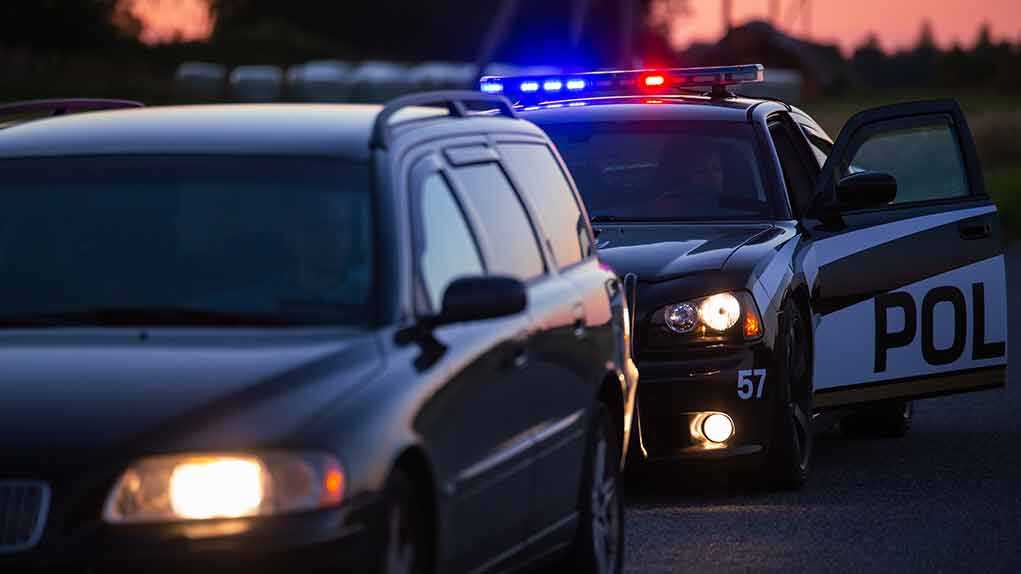
When a highly visible police officer critically injures a homeless man while driving off-duty, the incident is not just a traffic crash; it crystallizes how police power, vulnerability, and public trust intersect in the everyday spaces of a city.
Key Points
- An off-duty San Francisco police officer driving his personal car struck a homeless man lying or sitting in an alley behind Central Station, leaving the man in critical condition.
- The collision occurred around 7 a.m. near Card Alley and Emery Lane in North Beach, and SFPD’s Traffic Collision Investigation Unit is now leading a formal investigation.
- Officer Michael (Mike) Petuya, a third-generation officer featured in SFPD recruiting campaigns, was identified by media and unnamed police sources as the driver.
- Early reports describe the victim as on the ground and the officer as turning into the alley, raising serious questions about visibility, driver attention, and the policing of unhoused people.
The Established Facts of the Alleyway Collision
According to consistent accounts from multiple news outlets and police sources, the crash unfolded just after 7 a.m. in an alley behind the San Francisco Police Department’s Central Station, in the North Beach neighborhood. Police statements place the collision near Card Alley and Emery Lane, a narrow area of roadway behind the station that functions more like a service corridor than a main thoroughfare. At that hour, Officer Michael Petuya was off-duty, driving his own car rather than a marked cruiser, when his vehicle struck an adult man described as homeless.
Several reports converge on a striking detail: the man was already on the ground before impact. The New York Post, citing the San Francisco Chronicle, says the victim was “sleeping or lying on the ground.” Patch reports that he was “lying or sitting on the ground in an alleyway behind Central Station.” World Journal’s Chinese-language coverage similarly describes a man “sitting or lying on the ground” when he was hit. Sources quoted in these pieces say that when the car made its turn into the alley, it struck the man, who was then heard “screaming and yelling.”
SFPD spokespersons have confirmed the core sequence: an off-duty officer driving a personal vehicle, a collision with a man in the roadway, immediate stopping, and a call for help. Police say additional officers arrived quickly and rendered aid until San Francisco Fire Department paramedics transported the victim to a hospital, where he was listed in critical condition. The department’s Traffic Collision Investigation Unit—its specialized team for serious and complex crashes—was assigned to lead the investigation.
The Officer, the Victim, and the Role of Public Narrative
Officer Michael “Mike” Petuya is not a marginal figure in the department’s public image. Reporting describes him as a third-generation San Francisco police officer and as a prominent face in SFPD recruiting campaigns. In recent years, many departments have leaned on personable, media-friendly officers to soften their public image and attract new hires; Petuya’s appearance in promotional materials places him squarely in that role. When such an officer is involved in a serious incident, the stakes for departmental reputation and community trust are magnified.
The victim is described simply and pointedly as homeless. That single descriptor carries a great deal of social baggage. Homeless individuals are highly visible in public spaces yet often invisible in formal narratives; they are frequently framed either as threats to order or as emblematic victims of systemic failure. Here, the man’s homelessness appears in nearly every account of the crash, shaping how the public understands both his vulnerability and his relationship to the police.
This framing matters because police contact with people experiencing homelessness is not rare or incidental. Empirical research shows that interactions between police and unhoused individuals are common, and that the risk of police contact drops substantially during periods when those same individuals are housed. Policing scholars have documented how homelessness often becomes a de facto law enforcement problem—driven by calls for service, complaints about disorder, and the use of public space—despite the fact that police alone cannot solve its root causes.
Negligence, Intent, and What We Don’t Yet Know
Given the facts in public view, many readers will instinctively ask whether Petuya was negligent—whether he failed to exercise reasonable care when turning into a space where a person was on the ground. The description of the victim’s position and the officer’s turning maneuver certainly supports that question. If a driver turns into an alley and strikes someone who is lying or sitting on the ground, one natural inference is that the driver did not adequately scan the area, misjudged the turn, or drove at a speed or angle that made avoidance impossible. Those are classic elements of a negligence theory.
At the same time, the available reporting does not yet support a legal conclusion. There is no public crash reconstruction, no analysis of skid marks or vehicle telemetry, no toxicology results, and no independent eyewitnesses quoted describing speed, distraction, or impairment. Without that foundation, it is not possible to distinguish confidently among an unavoidable accident, careless driving, or something more serious. The early narrative elements—off-duty status, personal vehicle, alleyway geometry, a person on the ground—are compatible with multiple scenarios.
Visibility is a particularly important unknown. The reports do not show whether the victim was in a shadowed area, adjacent to a wall, next to a dumpster, or in direct view from the officer’s approach angle. Nor do they establish whether the man had moved shortly before the collision or whether lighting, weather, or parked vehicles constrained the driver’s options. These details, mundane as they sound, are central to collision analysis: they determine not just what happened but whether a reasonable driver, exercising normal care, could and should have avoided it.
Inside an SFPD Traffic Collision Investigation
When SFPD’s Traffic Collision Investigation Unit takes on a case like this, the label signals more than bureaucratic routing. It means the crash is treated as a serious event that warrants specialized examination of the scene, vehicles, and witness accounts. Investigators typically begin with the traffic collision report—a structured document capturing the basic who, what, when, and where of the incident. They then build out with supplemental reports, photographs, measurements, and, where available, video evidence.
In a collision involving critical injury, best practice involves reconstructing the crash in detail: documenting the exact positions of vehicle and victim, measuring distances and sightlines, analyzing vehicle damage, and examining physical evidence such as tire marks or debris patterns. If the vehicle has an event data recorder, investigators may retrieve data on speed, braking, and steering inputs in the moments before impact. They may also review 911 call logs, computer-aided dispatch (CAD) timestamps, and radio traffic to verify the timeline and capture any contemporaneous statements that shed light on what the officer perceived and when.
For the victim, medical and forensic records can help reconstruct how the body was struck—whether by the front bumper, undercarriage, or wheel—and at what probable speed. Biomechanical analysis of injuries can sometimes distinguish between a low-speed turning impact and a higher-speed strike. This is particularly relevant in an alley setting: speeds are typically lower than on arterial roads, but the proximity of walls and obstacles can amplify injury even at modest velocities.
Why Incidents Involving Homeless Victims Draw Intense Scrutiny
This case sits within a broader pattern: serious incidents involving police and homeless individuals tend to trigger deep public scrutiny and polarized narratives. In prior San Francisco cases, from controversial use-of-force encounters to officer-involved shootings captured on video, community debate has often centered on whether officers responded reasonably to people who were already in precarious circumstances. Each new incident is interpreted against that backdrop.
Research on policing and homelessness underscores why these situations are so fraught. One strand of scholarship argues that traditional enforcement-centric approaches—focusing on citations, arrests, and displacement—are poorly matched to the realities of life on the street and can exacerbate harm rather than reduce it. Another highlights the highly discretionary nature of police responses to homelessness: officers oscillate among outreach, prevention, laissez-faire tolerance, and more altruistic interventions, often without clear policy guidance.
When a homeless person is seriously injured in a police-related context—whether by use of force, vehicle operation, or neglect—the event is seldom seen as isolated. It becomes a proxy for broader questions: Are police treating unhoused individuals as full citizens with equal claim to safety? Are departmental policies and training adequate to protect people who live in public space? And are mechanisms of accountability robust enough to respond when things go wrong?
Information Access, Accountability, and What Comes Next
For members of the public, advocates, or lawyers who want to understand this collision more fully, the formal SFPD records system is the starting point. The department provides pathways to request traffic collision and incident reports through its Crime Information Services Unit, including an online portal and in-person options at police headquarters. Reports are generally available without copy fees, though they may be restricted or redacted while an investigation is active or if disclosure would compromise privacy or legal proceedings.
Beyond the basic report, deeper clarity usually depends on securing the full investigative file: supplemental reports, scene photos, diagrams, and witness statements. In serious-injury cases, these materials may become accessible through public records requests, civil litigation discovery, or, in some instances, administrative review processes. Surveillance video from Central Station or nearby businesses, if it exists, can be decisive in resolving questions about speed, visibility, and driver behavior.
The stakes of getting that evidence into public view are high. As policing researchers have warned, early narratives in serious incidents—whether “reckless officer” or “tragic accident”—tend to harden long before technical analysis is available. Without transparent release of collision findings, including clear communication about what investigators concluded and why, trust erodes further, especially among communities who already experience disproportionate police contact.
Beyond One Alley: The Larger Challenge of Policing Around Homelessness
Ultimately, this crash is about more than one officer and one victim in a North Beach alley. It exemplifies a structural tension: police are routinely tasked with managing the visible consequences of homelessness—people sleeping in alleys, resting in doorways, inhabiting sidewalks—without having the tools to resolve its causes. That tension plays out in countless minor encounters that never make the news; occasionally, as here, it erupts into a life-threatening event that forces the city to confront how fragile safety is for those living on the margins.
Serious collisions involving vulnerable pedestrians demand rigorous investigation and transparent reporting; when police are the drivers, they also demand institutional humility. The facts we have now are stark enough: a homeless man in critical condition, a star officer behind the wheel, an impact in the shadow of a police station. The facts we still need—about visibility, speed, perception, and decision-making—will determine not only legal responsibility but also whether this becomes another story that deepens cynicism, or one that prompts a more honest reckoning with how cities protect people who have nowhere else to lie down but the ground itself.
What Readers Should Watch For
For an informed observer, the next stages of this case are not about speculation but about evidence. Watch for whether SFPD releases, or is compelled to release, a detailed collision report with clear findings. Pay attention to whether surveillance footage appears and how closely public explanations align with what the video shows. And notice whether the department’s public messaging acknowledges the victim’s vulnerability as a homeless individual, not just his status as a “pedestrian in the roadway.” Those details will tell you as much about the culture of policing in San Francisco as any recruiting video featuring the officer whose turn into an alley changed a stranger’s life.
Sources:
nypost.com, instagram.com, patch.com, worldjournal.com, sanfranciscopolice.org, sfist.com, abc7news.com, cbsnews.com, sfchronicle.com, policerecords.californiaofficialrecords.com, mjqlaw.com, tandfonline.com, journals.sagepub.com, fatalencounters.org