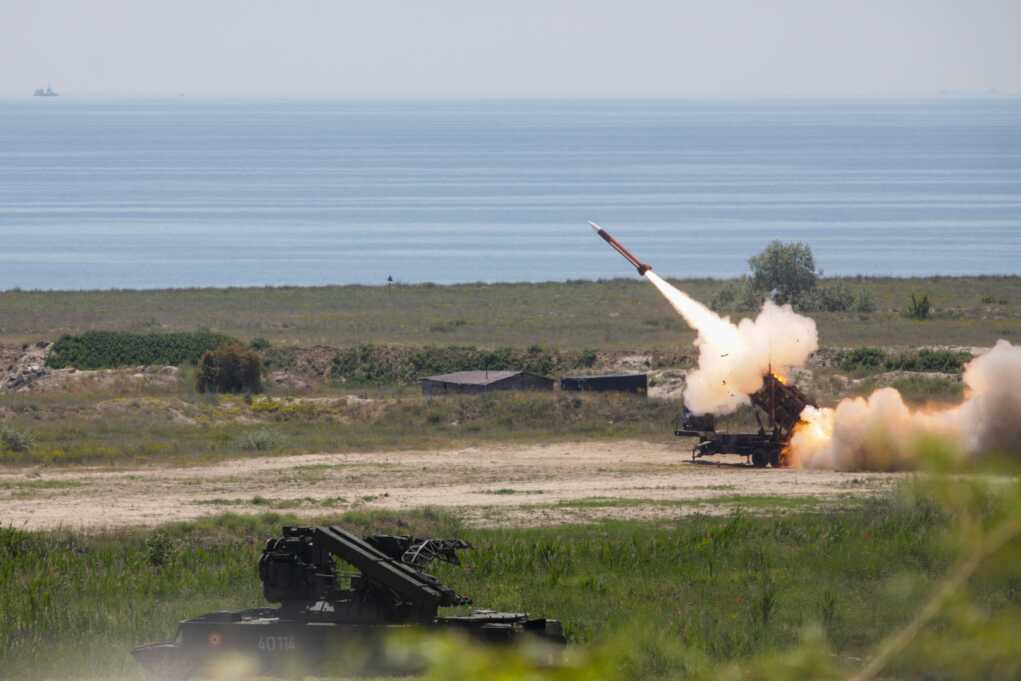
Washington weighs the first combat deployment of the Army’s Dark Eagle hypersonic missile even as questions linger over testing, inventory, and cost claims that critics say could outpace proven readiness [1][3][4][5].
Story Highlights
- Army fielded Dark Eagle to a multidomain task force in December 2025 after years of delays [1][2][3].
- Officials and media signal potential Middle East deployment; no public approval announced yet [1].
- December 2024 end-to-end flight test succeeded, bolstering advocates’ readiness case [3].
- Skeptics cite mixed 2024 test history, thin inventories, and uncertain effectiveness data [4][5].
Fielding Status And The Case For Readiness
Army leaders began fielding the Long-Range Hypersonic Weapon, known as Dark Eagle, to a multidomain task force in December 2025 after protracted delays tied to launcher and integration fixes, according to reporting that tracks service statements and program milestones [1][2][3]. That fielding step, combined with an Army and Navy-confirmed end-to-end flight test success on December 12, 2024 at Cape Canaveral, forms the backbone of claims that the system has achieved initial operational capability and can be tasked if regional commanders require it [1][3].
Senior defense watchers note that commanders have explored options to position Dark Eagle within reach of hardened, high-value targets, including scenarios tied to tensions with Iran, as part of a broader deterrence posture that leverages speed, maneuverability, and long-range precision strike [1][2]. Advocates argue that credible deployment signals to adversaries that the United States can impose costs quickly, penetrate defenses, and hold time-sensitive nodes at risk. Supporters also frame near-term employment as a test of American industrial recovery after years of hypersonic lag [1].
Unresolved Gaps: Testing Variability And Effectiveness Data
Countervailing analysis highlights an uneven 2024 test record and asserts that the Pentagon will not have enough data to evaluate combat effectiveness until later in the program timeline, tempering celebrations around the Cape Canaveral success [4]. Reports describe launch issues and production quality concerns affecting both missile and launcher subsystems, though public documentation is thin and often classified, leaving open questions about failure modes and corrective actions validated since late 2024 [4]. This lack of transparent test data complicates firm judgments about performance in real-world, high-stress environments.
Critics further argue that strategic signaling can blur with actual readiness. They warn that presenting deployment as a fait accompli risks overselling capability while underplaying sustainment, training, and re-strike capacity needs [4]. For conservative readers focused on accountability, the caution is straightforward: demand measurable proof that reliability, accuracy, and survivability thresholds have been demonstrated at scale before celebrating victory. Assertions about capability should be matched by reproducible results, not headline momentum or contractor press framing [4][5].
Inventory, Production, And Cost Pressures
Analysts point to a thin operational inventory—often described as roughly one battery’s worth of missiles—with production scaling still in motion, implying limited surge capacity if a conflict demands multiple strikes across days or weeks [5]. Reports suggest output rates that would challenge rapid replenishment, reinforcing the need for careful employment criteria and prioritization of the highest-value targets. These constraints are manageable if leadership treats Dark Eagle as a niche, high-payoff tool rather than a mass-fire solution, but they remain real planning limitations [5].
U.S. Army Dark Eagle Hypersonic Missile Moves Toward Combat Deployment Under $2.7B Leidos Contract@USArmy @LeidosInc @nytimes @WSJ @washingtonpost @USATODAY @latimes @Bloomberg @BBCWorld @NBCNews @CBS @Reuters @TheSun @MailOnline @DailyMirror @Daily_Express @FT @BBCOne…
— Army Recognition (@ArmyRecognition) May 13, 2026
Debate also centers on unit costs, with figures varying across outlets, and whether expending hypersonics against non-existential threats aligns with fiscal prudence and deterrence logic [4][5]. One expert perspective cautions against using the system for routine strikes, arguing that cost-per-effect should guide employment and that cheaper alternatives may suffice for many target sets [4]. Conservative priorities—strong defense, responsible spending, and mission clarity—favor a rigorous cost-effectiveness review before green-lighting wide operational use.
Command Authority, Deployment Signals, And Next Steps
U.S. Central Command has reportedly explored requesting a first-ever operational placement in the Middle East, but officials have not publicly announced an approved deployment, keeping the decision at the signaling stage for now [1]. The administration’s responsibility is twofold: deter adversaries credibly and protect taxpayers by ensuring programs deliver as advertised. That balance requires real test data, transparent milestones, and clear rules for when hypersonics are the right tool compared with conventional air and missile options [1][4].
Looking ahead, program momentum appears set to continue as the Army and industry partners transition from prototypes to production under recently reported contracting steps that aim to accelerate fielding and mature quality controls [5]. Success will be measured by consistent test runs, growing inventories, validated reliability, and integration with joint targeting networks. If those boxes are checked, combatant commanders will gain a precision reach that fits America’s peace-through-strength doctrine. Until then, vigilance—on performance claims, spending discipline, and mission suitability—remains the conservative stance [1][4][5].
Sources:
[1] Web – Dark Eagle hypersonic weapon Middle East deployment … – Fox News
[2] YouTube – US Plans To Deploy Dark Eagle Hypersonic Missile Against Iran
[3] Web – Long-Range Hypersonic Weapon – Wikipedia
[4] Web – Dark Eagle Hypersonic Weapon Nears Deployment – Legis1
[5] Web – U.S. Army Dark Eagle Hypersonic Missile Moves Toward Combat …