Tucker Carlson’s Iran-war criticism has exploded into an open MAGA rift—raising fresh questions about war powers, “America First,” and who gets to define the movement in Trump’s second term.
Quick Take
- President Trump backed joint U.S.-Israeli strikes on Iran, described in reporting as an ongoing operation aimed at Iran’s military and nuclear-related targets.
- Tucker Carlson condemned the strikes in blunt terms and argued the conflict serves Israel’s interests more than America’s, widening a public split on the Right.
- Trump responded by dismissing Carlson as “not MAGA,” turning a policy disagreement into a high-profile loyalty fight.
- Some Republicans are backing Trump’s posture, while others are demanding Congress vote before deeper escalation.
What Triggered the MAGA Split Over Iran
U.S. and Israeli forces launched strikes against Iran in late February 2026, with reporting describing targets that included nuclear facilities, air defenses, naval assets, and missile-related infrastructure. Trump publicly framed the operation as “massive” and ongoing, tying it to ending Iran’s nuclear ambitions and, in some accounts, pushing regime-change language. Pentagon leaders and U.S. Central Command officials cited significant operational progress, while the timeline suggests no clear end date has been announced.
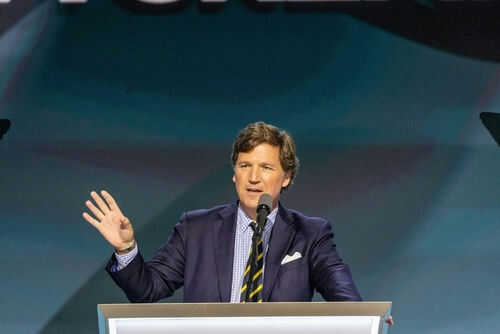
Carlson’s condemnation landed because it wasn’t a minor tactical critique. Reports describe him calling the strikes “absolutely disgusting and evil” and portraying the conflict as “Israel’s war,” not an “America First” priority. Carlson also warned the decision could cause political fallout for the movement, especially with midterm dynamics already in play. The sharper the rhetoric became, the harder it got for grassroots voters to treat this like a normal disagreement inside a coalition.
Trump’s Response: “Not MAGA” and a Loyalty Line in the Sand
Trump did not attempt to paper over the dispute. In interviews cited by major outlets, Trump said Carlson had “lost his way” and was “not MAGA,” escalating the clash from policy to identity. That matters because MAGA politics has often been defined by coalition discipline against the institutional Left—and now the fracture is happening in public. Carlson, for his part, reportedly said he remained fond of Trump personally, even while condemning the war decision.
Other pro-Trump voices moved quickly to defend the operation using “peace through strength” logic: America First, in their framing, means unmatched power and deterrence rather than retrenchment. Meanwhile, criticism from the Right has centered less on sympathy for Tehran and more on priorities and constitutional process—whether an open-ended conflict is consistent with campaign promises to avoid new wars, and whether Congress should authorize major hostilities. Polling referenced in coverage suggested broad public skepticism and a desire for congressional approval.
The Constitutional Pressure Point: War Powers and Congressional Buy-In
Republican dissent has not been limited to media commentary. Coverage identifies lawmakers who demanded a congressional vote, arguing that a widening conflict can’t be treated as purely an executive-branch choice. That objection lands with constitutional conservatives because it is about precedent: once the bar for unilateral escalation drops, future administrations—left or right—inherit the same expanded power. The reporting also notes bipartisan interest in war-powers constraints, highlighting how unusual the moment is.
Sorting Fact From Hype in the “Unconditional Surrender” Controversy
The viral framing around “unconditional surrender” and extreme claims about what it would mean on the ground has fueled online outrage, but the core reporting on the rift does not substantiate the most inflammatory phrasing as a documented, central quote in the main news coverage summarized here. What is clear from the sources is Carlson’s strong moral condemnation of the strikes and his claim that the conflict serves another nation’s interests more than America’s. The gap between viral clips and confirmed reporting is exactly why readers should separate verified quotes from social-media escalation.
Tucker Carlson Claims Trump's Push For 'UNCONDITIONAL SURRENDER' From Iran Means Troops Can 'Rape Your Wife and Daughter' https://t.co/mrNjgBqVU9 pic.twitter.com/bTwMkqeWdp
— Mediaite (@Mediaite) March 9, 2026
Politically, the stakes are obvious even without speculation. A coalition that won on border security, inflation relief, and pushing back on progressive cultural overreach can get derailed when foreign policy becomes a purity test. Strategically, the administration faces two simultaneous burdens: proving the operation protects U.S. security interests and explaining how escalation aligns with limited-government instincts at home. With operations ongoing and key claims—like leadership changes inside Iran—relying partly on Iranian state media, the story remains fluid.
Sources:
Trump throws out Tucker Carlson from club MAGA after Iran war criticism
Trump’s Iran decision sparks backlash from Tucker Carlson and MAGA
Jane Fonda and Tucker Carlson agree on this: Trump’s Iran war is a bad betrayal
Trump’s Iran decision sparks backlash