
Federal deployment of the National Guard to Portland sparks a fierce constitutional showdown, exposing deep divides over states’ rights and federal power.
Story Snapshot
- President Trump orders 200 Oregon National Guard troops to Portland under federal authority, citing threats to ICE facilities.
- Oregon state and city officials immediately filed a lawsuit, challenging the legality of the federal intervention and rejecting claims of crisis.
- Protests erupt across Portland, amplifying tensions between local autonomy and federal enforcement.
- The case sets a precedent for federal use of military force in domestic affairs without state consent, raising constitutional questions.
Trump’s Military Deployment Escalates Federal-State Tensions
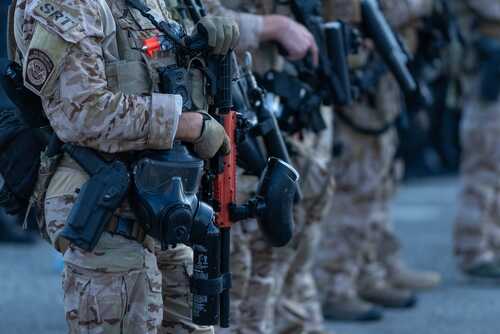
On September 27, 2025, President Donald Trump announced the federalization of 200 Oregon National Guard members for deployment to Portland, Oregon. He cited a need to protect U.S. Immigration and Customs Enforcement (ICE) facilities from what he called “attacks by Antifa and other domestic terrorists.” The order invoked Title 10 authority, enabling the federal government to override state consent in mobilizing the National Guard. Trump’s move reflects his continued commitment to a law-and-order agenda and highlights the ongoing battle over control of public safety and constitutional boundaries.
Watch: Trump orders U.S. troops to Portland, Ore., authorizes ‘full force’
Governor Tina Kotek and Mayor Keith Wilson responded with a federal lawsuit challenging the legality of the deployment, describing it as an “unlawful abuse of power.” They insisted Portland did not require military intervention and warned that the action could make Oregonians less safe. Attorney General Dan Rayfield led efforts to seek a temporary restraining order to block the deployment, criticizing the federal government’s reliance on social media-driven narratives rather than verified public safety data. The lawsuit marks a significant attempt by state and local officials to defend their sovereignty and maintain local control over law enforcement and protest management.
Protests and Political Fallout Intensify in Portland
Following Trump’s announcement and the subsequent deployment order, protests quickly erupted across Portland, reflecting public opposition to federal intervention. Many residents and local organizations denounced the militarization of the city, with demonstrations centered around ICE facilities and city government buildings. The presence of National Guard troops sparked concerns about potential confrontations and led to heightened scrutiny of law enforcement practices in managing civil unrest. Portland’s long-standing reputation as a focal point for protest activity added fuel to the conflict.
Legal uncertainty surrounds the deployment, as courts consider the merits of Oregon’s lawsuit. The outcome will determine whether the federal government can continue military operations in the city or must withdraw forces. Meanwhile, public trust in both local and federal authorities faces new challenges, with residents divided over the appropriate response to ongoing protests and perceived threats. The situation in Portland is emblematic of broader national debates over the militarization of domestic policy, federal authority, and the defense of constitutional rights. The case is poised to influence future policy decisions and could have lasting implications for civil-military relations in the United States.
Federal Power vs. States’ Rights: A Precedent in the Making
The use of Title 10 to federalize the National Guard without state consent sets a new precedent in federal-state relations. Historically, such powers have been reserved for situations of major civil unrest or natural disaster, but Trump’s order redefines the threshold for intervention, justifying military deployment as a response to alleged domestic terrorism. The legal and political conflict is amplified by the immediate challenge from Oregon officials and the continuing protests. This confrontation underscores the importance of constitutional checks and balances and raises critical questions about the limits of executive authority. As the courts deliberate, the nation watches closely, aware that the outcome will shape future federal interventions and the balance of power between Washington and the states.
In the short term, Portland faces heightened tensions and potential for confrontation, while the long-term ramifications extend to national debates over federalism, civil liberties, and the proper role of military force in domestic affairs. The deployment also affects law enforcement, legal professionals, and the broader public, who must navigate a shifting landscape of authority and accountability. Ultimately, Trump’s decision to send troops to Portland may be remembered as a defining moment in the struggle over American values, government overreach, and the defense of constitutional principles.
Sources:
Trump to send troops to Portland, Oregon in latest deployment of US forces
3 things to know about Trump’s plan to send troops to Portland and Memphis
Oregon, Portland sue Trump over deployment of National Guard to city
From Passing Mention to Deployment: A Timeline of Trump’s Pressure on Portland