Trump’s Iran war speech sent oil back above $105 and reminded working Americans that “limited strikes” can still hit your wallet like a full-blown conflict.
Quick Take
- Oil prices jumped roughly 3.6%–4.5% after President Trump’s April 1 address offered no clear end date for the U.S.-Iran campaign.
- Trump said the U.S. will “hit them extremely hard” for the next 2–3 weeks, while warning Iran’s oil infrastructure could become a target.
- Markets refocused on the risk of prolonged disruption through the Strait of Hormuz, a critical global shipping chokepoint.
- The speech sharpened tensions inside the MAGA coalition, where many voters support strength but oppose another open-ended Middle East war.
Oil markets react to a speech with no exit ramp
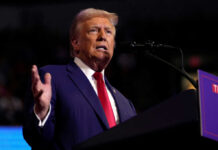
President Donald Trump’s prime-time address on April 1 landed like a jolt in energy markets. Crude futures climbed sharply after the remarks, with Brent rising to about $105.77 a barrel and West Texas Intermediate reaching roughly $103.78, reversing earlier declines that had followed talk of a faster wind-down. Traders interpreted the message as escalation, not closure, and the immediate move reflected renewed fears that the conflict could drag on.
Thursday morning pricing reinforced the same theme: volatility and uncertainty. Reports showed Brent around $105.53 (up about 4.32%) and WTI near $103.69 (up about 3.57%), while Murban crude fell to about $103.63 (down roughly 2.98%), underscoring uneven regional impacts. Small differences in quoted prices appear tied to timing and contract snapshots, not a contradiction in the overall trend—risk premium snapped back into the market.
Trump signals heavier strikes—and keeps oil targets on the table
Trump’s words, not just the bombs, did the damage to de-escalation expectations. He declined to declare victory and did not provide a firm end date, even as the campaign entered its fifth week under the banner of “Operation Epic Fury.” Instead, he described an intensified phase of strikes lasting 2–3 weeks and floated broader target sets, including potential attacks on Iranian power infrastructure. He also warned Iran’s oil infrastructure could be struck, while saying it had not been hit yet.
That conditional posture matters because traders price possibilities. Analysts quoted in coverage described the tone as more hawkish than markets expected, arguing that another 2–3 weeks of heavy bombing could delay any return to “normal” pricing for months as the market tightens day by day. Another expert perspective highlighted that the speech didn’t offer much new operational detail, but it did reinforce the risk of a larger campaign if no deal materializes—exactly the kind of open-endedness markets punish.
Hormuz risk raises gasoline and inflation pressure at home
The Strait of Hormuz sits at the center of the price spike story because it is a vital route for global crude flows. Reporting pointed to a prolonged plunge in traffic through the strait, amplifying fears that disruption could persist even without a single catastrophic event. When markets believe shipping risk is rising, the result is often a fast “insurance premium” added to oil prices. That premium doesn’t stay on Wall Street; it travels directly into diesel costs, food distribution, and family budgets.
March already provided a warning sign. Oil prices rose about 63% during the month as the war expanded, peaking above $115–$118 a barrel before easing when Trump hinted at a possible U.S. exit in 2–3 weeks. The April 1 speech reversed that cooling trend. For voters who were promised energy dominance and lower prices, the reality is more complicated: even with strong U.S. production, global crude is still globally priced, and war risk still hits Americans.
Allies, burden-sharing, and the MAGA split over another war
Trump emphasized burden-sharing, pressing U.S. allies to do more to protect shipping lanes and criticizing what he framed as their inaction. He also argued the United States is not dependent on Iranian oil and pushed a “buy from America” theme that aligns with domestic production and exports. But the political reality inside the coalition is messy: many MAGA voters support Israel and a strong U.S. posture, yet they are increasingly skeptical of open-ended conflict that looks like another blank check overseas.
That skepticism is driven less by ideology than by memory—years of shifting rationales, unclear objectives, and costs that never seem to end. The research available here does not quantify public opinion, but the speech’s market impact reveals a concrete pressure point: when Washington can’t describe a clear endpoint, Americans start paying in higher energy costs immediately. For constitutional-minded conservatives, the question becomes whether the administration can define achievable objectives, protect U.S. interests, and avoid sliding into the kind of permanent war footing voters rejected.
Iran, for its part, issued an open letter denying it initiated the war and questioning U.S. motives, while reports also noted Iran denying ceasefire requests. Those claims are difficult to independently verify from the limited public material summarized in the research, but they frame the diplomatic stalemate: each side seeks leverage, and energy markets trade on leverage. Until there is a credible signal of de-escalation—backed by actions, not hints—oil’s war premium is likely to remain a political and economic headache for the White House.
Sources:
Oil surges after Trump’s speech on Iran offers no clear path to war’s end
Oil price spike: Brent, WTI jump nearly 5% after Trump’s Iran speech
Iran-US war live: Trump address
Oil prices surge after Trump speech on Iran war