France’s call for a NATO exercise in Greenland signals a bold stand against Trump’s annexation threats, challenging the balance of transatlantic power.
Story Highlights
- France demands NATO’s involvement in Greenland to counteract Trump’s aggressive stance.
- European nations unite for Arctic security amidst US pressure.
- Trump’s tariff threats and annexation rhetoric escalate tensions.
- NATO leaders emphasize diplomacy to maintain alliance unity.
France’s Strategic Military Move
On January 21, 2026, France’s presidential office issued a call for a NATO military exercise in Greenland, emphasizing its readiness to contribute. This move is a direct response to US President Donald Trump’s threats to annex Greenland, a self-governing Danish territory. France’s initiative represents a significant European effort to safeguard Arctic security and counteract American unilateralism, aligning with the broader goal of European unity against perceived imperialism.
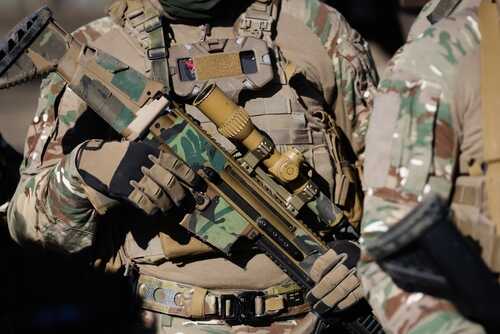
France’s call for a NATO-wide exercise goes beyond individual national deployments, involving multiple European allies like Germany, Sweden, and Norway. This joint military effort is designed to demonstrate European capabilities and solidarity with Denmark, serving as a counterbalance to Trump’s aggressive rhetoric. European leaders are coordinating their responses, highlighting a unified stance against territorial acquisition through coercion.
#BREAKING France calls for NATO to hold an exercise in Greenland and says it is "ready to contribute", as US President Donald Trump's push to take the Danish autonomous territory upends the transatlantic alliance pic.twitter.com/R82KI3ZlLP
— AFP News Agency (@AFP) January 21, 2026
Economic and Diplomatic Tensions
Trump’s plan to impose tariffs on goods from several European countries, including Denmark and France, has intensified economic tensions. These tariffs, set to rise from 10% to 25%, are linked to his ambition to “complete and total purchase of Greenland.” Such economic coercion puts European nations in a challenging position, balancing the need for alliance solidarity with economic interests. The EU has vowed a “united and proportional” response, signaling a hardening stance against US pressures.
Simultaneously, NATO’s Secretary General, Mark Rutte, has called for “thoughtful diplomacy” to address these rising tensions. His emphasis on negotiation over confrontation reflects NATO’s institutional preference for maintaining alliance cohesion amidst the crisis. However, the threat of fracturing NATO looms if European members perceive the US more as a threat than a security provider.
Military and Strategic Implications
The deployment of European military personnel in Greenland, though modest in number, serves as a deterrence against US unilateral action. This exercise underlines NATO’s capability and resolve to defend Arctic security, despite the symbolic nature of the troop numbers. France’s assertive diplomatic positioning, likening Trump’s approach to Putin’s actions in Ukraine, underscores the European resolve to uphold international law and resist coercion.
Watch:
As the situation develops, the crisis may accelerate European strategic autonomy initiatives, including increased defense spending and reduced reliance on US security guarantees. The outcome of this geopolitical standoff will likely influence transatlantic relations and international law precedents for years to come, potentially reshaping the landscape of global territorial disputes.
Sources:
France wants NATO exercise in Greenland, ‘ready to contribute’: presidency
France to join Operation Arctic Endurance in Greenland, says minister
France calls for NATO exercise in Greenland as Trump doubles down on push for island
Trump heads for Davos maelstrom over Greenland