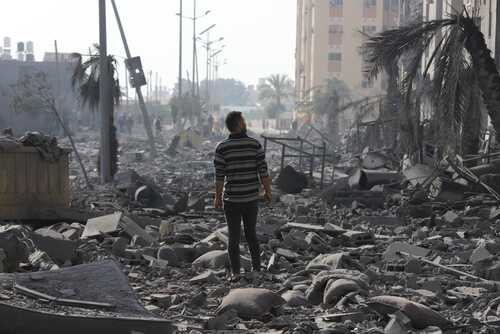
Operation Gideon’s Chariots II intensifies, forcing Gaza residents into mass evacuation amidst escalating military actions.
Story Highlights
- Israel launches Operation Gideon’s Chariots II, targeting Gaza City.
- Mass civilian displacement as residents evacuate south.
- International condemnation and humanitarian concerns rise.
- Potential restructuring of Gaza’s governance under debate.
Israel’s Strategic Offensive in Gaza
On August 20, 2025, Israel announced the launch of Operation Gideon’s Chariots II, a military offensive targeting Gaza City. The operation aims to dismantle Hamas’s military and administrative infrastructure, following years of continued conflict and hostilities. This strategic move by Israel is part of a broader effort to eliminate Hamas’s operational capacity and secure Israeli hostages held in Gaza. The offensive has been marked by intensive ground operations, unprecedented in scale, and has faced sharp international scrutiny over its humanitarian impact.
#BREAKING 🔥🚨🇮🇱 🇵🇸
Israel launched a ground offensive, "Operation Gideon's Chariots II," to seize Gaza City, with tanks advancing after airstrikes leveled high-rises.Since Secretary of State Marco Rubio’s arrival in Jerusalem for talks with PM Netanyahu, Israeli forces have… pic.twitter.com/euYg7HshuS
— Frankie™️🦅 (@B7frankH) September 16, 2025
The Israeli government issued evacuation orders to Gaza City residents, urging them to move south to avoid the military operations. This has resulted in a massive displacement of civilians, with hundreds of thousands forced to leave their homes. While Israeli officials emphasize that the offensive is necessary for national security, the situation has drawn widespread condemnation from international bodies like the United Nations, which has described the humanitarian impact as severe and alarming. The evacuation orders have compounded the already dire humanitarian crisis in Gaza, with resources and aid limited by ongoing blockades.
Watch: IDF Launches Operation Gideon’ Chariots II; Qatar aims to unite world vs Israel TV7 Israel 16 Sept.
International Response and Humanitarian Concerns
The international community has reacted strongly to the unfolding events in Gaza. The United Nations and various human rights organizations have condemned the offensive, citing concerns over civilian casualties and the potential for ethnic cleansing. Military analysts highlight the challenges of urban warfare in a densely populated area like Gaza City, questioning the feasibility of fully dismantling Hamas without significant civilian impact. The situation also poses a risk of further destabilization in the region, with potential long-term consequences for both Israeli and Palestinian populations.
Amidst the conflict, the United States, under the administration of President Donald Trump, has proposed controversial plans for post-war reconstruction in Gaza. These plans include the establishment of a “humanitarian city” in Rafah for displaced Palestinians, a move that has sparked debate over its feasibility and implications for Gaza’s future governance. The US aims to exert strategic influence in the region, but its proposals have been met with skepticism from various international actors.
Long-term Implications and Future Prospects
As the conflict continues, the long-term implications for Gaza and the broader region remain uncertain. The ongoing military operations threaten to reshape Gaza’s demographics and governance, with potential repercussions for regional stability and peace efforts. The destruction of infrastructure and economic paralysis in Gaza further complicates prospects for reconstruction and recovery. Meanwhile, the social and political impact on Israeli leadership and international relations is yet to be fully realized, as the global community grapples with the humanitarian fallout of the offensive.
While the Israeli government remains committed to its military objectives, the path to sustainable peace and stability in the region appears fraught with challenges. The cyclical nature of conflict in Gaza underscores the need for comprehensive solutions that address both security concerns and humanitarian needs. As the world watches closely, the unfolding events in Gaza will continue to shape the geopolitical landscape and influence future policy decisions.
Sources:
Timeline of the Gaza war (16 May 2025 – 19 August 2025)