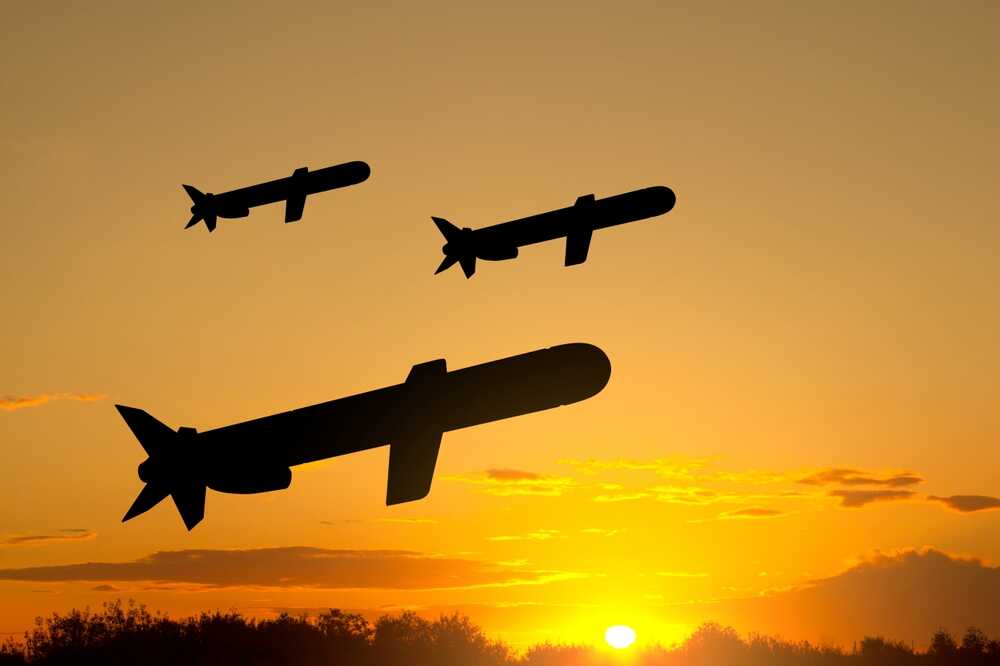
After just four weeks of fighting, America’s go-to precision strike missile is reportedly being burned through so fast that Pentagon planners are privately sounding alarms.
Quick Take
- Multiple reports say the U.S. has fired more than 850 Tomahawk missiles at Iran in about four weeks, triggering internal concern about “alarmingly low” regional stockpiles.
- Pentagon and White House spokespeople have publicly rejected the idea of a shortage, insisting the military has “everything it needs” for Operation Epic Fury.
- Tomahawks are expensive and slow to replace—about $3.6 million each and up to two years to manufacture—raising questions about how long the current strike pace can be sustained.
- Defense manufacturers are ramping production of Tomahawks and other high-end munitions, but the timeline to refill inventories points to a longer-term readiness problem.
850 Tomahawks in Four Weeks: What the Reports Actually Say
Reporting tied to The Washington Post says U.S. forces launched more than 850 Tomahawk cruise missiles at Iran over roughly four weeks of war, drawing down stocks positioned in the Middle East to levels described internally as “alarmingly low.” The same accounts say Pentagon officials have discussed moving missiles from other regions to keep operations going. Exact inventory figures remain classified, leaving the public to weigh anonymous operational warnings against official denials.
Public messaging from the Trump administration has pushed back hard. Pentagon spokesman Sean Parnell reportedly argued that the military has “everything it needs” and accused media coverage of portraying U.S. forces as “weak.” White House Press Secretary Karoline Leavitt likewise said stockpiles were “more than enough” for Operation Epic Fury. The gap between internal alarm and external reassurance matters because it shapes whether Congress and voters get an honest picture of costs, capacity, and risk.
Why This Missile Math Matters to “America First” Voters
Tomahawks have been central to U.S. long-range strike strategy since their first major combat use in the 1991 Gulf War, and they remain a workhorse because they can be launched from ships and submarines without putting pilots over hostile airspace. But a high-tempo campaign exposes a basic reality: precision munitions are not unlimited. Conservative voters who have watched Washington stumble from one overseas project to the next are now scrutinizing whether the mission is defined—and whether the country is being positioned for another open-ended conflict.
The numbers translate into real pressure on taxpayers and readiness. At about $3.6 million per missile, firing 850 implies well over $3 billion in Tomahawks alone, before counting ships, aircraft, air defenses, fuel, and personnel. Replacement is not quick; reports say a Tomahawk can take up to two years to manufacture, and only a few hundred are produced annually under normal conditions. The research also notes that last year’s budget funded just 57 Tomahawks—an illustration of how peacetime procurement can collide with wartime burn rates.
Production Ramps Are Coming—But They Don’t Fix Shortfalls Overnight
Defense industry moves show Washington recognizes a broader munitions problem that predates Iran. Business reporting says Raytheon is ramping Tomahawk production to more than 1,000 per year, while Lockheed Martin and BAE Systems are increasing output tied to systems like THAAD components and the Precision Strike Missile (PrSM), which reportedly debuted in combat this month. These expansions reflect an effort to scale for high-end warfare, not just to refill what has been expended in the Gulf.
Even with higher production, replenishment timelines are measured in years, not weeks. Analysts cited in the research warn that heavy Tomahawk use can create a “large gap” for other contingencies, including the Western Pacific. That warning hits a sensitive point for conservatives who prioritize deterrence: if the U.S. spends down its most useful conventional strike weapons in one theater, it may weaken its ability to credibly signal strength elsewhere. Officials have reportedly discussed global redistribution, which underscores the trade-offs.
The Readiness Question Collides With War-Weariness on the Right
MAGA voters are not uniform on this war. Some back aggressive strikes, especially when framed as defending Americans or supporting an ally, while others see another drift toward endless intervention that contradicts the promise to avoid new wars. The reported Tomahawk burn rate adds fuel to that debate because it suggests the U.S. is operating at an intensity that is hard to sustain. When the administration insists there is no shortage, skeptics will ask whether “no shortage” means “no immediate operational pause,” not “no strategic cost.”
Panic inside the Pentagon as staggering report lays bare Tomahawk missile crisis as Iran keeps stranglehold on Strait of Hormuz https://t.co/OojtKc4FUN
— Daily Mail US (@Daily_MailUS) March 27, 2026
For constitutional conservatives, the practical takeaway is accountability. A major, fast-moving conflict increases pressure for emergency spending, expedited contracting, and expanded executive flexibility—areas where oversight often erodes first. The research available does not provide a public, independently verified stock count, so any claim of “plenty” or “near empty” should be treated cautiously. But the basic procurement facts—cost per missile, production speed, and ongoing ramp-ups—make one point unavoidable: sustained high-volume strikes force hard choices that the public deserves to see clearly.
Sources:
“Alarmingly Low”: Pentagon Scrambles After US Fires 850 Tomahawks At Iran
US uses hundreds of Tomahawk missiles on Iran, alarming some at Pentagon: WaPo reports
The US is ramping up production of weapons critical for a major war
Dawn.com news report (1985932)