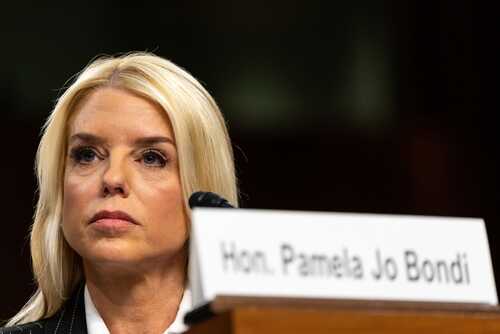
A Florida ethics judge has threatened former Attorney General Pam Bondi with jail time and removal from office for defying subpoenas.
Story Snapshot
- Ethics judge warns Bondi faces incarceration for refusing to comply with Epstein-related document subpoenas
- Investigation centers on Bondi’s handling of Epstein matters during her tenure as Florida Attorney General from 2011-2019
- Bondi currently serves on the very ethics commission now investigating her conduct, creating unprecedented conflict
- Case highlights broader pattern of institutional protection surrounding Epstein and his powerful associates
Ethics Commission Issues Unprecedented Warning
The Florida Commission on Ethics has escalated its investigation into Pam Bondi’s conduct, with an administrative law judge delivering a stark ultimatum during recent hearings. Bondi faces formal contempt findings, potential jail time, monetary fines, and removal from her current ethics post if she continues defying subpoenas for emails, texts, and communications related to Jeffrey Epstein. The judge’s warning represents an unusually blunt enforcement action against a sitting ethics commissioner, highlighting the severity of Bondi’s non-compliance with the investigation.
Bondi has consistently refused to produce requested documents, citing objections including privilege claims, overbreadth concerns, and allegations of political motivation. Her legal team argues the ethics probe constitutes unfair targeting of political decisions made during her tenure as Attorney General. However, ethics experts emphasize that subpoena defiance by a sitting ethics commissioner sends a dangerous message that compliance is optional for powerful officials, undermining the entire oversight system.
Watch:
Institutional Failures Enable Elite Protection
The ethics investigation exposes deeper systemic problems surrounding the Epstein case and how Florida officials handled oversight responsibilities. During Bondi’s tenure as Attorney General from 2011 to 2019, serious questions persisted about whether state-level law enforcement adequately revisited Epstein’s unusually lenient 2008 plea agreement as new victims emerged. Federal prosecutors under Alexander Acosta had negotiated a secret non-prosecution agreement allowing Epstein to plead to minor state charges while avoiding federal sex-trafficking prosecution.
Bondi’s resistance to transparency mirrors broader institutional failures that enabled Epstein’s crimes to continue unchecked for years. The original plea deal was deliberately concealed from victims, with officials working closely with Epstein’s defense team to hide the agreement’s existence and terms. This pattern of secrecy and deference to powerful interests represents exactly the kind of elite protection that conservative Americans rightfully oppose when it corrupts our justice system.
Accountability Demands Transparency
The ethics case serves as a crucial test of whether powerful former officials can be held accountable for their role in institutional cover-ups. Bondi’s defiance of legitimate oversight not only obstructs justice but also demonstrates the arrogance of establishment figures who believe rules apply only to ordinary citizens. Her position on the very ethics commission investigating her conduct creates an unprecedented conflict that demands immediate resolution through either compliance or removal.
Victim advocates and transparency groups view Bondi’s stonewalling as further evidence that powerful officials remain reluctant to expose their role in protecting predators like Epstein. If a former Attorney General can ignore subpoenas without consequence, it sends a chilling message that elite accountability remains an illusion. The judge’s jail-time warning represents a necessary step toward ensuring that ethics laws apply equally to all officials, regardless of their political connections or institutional standing.
Sources:
A timeline of the Jeffrey Epstein, Ghislaine Maxwell scandal
Timeline: Jeffrey Epstein and Ghislaine Maxwell