
A new arms showcase in South Korea underscores the race towards AI-driven military technology, sparking ethical and geopolitical concerns.
Story Overview
- South Korea exhibits AI weapons like howitzers and drones, aiming for global defense leadership.
- The event highlights the country’s strategic response to North Korean threats and global arms competition.
- Public-private partnerships drive AI military advancements, raising ethical questions.
- South Korea’s AI defense ambitions reflect its desire to balance innovation with global governance.
South Korea’s Technological Leadership in AI Weapons
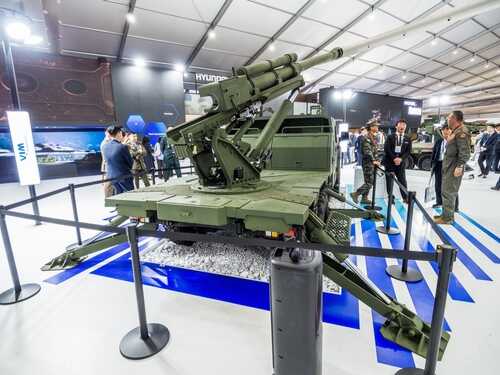
South Korea has boldly stepped into the spotlight by showcasing AI-powered military technology at its latest arms fair. The exhibition features advanced AI-enabled systems, including howitzers and suicide drones, underscoring the nation’s commitment to becoming a global leader in defense innovation. This event is part of a broader strategy to integrate civilian AI advancements into military applications, positioning South Korea alongside the US and China in the AI arms race.
The arms fair is not just a display of technological prowess; it is a response to significant regional security challenges. With North Korea’s military capabilities posing a constant threat, South Korea’s development of AI weapons systems aims to ensure a qualitative edge over its unpredictable neighbor. The nation’s emphasis on AI-driven defense solutions highlights its strategic focus on countering these threats while asserting its position as a formidable player in the global arms market.
Watch: South Korea’s major defence show kicks off with air display
Public-Private Collaboration and Ethical Concerns
South Korea’s advancement in AI military technology is fueled by a robust collaboration between government, academia, and leading tech firms. This cooperation is pivotal in driving innovation and production of cutting-edge weapons systems. However, the development and deployment of autonomous weapons raise significant ethical concerns. International critics and arms control advocates warn of the potential risks associated with AI in warfare, emphasizing the need for transparent guidelines and restrictions.
The ethical implications of lethal autonomous systems are a growing concern globally. South Korea’s demonstration of these technologies at the arms fair invites scrutiny and debate over the governance of AI in military applications. The country participates actively in international discussions on AI safety, balancing its ambitions with a responsibility to address potential misuse and escalation risks.
South Korea launched its largest-ever arms fair, featuring developments from over 600 companies and 35 countries, with unmanned weapons and AI being the focus point.https://t.co/Xec1muUSc2
— The Jerusalem Post (@Jerusalem_Post) October 17, 2025
Implications for Global Arms Markets and AI Governance
South Korea’s strides in AI military technology have profound implications for the global arms market and international AI governance. By establishing itself as a major arms exporter of advanced, cost-effective systems, South Korea could significantly influence market dynamics, particularly in regions seeking technological superiority. This development also prompts broader discussions on the future of warfare and the need for comprehensive international frameworks to manage AI’s role in military contexts.
The nation’s AI defense initiatives are set against a backdrop of regional tensions and global competition. As South Korea continues to innovate, it must navigate the complex landscape of ethical considerations and geopolitical strategies, ensuring its advancements contribute positively to global security while safeguarding against potential threats posed by autonomous weapons.
Sources:
South Korea’s AI in Defense Sector
Timeline of South Korean AI Efforts
Time for Countries to Discuss Autonomous Weapons