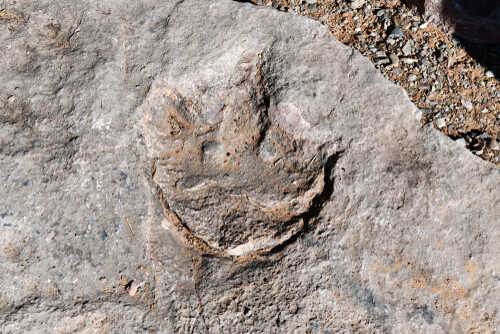
Catastrophic Texas floods have unexpectedly uncovered 110-million-year-old dinosaur tracks, reminding us that even amid disaster, American resilience and community spirit can lead to astonishing discoveries.
Story Snapshot
- Volunteers cleaning flood damage in Travis County found dinosaur footprints dating back 110–115 million years.
- The tracks were confirmed by University of Texas paleontologists, linking today’s natural disasters to ancient history.
- The discovery highlights how local initiative and community action—not government intervention—can yield remarkable results.
- Plans for further study and preservation are underway, but debates loom over site access, land use, and scientific oversight.
Volunteers Uncover Ancient Dinosaur Tracks Amid Flood Recovery
In early July 2025, as central Texas reeled from the devastation of severe flooding, local volunteers rolled up their sleeves to help clean up the Sandy Creek area in Travis County. During this community-driven effort, these citizens stumbled upon a series of large, distinct dinosaur footprints embedded in layers of sediment newly exposed by the floodwaters. The discovery quickly drew the attention of paleontologists, who identified the tracks as belonging to the predatory Acrocanthosaurus and possibly the herbivorous Paluxysaurus—creatures that roamed what is now Texas some 110 to 115 million years ago. Rather than government agencies, it was everyday Americans who made this rare find, a testament to the power of local initiative and citizen action.
Ancient dinosaur footprints dating back 115 million years were discovered in Northwest Travis County, Texas, after recent flooding swept away layers of sediment and brush that had long hidden them, according to officials. https://t.co/MM7z1FUuIw
— ABC News (@ABC) August 9, 2025
Paleontologists from the University of Texas, including Matthew Brown and Kenneth Bader, were called to the scene soon after the tracks were reported. Their expert analysis confirmed both the authenticity and scientific importance of the footprints, which offer rare insight into the lives of Cretaceous-era dinosaurs in North America. The tracks were only revealed because floodwaters scoured away layers of debris and vegetation, echoing similar discoveries in the past where natural disasters have unexpectedly unearthed valuable scientific evidence.
Watch:
Unique Historical Context: When Nature, Not Bureaucracy, Drives Scientific Discovery
The Glen Rose Formation in central Texas, where these tracks were found, is globally recognized for its Early Cretaceous dinosaur fossils. Throughout history, extreme weather events—such as droughts or floods—have periodically exposed new fossils, with previous discoveries often following similar natural events. However, unlike government-sponsored research programs that require extensive funding and oversight, these discoveries are frequently driven by private citizens and local communities responding to immediate needs. This underscores the value of empowering local action over centralized intervention, a principle often championed by conservative Americans frustrated by bloated federal programs and bureaucratic inefficiency.
Broader Implications: Community Pride, Economic Opportunity, and the Role of Volunteerism
The immediate impact of the discovery is a surge of pride within the Travis County community, with local residents and their families at the heart of the story. Economic benefits may follow, as interest in the site grows and opportunities for tourism and educational programming emerge. The scientific community gains new data on dinosaur behavior and paleoecology, while local families see firsthand how their efforts support something greater than themselves.
Expert commentary from University of Texas paleontologists affirms the rarity and global importance of the find, but also offers a warning. Increased public attention could threaten preservation if not managed carefully. The story serves as a reminder that the most remarkable progress often comes not from centralized planning but from the initiative of ordinary Americans. In Texas, it was volunteers who unearthed a window into history, showing once again that when Americans act locally, they can achieve extraordinary things.
Sources:
Dinosaur tracks discovered after Texas floods expose prehistoric history
Austin volunteers, paleontologists uncover dinosaur tracks after floods
Dinosaur tracks found by flood recovery volunteers in Central Texas
Texas floods unearth dinosaur tracks over 100 million years old