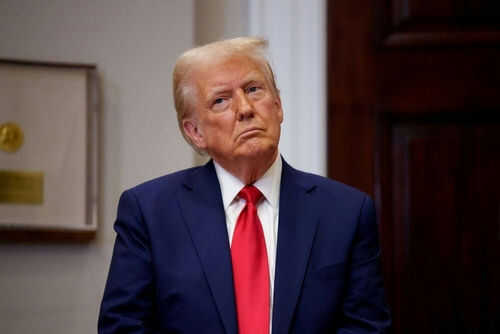
The Supreme Court delivered a stunning 6-3 rebuke to President Trump’s broad tariff authority, striking down over $200 billion in levies and potentially forcing massive refunds to American businesses caught in the crossfire of executive overreach.
Story Snapshot
- Supreme Court ruled 6-3 that Trump’s use of emergency powers to impose sweeping tariffs exceeded statutory authority under IEEPA
- Over 200,000 small and midsize importers paid more than $200 billion in 2025 tariff collections now subject to potential refunds
- U.S. Chamber of Commerce demands swift refund action to relieve businesses strangled by cost increases and supply chain disruptions
- Decision curbs executive branch overreach, reasserting congressional control over commerce and taxation powers
Supreme Court Strikes Down Emergency Tariff Powers
Chief Justice John Roberts authored the majority opinion in Trump v. V.O.S. Selections, Inc., ruling the International Emergency Economic Powers Act does not grant presidents authority to impose broad tariffs. The 6-3 decision consolidated multiple challenges from small businesses and states, applying the “major questions” doctrine to reject Trump’s emergency justification. Roberts emphasized IEEPA’s language regarding “regulate” and “importation” cannot support unlimited tariff authority without explicit congressional delegation. The ruling represents the first Supreme Court invalidation of IEEPA use for sweeping trade levies, reasserting constitutional limits on executive commerce powers that many conservatives recognize as core congressional prerogatives.
Business Community Demands Relief from Unauthorized Collections
The U.S. Chamber of Commerce immediately urged swift refunds for businesses forced to pay tariffs during litigation appeals. Neil Bradley, the Chamber’s Executive Vice President and Chief Policy Officer, highlighted the plight of over 200,000 small and midsize importers who absorbed massive cost increases and supply chain disruptions while courts deliberated. The Chamber filed an amicus brief supporting the legal challenges, arguing the tariffs damaged American competitiveness and burdened families with higher prices. Bradley stated refunds “will help support stronger economic growth” and called for resetting tariff policy toward frameworks that boost wages and reduce consumer costs rather than imposing unauthorized emergency levies.
Constitutional Separation of Powers Restored
The ruling vindicates constitutional principles limiting executive branch expansion into congressional territory. Justice Neil Gorsuch’s concurrence rejected any foreign affairs exception to statutory interpretation, emphasizing checks and balances apply regardless of policy domain. The majority opinion stressed tariffs fall squarely within Congress’s “core congressional power of the purse,” requiring clear legislative authorization before presidents can impose revenue-generating trade barriers. This reasoning aligns with conservative concerns about administrative state overreach and executive actions circumventing representative government. The decision constrains future presidents from weaponizing emergency statutes to bypass Congress on fundamental economic policy, protecting constitutional governance from expedient shortcuts that undermine separation of powers.
Justice Brett Kavanaugh dissented alongside two colleagues, arguing IEEPA traditionally empowers presidents to regulate commerce during emergencies and the major questions doctrine should not apply to foreign affairs. His dissent noted potential billions in refunds could burden taxpayers even if businesses passed costs to consumers, raising fiscal concerns about retroactive unwinding. Lower courts uniformly rejected the IEEPA tariff justification before the Supreme Court consolidated appeals, but stays allowed collections to continue pending final judgment. The consolidated cases affirmed district court holdings that Trump exceeded statutory authority, leaving administrative and legislative branches to determine refund mechanisms without judicial guidance on implementation procedures or timelines.
Economic Impact and Path Forward for Trade Policy
The decision immediately halts unauthorized tariff collections and opens pathways for relief to import-dependent sectors including manufacturing and retail. Short-term implications include potential Treasury refunds relieving business cash flow pressures and possible consumer price reductions as supply chains stabilize. Long-term effects shift trade policy authority back to Congress, potentially spurring legislative action on targeted reforms addressing legitimate trade imbalances through constitutional processes rather than emergency declarations. The ruling encourages statutory clarity over emergency powers in commerce regulation, forcing policymakers to build consensus for trade measures instead of relying on unilateral executive actions that courts now recognize as overstepping legal boundaries and constitutional constraints on presidential authority.
The Chamber’s advocacy reflects broader business frustration with tariff policies that raised operating costs without congressional debate or authorization. While Trump’s reciprocal tariff strategy aimed to address trade deficits framed as national security threats, the Court found emergency statutes cannot substitute for legislative process on matters central to congressional revenue powers. This outcome protects constitutional governance while creating opportunities for measured trade reforms that balance competitiveness concerns with legal authority limits. American businesses and consumers stand to benefit from constitutional fidelity that prevents executive overreach, though refund logistics and fiscal impacts remain unresolved pending administrative action on the Court’s mandate restoring separation of powers in trade policy.
Sources:
U.S. Chamber Welcomes Supreme Court Decision on Tariffs
Supreme Court Strikes Down Tariffs
Trump v. V.O.S. Selections, Inc. – Supreme Court Docket