University police across California have quietly received approval to stockpile military-grade weapons and surveillance tools, raising new alarms about the normalization of force on college campuses.
Story Snapshot
- The UC Board of Regents granted campus police departments permission to expand arsenals of pepper-ball projectiles, drones, and rifle rounds.
- This approval, mandated by California law, follows a year of intense pro-Palestinian protests and growing scrutiny of police tactics on campus.
- Equipment purchases are justified as necessary for training and crowd control, but opponents warn of escalating militarization and threats to civil liberties.
- The debate highlights tensions between campus security, free speech, and growing demands for government transparency and accountability.
UC Regents Approve New Military-Grade Equipment for Campus Police
On September 17, 2025, the University of California Board of Regents approved requests from several UC campus police departments to acquire and replenish stocks of military-grade equipment, including drones, rifle ammunition, sponge projectiles, and thousands of pepper-ball rounds. Each campus submitted detailed inventories and justifications, with UC San Diego requesting the largest ammunition increase and UCLA seeking new pepper-ball launchers as well as sponge rounds. While the equipment is mostly used for training, deployments during recent protests have drawn sharp scrutiny from students and civil rights advocates.
Watch: Pepper-balls, rifle rounds, drones UC police get green light for military-grade weapons – YouTube
This annual approval is a direct result of California Assembly Bill 481, enacted in 2021, which requires law enforcement agencies to publicly report and secure approval for any military-grade equipment. The law was designed to increase transparency and give the public insight into police practices and inventories—a response to national concerns about police militarization and government overreach. Notably, the approved equipment is not sourced from federal military surplus; instead, it is purchased independently by each campus police department, allowing local authorities to bypass federal restrictions and oversight.
Pepper-balls, rifle rounds, drones: UC police get green light for more weapons https://t.co/Q4w3KsIGQx pic.twitter.com/hJlmkeT7lZ
— Los Angeles Times (@latimes) September 18, 2025
Campus Protests and Civil Liberties Concerns Fuel Debate
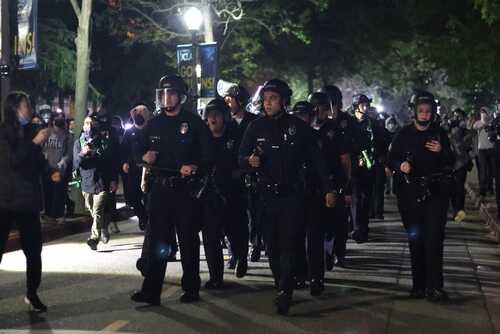
The decision comes at a time of heightened tensions following a year of pro-Palestinian demonstrations that have swept UC campuses. In June 2024, UCLA police deployed more than 200 pepper-ball projectiles during a protest, intensifying concerns about excessive force and the chilling of free speech. Student and faculty groups have vocally opposed the continued militarization of campus police, arguing that the presence of military-grade equipment undermines First Amendment rights and fosters an atmosphere of intimidation rather than safety. These groups lack direct decision-making power but exert influence through public comment and organized protest.
Transparency, Oversight, and the Risks of Normalized Militarization
The approval process, while transparent on paper, has not eased concerns that military-grade equipment is becoming standard on campuses nationwide. Economically, the purchases divert university funds toward law enforcement at a time when many students and faculty call for investments in education and mental health resources. Socially, the increased police presence and escalation of force have strained campus climates, especially among activist and marginalized communities. Politically, the ongoing debate sets a precedent for other public universities, fueling a broader national conversation about transparency, oversight, and the appropriate limits of government power.
Sources:
Los Angeles Times: UC police military weapons approval
Military.com: UC police get green light for military-grade weapons
UC Regents AB 481 Report (September 2025)