

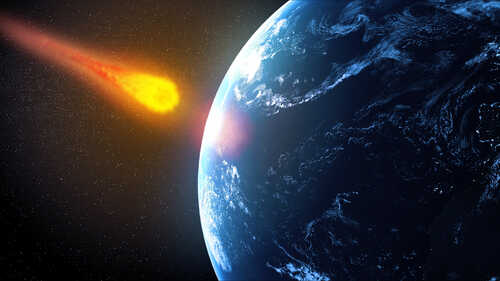
Scientists have uncovered a cosmic mystery: a giant asteroid slammed into ancient Australia, but its crater has vanished.
Story Overview
- Asteroid impact site in South Australia revealed by tektite glass field, yet no crater found
- 11-million-year-old tektites differ chemically from other known impact glass
- Discovery challenges assumptions about how asteroid impacts shape Earth’s surface
- Researchers now reconsider how evidence for ancient impacts can survive—or disappear—over time
A Field of Glass Without a Scar
South Australia’s arid plains conceal a fresh cosmic puzzle. Researchers recently unearthed a sprawling field of ancient tektites—glassy rocks forged by the unimaginable heat of an asteroid impact. These fragments, dated to around 11 million years ago, are chemically distinct from other tektites found elsewhere on Earth. The site’s uniqueness is not just in its chemical fingerprint, but in a glaring absence: no crater marks the impact that created them.
Where most tektite fields are paired with unmistakable scars in the earth, this South Australian field stands alone. Scientists expected to find a crater—a basin gouged by the fury of an extraterrestrial collision. Instead, only glass remains, scattered across a landscape that otherwise hints at no trauma. This contradiction has thrown established impact science into disarray and forced a re-evaluation of how ancient asteroid events are detected and understood.
A giant asteroid hit Earth, but its crater is missing https://t.co/aWzPEnB06c
— Zicutake USA Comment (@Zicutake) October 16, 2025
Unraveling the Evidence: Tektites Tell a New Story
Tektites offer a direct connection to Earth’s catastrophic past. Formed when an asteroid strikes with such force that the surface melts and is flung skyward, these glassy droplets rain down over vast distances. The South Australian tektites diverge from other known fields in both their chemical makeup and their geographic isolation. Unlike the tektites of Southeast Asia or North America, these specimens contain geochemical clues pointing to a local origin and an event never before documented in the region.
Researchers have meticulously analyzed the glass, comparing trace elements and isotopic ratios to local geology. Their findings suggest the fragments originated from a powerful impact that vaporized and melted native rock. Yet, the absence of a crater means either the impact dynamics were unusual, or the evidence of the collision has been erased by time itself. Theories now range from rapid erosion to tectonic activity burying the crater beneath layers of sediment, or even an impact into a soft substrate that left only a fleeting mark.
Rethinking Ancient Impact Detection
Traditional models of asteroid impacts rely on visible craters as the smoking gun. The South Australian tektite field is forcing scientists to reconsider the possibility that many impacts—especially those from millions of years ago—may leave subtle, indirect traces rather than obvious scars. This has implications for how other “missing” craters and undiscovered impacts might be found, especially in regions where geological processes have actively reshaped the surface.
The South Australian discovery is now prompting a global search for more “orphaned” tektite fields—a quest to find the fingerprints of ancient impacts that have slipped through the cracks of geological history.