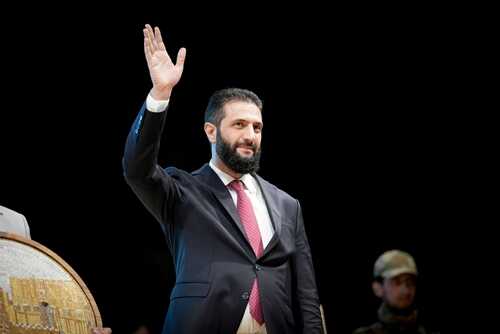
A former “terrorist” labeled by the Assad regime now stands as Syria’s president at the United Nations, marking the most dramatic political transformation in Middle Eastern history.
Story Highlights
- Ahmad Al-Sharaa becomes first Syrian president to address UN General Assembly since 1967
- Former opposition leader branded “terrorist” by Assad now leads Syria’s transitional government
- New administration pledges transitional justice and accountability for Assad regime war crimes
- Syria calls for international partnership while facing ongoing Israeli airstrikes
Historic UN Address Breaks Six-Decade Silence
President Ahmad Al-Sharaa delivered Syria’s first presidential address to the United Nations General Assembly since 1967, marking a watershed moment for the war-torn nation. Speaking at the 80th UNGA session on September 24, 2025, Al-Sharaa presented Syria as emerging from decades of authoritarian repression under the Assad dynasty. His appearance represents a complete reversal of fortune—from being labeled a terrorist by the previous regime to standing as Syria’s legitimate leader on the world’s most prestigious diplomatic stage.
Watch: Ahmed al-Sharaa: First Syrian president to address UN since 1967 | DW News
From Opposition Fighter to Presidential Palace
Al-Sharaa’s rise exemplifies the dramatic political upheaval that swept Syria following Assad’s collapse in 2024. Once branded a terrorist by Assad’s security apparatus, he now leads a transitional government comprising former opposition groups, technocrats, and civil society representatives. The new administration faces the monumental task of rebuilding a nation devastated by over a decade of civil war, restoring basic services, and addressing the needs of millions of displaced Syrians while navigating complex relationships with regional and international partners.
Transitional Justice and Accountability Promises
The Syrian president announced the establishment of national commissions for transitional justice and missing persons, pledging to bring perpetrators of Assad-era atrocities to justice. Al-Sharaa explicitly condemned the previous regime’s war crimes, including chemical attacks, torture, and forced displacement that characterized Syria’s brutal civil war from 2011 to 2024. His commitment to inclusive governance and accountability represents a stark departure from Assad’s authoritarian rule, though implementation challenges remain significant given deep societal wounds and the legacy of widespread human rights violations.
Regional Security Challenges Persist
Despite diplomatic progress, Al-Sharaa highlighted ongoing security threats, particularly continued Israeli airstrikes against Syrian territory. The president reaffirmed Syria’s commitment to the 1974 Disengagement Agreement with Israel while calling for an end to external aggression. Regional powers including Turkey, Saudi Arabia, and Qatar have provided crucial support during Syria’s transition, giving them significant leverage in the country’s future direction. The new government must balance these relationships while maintaining sovereignty and pursuing national reconciliation among Syria’s diverse communities.
Al-Sharaa’s UN appearance signals Syria’s determination to rejoin the international community after years of isolation under Assad. The transitional government seeks recognition, humanitarian aid, and reconstruction assistance while promising democratic reforms and legislative elections. However, success depends on delivering tangible improvements to Syrian lives, maintaining unity among former opposition factions, and preventing spoiler groups from undermining the fragile transition toward legitimate governance.
Sources:
In landmark UN speech, Syrian president vows to rebuild Syria, calls for world support
Syria’s new president calls for international support in historic UN address