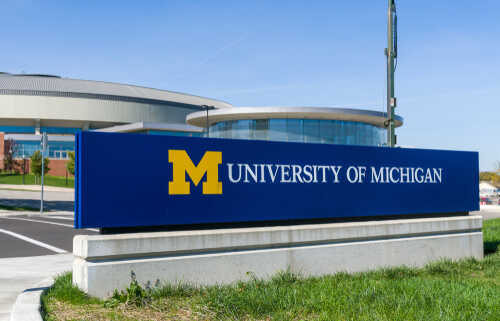
What happens when a prestigious university like the University of Michigan becomes entangled in a web of foreign funding controversies? Buckle up, because this is a story that could shake the very foundation of academic integrity in America.
At a Glance
- The University of Michigan is under federal investigation for undisclosed foreign funding.
- Chinese nationals linked to the university are charged with smuggling biological materials.
- The investigation focuses on transparency and national security risks.
- Looming repercussions for U.S.-China academic relations.
University of Michigan Under the Microscope
The U.S. Department of Education has launched a rigorous investigation into the University of Michigan over allegations of undisclosed foreign funding. At the heart of this probe lies Section 117 of the Higher Education Act of 1965, which demands that institutions disclose any foreign gifts or contracts exceeding $250,000 annually. The university reportedly failed to meet these disclosure mandates, with nearly $86 million reported late since January 2021. This isn’t just a breach of protocol; it’s a potential violation of federal law. The implications are vast, not just for the university but for the entire U.S. higher education sector.
ED has opened a foreign funding investigation into the University of Michigan after reports showed inaccurate & incomplete disclosures.
This follows DOJ complaints alleging Chinese nationals smuggled hazardous biological materials, potentially for agroterrorism, into UM labs.… pic.twitter.com/YkQbU6Xf0W
— U.S. Department of Education (@usedgov) July 15, 2025
These aren’t just numbers on paper. The investigation is a part of a broader federal effort to protect U.S. academic institutions from foreign influence. Similar probes have targeted other major universities like Harvard and UC Berkeley. This isn’t just about academic honesty; it’s about national security.
Serious Allegations and National Security Risks
The situation escalated when criminal charges were filed against two Chinese nationals linked to the University of Michigan. These individuals are accused of smuggling dangerous biological materials into the U.S., raising alarming concerns about potential agroterrorism. This revelation not only puts the university’s research labs under scrutiny but also poses questions about the vulnerability of American academic institutions to foreign sabotage. The timing couldn’t be more concerning, especially after the university ended its partnership with China’s Shanghai Jiao Tong University in January following congressional pressure.
The investigation isn’t just about numbers and paperwork; it’s about the safety and security of research that could have far-reaching implications. The question remains: how did these materials get past the university’s safeguards, and what does this mean for the future of international academic collaborations?
Watch a report: University of Michigan faces federal investigation
The Stakes and the Players
Several key stakeholders are embroiled in this saga. The University of Michigan stands at the center, responsible for complying with federal laws. The U.S. Department of Education, led by Chief Investigative Counsel Paul Moore, is spearheading the probe. The Department of Justice is also involved, given the criminal charges. Chinese institutions and nationals are under the spotlight, while congressional lawmakers, particularly Republicans, are calling for stricter scrutiny of U.S.-China academic ties.
For the university, the stakes are high. Failure to comply with the investigation could lead to significant administrative burdens, reputational damage, and a disruption of research activities. The broader impact on U.S.-China academic relations cannot be ignored, as lawmakers push for severing ties with Chinese institutions deemed security risks.
Implications for the Future
In the short term, the University of Michigan faces an administrative whirlwind as it scrambles to compile and submit extensive records. The reputational risk is palpable, with potential effects on its standing among peers and international partners. Research disruptions are likely, particularly in sensitive areas involving foreign collaborations. In the long term, this investigation may prompt universities nationwide to tighten foreign funding disclosures. The broader trend suggests increased federal oversight of foreign influence in U.S. higher education, with stricter regulations on the horizon. The chilling effect on international partnerships, especially with countries like China, could reshape the landscape of global academic collaboration.