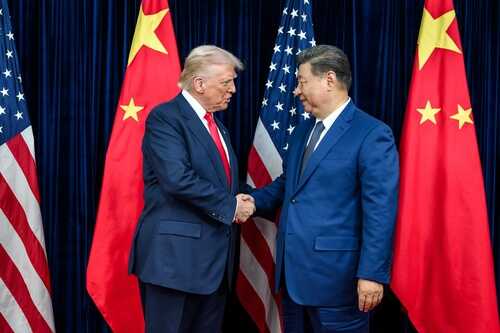
China confirms receiving President Trump’s invitation to his revolutionary Board of Peace, but holds back commitment—raising questions about Beijing’s true intentions.
Story Highlights
- President Trump establishes the Board of Peace, with himself as lifetime chair, to oversee Gaza rebuilding and expand to global conflicts, bypassing ineffective UN bureaucracy.
- China’s Foreign Ministry spokesperson Guo Jiakun acknowledges the U.S. invitation on January 20, 2026, but offers no acceptance, echoing cautious diplomacy after the recent trade truce.
- Morocco joins as a founding member, Kazakhstan agrees, and Russia reviews—showing growing international support for Trump’s America-led initiative.
- The board features unique terms: 3-year memberships for others with a $1 billion fee option, mobilizing real resources for peace unlike globalist talk shops.
Trump Launches Board of Peace
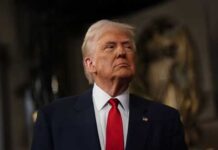
President Donald Trump announced the Board of Peace in September 2025 as part of his 20-point plan to end Israel’s Gaza war. The initiative establishes a National Committee for Gaza Administration for transition and oversight. Trump serves as lifetime chair, positioning the U.S. to lead global conflict resolution. The White House extended invitations to dozens of world leaders following the announcement. This structure empowers decisive action over endless debates in traditional forums.
China’s Cautious Confirmation
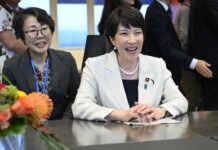
Chinese Foreign Ministry spokesperson Guo Jiakun confirmed on January 20, 2026, during a regular press briefing that Beijing received the U.S. invitation. Guo stated, “China has received the United States’ invitation” and emphasized that “cooperation benefits both, confrontation harms both.” Unlike firm acceptances from others, China avoided any commitment. This response reflects Beijing’s focus on bilateral stability after a recent trade truce stabilized ties despite ongoing tariffs. Trump’s approach tests these relations directly.
Watch:
Global Responses Build Momentum
On January 19, Morocco accepted as a founding member, Kazakhstan confirmed agreement, and Belarus welcomed the invitation. Russia is reviewing its invite, with the Kremlin expressing hopes for U.S. contacts. Invitations also went to leaders in Hungary, Canada, Armenia, Israel, Poland, Singapore, Australia, Vietnam, Thailand, Pakistan, and India. Malaysia shows hesitation over Israel concerns. These developments signal broad interest in Trump’s vision, contrasting with reserved stances from some powers.
The board’s establishment on January 16 sets the stage for member announcements soon. It mobilizes resources for Gaza’s phase two reconstruction under the NCAG. Short-term, it shapes U.S.-China dynamics; long-term, success could sideline UN mechanisms that have failed to deliver peace. Gaza residents stand to benefit from real rebuilding efforts, while Israel and Palestinians gain from conflict resolution. Politically, it shifts power toward effective leadership.
Implications for American Leadership
Trump’s Board challenges multilateralism by prioritizing results over bureaucracy, aligning with conservative priorities of strong U.S. diplomacy and limited government overreach in global affairs. Economic impacts include potential $1 billion fees to fund Gaza efforts, aiding Middle East stability that benefits energy and security sectors. Invitees seek influence and ties with America. China’s pragmatic stance underscores the value of Trump’s deal-making, free from woke globalist constraints that plagued prior administrations.
This initiative revives echoes of Trump’s Abraham Accords success, proving American leadership delivers where others falter. Cautious nations like China may join as momentum builds, reinforcing U.S. sovereignty in peace efforts.
Sources:
China confirms invitation to join Trump’s Board of Peace
China invited to join Trump’s Board of Peace
China invited to join Trump’s Board of Peace, says Foreign Ministry
Jerusalem Post article on Board of Peace invitations
China says it received invitation to join Board of Peace on Gaza
China Daily on invitation to Trump’s Board of Peace