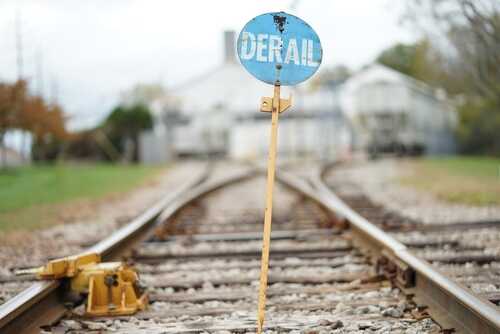
Thirty-five Union Pacific train cars derailed near Gordon, Texas, igniting new concerns about hazardous material transport and the nation’s critical infrastructure safety under watchful conservative eyes.
Story Snapshot
- 35 Union Pacific train cars derailed on August 12, 2025, near Gordon, Texas, with no reported injuries or evacuations.
- Emergency services responded immediately, treating the site as a hazardous materials (HazMat) incident due to uncertain cargo.
- The derailment sparked a grass fire, but fire crews successfully contained the blaze and secured the area.
- The incident raises questions about infrastructure reliability, rail safety protocols, and oversight of hazardous material shipments in rural America.
Large-Scale Derailment Demands Swift, Conservative Response
On August 12, 2025, a Union Pacific freight train carrying unknown cargo derailed east of Gordon, Texas, sending 35 cars off the track and forcing emergency crews into immediate action. Despite the scale of the event, no injuries or evacuations were reported, showcasing the effectiveness of local first responders and their commitment to public safety. The uncertainty about the train’s cargo, however, triggered HazMat protocols as a precaution, underlining the risks posed by hazardous material shipments through rural communities.
At least 35 cars of a Union Pacific freight train derailed Tuesday near a small Texas town, officials said.
No injuries were reported and no evacuations have been ordered following the afternoon derailment, Union Pacific spokeswoman Robynn Tysver said. pic.twitter.com/PcChMf5vfI
— The Associated Press (@AP) August 13, 2025
The derailment occurred on a bridge spanning Coalville Road, just two miles from the small, tight-knit town of Gordon. This rural setting complicated access and containment efforts for emergency services, yet fire crews managed to suppress a grass fire caused by the incident. The rapid containment of the fire and absence of injuries demonstrate a competent and prepared emergency response, but the need for HazMat assessment highlights ongoing vulnerabilities in America’s freight rail system, where unknown cargo can pose significant danger to both citizens and the environment.
Watch: Texas Train Derailment: 35 Union Pacific Cars Derail, Spark Blaze Near Fort Worth
Hazardous Materials and Infrastructure: Conservative Concerns
Train derailments have become an all-too-common risk as freight traffic increases and critical infrastructure ages across the United States. The Gordon incident, while not resulting in confirmed leaks or casualties, raises pressing questions about the adequacy of current safety standards, transparency in cargo reporting, and the resilience of rural infrastructure.
Local residents and businesses depend on uninterrupted, safe freight transport, yet repeated derailments threaten economic stability and community well-being. The effective containment in Gordon should not overshadow the broader trend: every such incident puts family values, property rights, and local economies at risk. Ongoing investigations must address not only immediate causes but also systemic issues, ensuring that rural communities are not left to bear the brunt of regulatory negligence or corporate shortcuts.
Stakeholders, Public Safety, and Industry Accountability
Union Pacific Railroad, as the operator, bears primary responsibility for both the safety of its operations and transparent communication with affected communities. Palo Pinto County Emergency Services District and local fire departments played crucial roles in containing the immediate threat, but their effectiveness also depends on clear information about cargo and potential hazards. While Union Pacific maintains operational authority, it is subject to oversight from local, state, and federal regulators. The balance between efficient commerce and public safety requires vigilant enforcement of existing laws, not new layers of government overreach.
Long-Term Implications and Conservative Takeaways
The Gordon derailment’s short-term impacts include disrupted rail service and the deployment of emergency resources, but the long-term implications could be far more significant. Renewed scrutiny of Union Pacific’s safety protocols, potential infrastructure upgrades, and ongoing environmental monitoring may follow, depending on the outcome of the investigation.
The absence of injuries or hazardous leaks in this event is a relief, but it should not breed complacency. Instead, it highlights the need for proactive measures to safeguard communities, ensure corporate accountability, and preserve the principles of limited government and local empowerment. As investigations continue, conservatives should advocate for solutions that defend both public safety and individual liberty without succumbing to unnecessary federal expansion or ideological distractions.
Sources:
Train carrying hazardous materials derails in Palo Pinto County, Texas; no injuries reported