A Chinese national with undisclosed ties to Beijing’s military just walked out of a U.S. courtroom and straight into the hands of ICE—exposing yet again the gaping cracks in our visa system that put Americans last and our national security on the line.
At a Glance
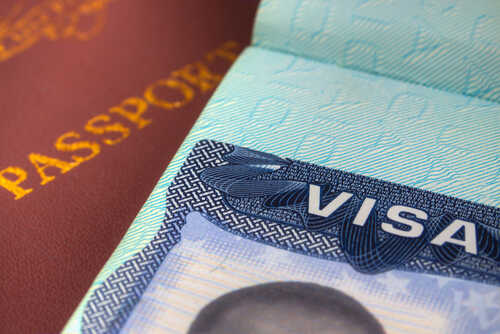
- Jiaxuemo Zhang, a Chinese student with a background at a PLA-linked university, pled guilty to visa fraud and was handed over to ICE for possible deportation
- The case highlights rising concerns about technology transfer and espionage through academic channels, especially in sensitive STEM fields
- Beijing is denouncing the prosecution as politically motivated, stoking further tension between the U.S. and China over national security and academic freedom
- U.S. authorities are ratcheting up scrutiny of Chinese nationals, especially those from universities with military ties, as part of a broader crackdown under Proclamation 10043
Visa Fraud, Military Ties, and a System That Prioritizes Anything but Americans
Jiaxuemo Zhang arrived on American soil in 2021 under the typical pretense: a student visa, bright future, the usual story. What didn’t make it onto his visa application was his not-so-insignificant academic history at Beihang University—a research powerhouse with documented links to the People’s Liberation Army, China’s military apparatus. Now, anyone with a pulse and half a memory knows Beihang’s reputation for churning out military-aligned tech talent. Yet, somehow, the U.S. State Department let Zhang in, trusting that the paperwork told the whole story. Once authorities finally connected the dots, the result was an arrest, a guilty plea for visa fraud, a swift sentencing to “time served,” and a hand-off to ICE. American citizens can only hope the feds don’t drop the ball on deportation as well.
Watch a report: China opposes US revoking student visas – YouTube
There’s no shortage of irony here. American taxpayers fund universities and federal agencies to protect our intellectual property and national security, but loopholes and bureaucratic incompetence let foreign nationals with undeclared military connections slip through the cracks. Meanwhile, everyday Americans deal with inflation, rising tuition bills, and a federal government obsessed with coddling “global talent”—even when that talent may be siphoning sensitive information straight into the arms of an adversarial regime. If Zhang’s prosecution is meant to reassure the public, it does little to inspire confidence that the system is anything but a sieve for the world’s bad actors.
National Security, Academic Espionage, and the Ongoing Farce of “International Collaboration”
Let’s not kid ourselves: this is far from an isolated incident. Zhang’s case is just the latest in a long line of Chinese nationals entering the U.S. under false pretenses, hiding backgrounds at universities known for military research, and getting access to cutting-edge labs and technologies. This farce has been going on for years, with the U.S. government only now taking baby steps to address the obvious. The 2020 Presidential Proclamation 10043 was supposed to stop this kind of infiltration by blocking visas for anyone with ties to China’s “military-civil fusion strategy.” Yet, here we are—Zhang got in, got comfortable, and only got caught because someone bothered to check the paperwork after the fact.
China Cries Foul While Americans Foot the Bill
As predictable as sunrise, the Chinese Ministry of Foreign Affairs immediately condemned Zhang’s prosecution, calling it “fabricated” and “politically motivated.” They demand the U.S. stop “suppressing” Chinese students under the pretext of national security. It’s a familiar script: play the victim, accuse the U.S. of discrimination, and conveniently ignore the fact that Zhang lied on his visa application about a university deeply embedded in China’s military-industrial complex. Meanwhile, American students see tuition spike, families face economic hardship, and border security remains under constant assault from both bureaucratic incompetence and activist judges more interested in virtue signaling than defending the homeland.