Prince Andrew’s arrest over alleged abuse of public office has forced Britain’s royal family into a public stress test—one Prince William couldn’t fully hide on the BAFTAs red carpet.
Story Snapshot
- Prince William and Kate Middleton attended the 2026 EE BAFTA Film Awards on Feb. 22, their first joint appearance since Prince Andrew’s Feb. 19 arrest.
- Andrew Mountbatten-Windsor was arrested on suspicion of misconduct in public office after documents reportedly alleged he shared sensitive government information with Jeffrey Epstein during his trade envoy years.
- William’s comment that he needed a “calm state” to watch a film became the night’s headline, with outlets framing it as a rare glimpse of the strain inside the House of Windsor.
- King Charles publicly backed authorities and emphasized that the “law must take its course,” signaling institutional distance from Andrew as the investigation continues.
What Happened at BAFTAs—and Why William’s Words Landed
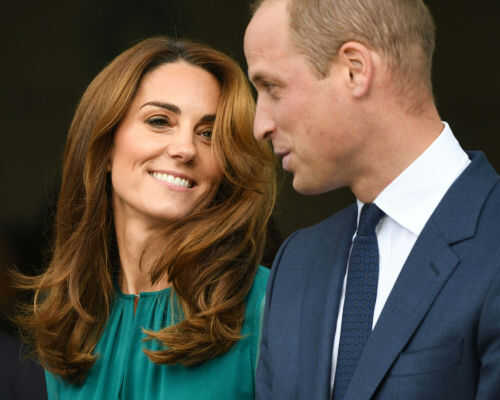
Prince William arrived at London’s Royal Festival Hall for the EE BAFTA Film Awards on Feb. 22 as BAFTA’s president, making his first major public appearance since the Feb. 19 arrest of Prince Andrew. William presented a fellowship to Donna Langley and briefly discussed filmgoing, saying he needed a “calm state” to watch a movie. Coverage treated that line as unusually candid, given the family’s long habit of public composure during scandal.
Kate Middleton joined William on the red carpet, drawing attention because she had appeared publicly on her own in the days after Andrew’s arrest. Reporting from the event said the couple smiled for cameras and did not offer press remarks about the legal case. Kate did speak about the emotional impact of one film—commenting on “puffy eyes”—and mentioned the family’s viewing habits, a small reminder that the royals were trying to keep routine even as the broader story remained dominated by Andrew.
The Allegation at the Center: Misconduct in Public Office
UK authorities arrested Andrew Mountbatten-Windsor on Feb. 19—his 66th birthday—on suspicion of misconduct in public office, a serious allegation tied to the public trust. The reporting summarized a central claim: newly surfaced documents allegedly show Andrew sent sensitive government information to Jeffrey Epstein while serving as a UK trade envoy in the early 2000s. As of Feb. 22 coverage, Andrew remained in custody and no charges had been announced.
King Charles’s Message: Support the Process, Don’t Prejudge the Case
King Charles issued a statement expressing “deepest concern” while offering support for authorities and emphasizing that the law should take its course. That posture matters because it draws a bright line between family loyalty and institutional responsibility. For Americans who’ve watched powerful networks protect insiders, the key point is procedural: a functioning system should follow evidence and due process, not titles. The available reporting does not describe what evidence investigators hold beyond the document claims.
Epstein’s Shadow and the Monarchy’s Credibility Problem
The Andrew-Epstein association has been a long-running controversy, including public backlash after Andrew’s 2019 interview and his subsequent removal from official duties. The current arrest adds a new legal dimension by focusing on alleged misuse of government position rather than only personal association. Outlets tied the latest development to the broader Epstein history because any suggestion of state access being traded to someone like Epstein goes beyond scandal into governance. That distinction is why the arrest is politically explosive in the UK.
What’s Known, What Isn’t, and Why the Media Framing Matters
As of the Feb. 22 reporting window, key details remain unresolved: investigators had not publicly filed charges, and no court-tested summary of evidence was available in the cited coverage. Several entertainment and mainstream outlets interpreted William’s “calm state” remark as a signal of family strain, but the sources also acknowledge that the remark did not explicitly reference Andrew or the arrest. Readers should separate two tracks: verified timeline events (arrest, BAFTAs, statements) and interpretive narrative about motives.
The practical takeaway is that the royal family is attempting to project continuity while a law-enforcement process moves forward. William and Kate’s decision to proceed with a high-profile public engagement suggests an effort to keep official duties insulated from personal fallout. Whether that strategy works depends less on red-carpet optics and more on what investigators can prove—and what the public concludes about accountability when elites are involved.
Sources:
Prince William reveals he is not “in a calm state” while at the BAFTAs
Prince William and Kate appearance after Andrew arrest, Epstein, BAFTAs
Prince William, Kate Middleton attend 2026 BAFTAs amid Prince Andrew arrest