French President Emmanuel Macron’s public rebuke of Italian Prime Minister Giorgia Meloni over her commentary on French domestic violence exposes a stunning power shift in Europe where France’s weakened leadership is being challenged by a resurgent Italy eager to assert its newfound influence.
Story Highlights
- Macron publicly demands Meloni stop commenting on French affairs after she called the death of a far-right activist “a wound for all of Europe”
- The diplomatic clash follows the February 12 fatal beating of 23-year-old Quentin Deranque by far-left attackers during a Lyon protest
- Italy’s growing stability under Meloni contrasts sharply with France’s political turmoil, reversing traditional European power dynamics
- An emerging Italy-Germany alliance threatens to displace the historic Franco-German partnership that has anchored EU leadership for decades
Meloni’s Challenge to French Sovereignty
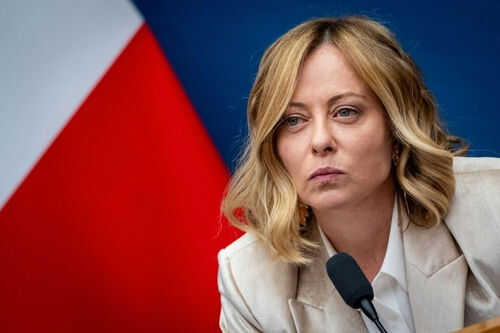
Italian Prime Minister Giorgia Meloni ignited diplomatic tensions when she publicly characterized the killing of Quentin Deranque as a wound for all of Europe. The 23-year-old far-right activist died from head injuries after being attacked by at least six people during a protest in Lyon on February 12, 2026. Eleven suspects were detained, with most connected to far-left movements. French prosecutors subsequently requested homicide charges against seven individuals. Macron responded by urging Meloni to refrain from commenting on French domestic matters, marking an unusual public confrontation between EU leaders.
Italy’s Rising Confidence Amid French Decline
The diplomatic clash reflects deeper shifts in European power structures. While France has endured successive political crises since snap elections in 2024, Italy’s right-wing government under Meloni has demonstrated surprising stability. Credit rating agencies have raised Italy’s fiscal rating while downgrading France’s, underscoring this reversal. An Ipsos poll from November 2025 revealed telling asymmetry: 60% of French respondents expressed affection for Italy, but only 30% of Italians reciprocated, with 20% openly expressing antipathy toward France due to perceived French arrogance. This sentiment shift provides context for Meloni’s willingness to challenge Macron’s authority.
Italian Foreign Minister Antonio Tajani defended his country’s right to comment, stating the killing is a serious matter that concerns all Europeans. He drew parallels to Italy’s own history of political violence during the darkest periods of its republic, suggesting Italy has legitimate grounds for commentary. Tajani’s response signaled Italy’s growing confidence in challenging traditional French leadership within the EU. Macron countered that there is no place in France for movements that adopt and legitimize violence, calling on all political parties to clean up their acts while closely monitoring events to prevent any spiral of violence.
The New Italy-Germany Axis Challenges Franco-German Dominance
The confrontation occurs as Italy and Germany forge a closer partnership that threatens to displace the traditional Franco-German axis. In February 2026, Meloni and German Chancellor Friedrich Merz began advocating for unified EU strategy, with Foreign Minister Tajani declaring a new era where Italy seeks a leading role as one of the EU’s driving forces. Matteo Villa from Italy’s ISPI think tank characterized this alignment as parallel convergence, suggesting a structural shift rather than temporary positioning. An unnamed European diplomat assessed that the Franco-German partnership is faltering as Meloni and Merz chart their own course together.
This power realignment has practical consequences. The Italy-Germany alliance has already influenced EU positions on Mercosur and automotive regulations, areas where France opposed but could not prevail. Italy’s strengthening ties with the United States under President Trump contrast with France’s relative isolation, affecting NATO strategic alignment. Macron dismissed notions of French marginalization, stating it is normal for Rome and Berlin to share proposals with EU leaders. However, his acknowledgment that the Franco-German partnership is vital for propelling Europe forward but never sufficient on its own reveals recognition of diminished French influence.
Violence and Political Polarization Across Europe
The death of Quentin Deranque highlights deepening political polarization and violence across Europe. Both far-left and far-right groups now face increased scrutiny and pressure to distance themselves from violence. The incident establishes a precedent for EU members to publicly comment on each other’s internal affairs, potentially eroding traditional boundaries of national sovereignty. Despite tensions, diplomatic sources indicate Macron and Meloni plan to hold an Italy-France summit in April 2026 in Toulouse, suggesting both leaders recognize the need to manage bilateral relations. However, the confrontation underscores France’s struggle to maintain its traditional EU leadership position amid domestic political instability and Italy’s emergence as a more stable alternative.
Sources:
The rivalry between France and Italy as seen by Meloni
How Macron’s fall boosted Meloni’s European leadership
Macron tells Meloni to stay out of France’s affairs after activist remark
Meloni and Merz: EU’s new power couple?