
Federal investigators are now following the money inside America’s nonprofit world—raising a high-stakes question about whether tax-exempt status has been shielding political violence.
Quick Take
- The FBI and IRS Criminal Investigation unit have launched a joint “mission control” effort to probe whether U.S. nonprofits are funding domestic terrorism or political violence.
- The initiative traces back to President Trump’s September 2025 domestic-terrorism executive order and Attorney General Pam Bondi’s December 2025 memo prioritizing investigations tied to antifa and other extremist networks.
- IRS agents are being embedded with the FBI on year-long assignments, bringing financial forensics and tax-fraud tools into terrorism-style cases.
- No specific nonprofit targets have been publicly named, and former DOJ officials have raised questions about what legal “predication” is being used to build any group lists.
FBI-IRS “Mission Control” Puts Nonprofit Funding Under a Microscope
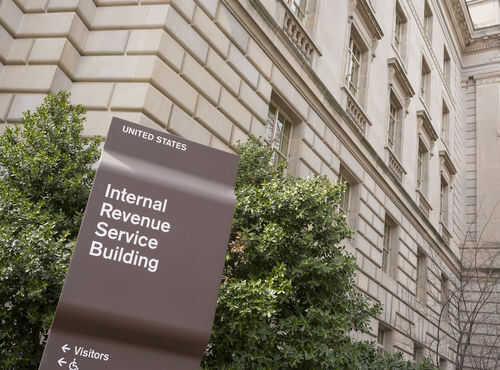
Federal law enforcement is standing up a new joint operation that pairs FBI terrorism investigators with IRS-Criminal Investigation specialists to track suspected funding streams linked to domestic terrorism or political violence. Reports describe a “mission control command center” housed at the FBI, with IRS personnel detailed to the Bureau for one-year rotations. Officials have emphasized financial crimes, tax fraud, and donor flows as the practical entry points—tools that can reveal networks even when groups are decentralized and hard to map.
The operational shift matters because nonprofits sit at the intersection of protected speech and regulated finance. Tax-exempt organizations can move large sums quickly, route money through fiscal sponsors, and fund activism at scale. Investigators are not claiming that all activism is criminal; the stated focus is on whether money is being funneled into violence as defined by federal standards. Still, the scope is broad enough that compliant organizations will likely review internal controls, grant documentation, and donor vetting practices.
How Trump’s 2025 Order and Bondi’s Memo Set the Enforcement Direction
The current initiative is tied to a broader Trump administration push that accelerated after a series of high-profile incidents and political violence concerns. President Trump’s September 2025 executive order on domestic terrorism was followed by Attorney General Pam Bondi’s December 4, 2025 memo directing agencies to prioritize investigations and prosecutions involving antifa and extremist groups, including reviewing files for intelligence and considering tax-related offenses. U.S. attorney offices were also instructed to elevate domestic-terrorism coordination, signaling a sustained, nationwide posture.
Domestic terrorism is defined in federal law, but prosecutors often face a practical obstacle: there is no standalone federal “domestic terrorism” charge in the way there is for many international terrorism cases. That reality puts added weight on adjacent statutes—conspiracy, weapons offenses, arson, explosives, and financial crimes—that can be charged when violence is planned, enabled, or financed. Supporters argue that using tax and fraud authorities is a common-sense way to pierce the veil around sophisticated funding structures without criminalizing viewpoints.
Legal and Constitutional Tensions: Financial Policing vs. Political Policing
A major unresolved issue is how investigators draw the line between protected advocacy and unlawful support for violence. Former DOJ domestic-terrorism counsel Tom Brzozowski has publicly described Bondi’s approach as “concerning,” specifically questioning what factual predicate would justify building lists of groups or affiliated actors. That critique does not refute the existence of domestic political violence; it challenges whether a centralized list-building effort can be narrowly tailored and evidence-based enough to avoid sweeping in legitimate dissent or association.
For conservatives who watched the previous era normalize ideological targeting and bureaucratic overreach, the standard should be simple: pursue crimes, not viewpoints. The administration’s public framing emphasizes rule of law, public safety, and protecting Americans’ ability to participate in faith, speech, and elections without intimidation. The credibility of that framing will depend on transparency about process—how cases are opened, what financial thresholds trigger scrutiny, and how innocent organizations can clear their names without being ground down by prolonged investigations.
What This Means for Donors, Nonprofits, and Future Enforcement
In the short term, the most immediate impact may be compliance shockwaves. Nonprofits that engage in high-intensity political activity—especially those operating as fiscal sponsors or moving funds to loosely affiliated networks—could face heightened audit risk, requests for records, and scrutiny over whether expenditures align with tax-exempt purposes. Congress has already shown interest in nonprofit enforcement through separate inquiries and requests, suggesting political momentum around tax-exempt accountability is not limited to one agency or one news cycle.
Investigative Arm of IRS, FBI Reach Major Turning Point, Dig Into Nonprofits That Fund Domestic Terrorhttps://t.co/KDNEyfJFuq
— RedState (@RedState) March 19, 2026
In the long term, the partnership could set a precedent for treating domestic political violence financing more like counter-terror finance, where tracking money becomes the backbone of the case. That approach can be effective, but it also raises stakes for civil liberties because financial surveillance tools are powerful. With no targets named so far, the public cannot evaluate whether the focus is narrow and evidence-driven. Until details emerge, the responsible conclusion is limited: the Trump DOJ is betting that financial forensics will succeed where traditional investigations struggle.
Sources:
FBI and IRS to Investigate Nonprofit Groups for Domestic Terrorism Links
FBI and IRS agents will work together investigate nonprofits’ links to domestic terrorism
US agencies to investigate nonprofit groups for suspected links to domestic terrorism: Report
Government Scrutiny of Nonprofits Intensifies
DOJ Issues Sweeping New Domestic Terrorism Directive
February 2026 Criminal Investigation Press Releases
Understanding Trump’s War on Nonprofits