New NTSB footage of last year’s DCA mid-air collision shows how razor-thin “see and avoid” margins can turn America’s most sensitive airspace into a death trap.
Story Snapshot
- The NTSB released additional video and simulation materials tied to the January 29, 2025 collision over the Potomac River near Reagan National Airport.
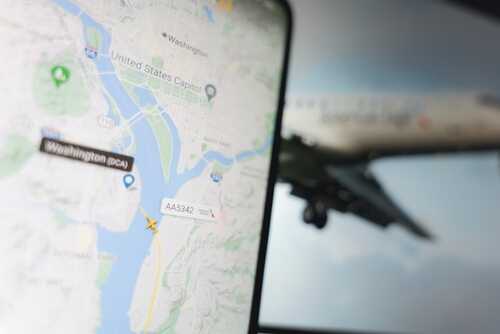
- American Airlines Flight 5342 (a PSA-operated CRJ700) and an Army UH-60 Black Hawk collided during a night operation, killing all 67 people aboard both aircraft.
- Investigators are scrutinizing air traffic control communications, a runway change to Runway 33, and whether the helicopter crew misidentified the airliner.
- The FAA imposed helicopter-route restrictions after the crash and has pushed for ADS-B Out requirements for military helicopters in the area.
What the NTSB Footage Adds to the Timeline
The new material released around the NTSB’s January 27, 2026 board activity centers on the final minutes before the collision and what crews likely could—and could not—see. The crash happened around 8:47 p.m. on January 29, 2025, as Flight 5342 approached Reagan National and the Army helicopter flew a night vision goggle training evaluation route. Both aircraft fell into the Potomac River, and no one survived.
Investigators have outlined a tight chain of events: Flight 5342 checked in with the tower, then accepted a runway switch and clearance to land, which changed its final approach path. About 20 seconds before impact, air traffic control asked the helicopter if it had the CRJ in sight while a conflict alert occurred, and the jet received a “traffic, traffic” advisory. Moments later, the collision occurred at low altitude near the runway environment.
How DCA’s Mixed Airspace Became the Risk Multiplier
Reagan National sits inside one of the most complex pieces of airspace in the country, where commercial arrivals share corridors with government, law-enforcement, and military helicopter traffic along the Potomac. Reporting on the anniversary described the crash as a “defining moment,” pointing to near-misses around DCA in prior years as a warning signal that procedures and route design needed hardening. The core hazard is convergence: visual approaches and helicopter routes can intersect with little margin.
That convergence matters because DCA’s operations often depend on “visual separation” assumptions—human eyesight and quick radio coordination—at exactly the time crews are busy, close to the ground, and operating at night. The NTSB’s work has highlighted how night conditions and the use of night vision goggles can complicate detection and identification. Investigators have also examined whether the helicopter crew believed they had the airliner in sight but may have been looking at the wrong aircraft.
Watch:
FAA Restrictions and the Push for ADS-B Out on Military Helicopters
After the crash, the FAA implemented immediate route restrictions affecting helicopter operations near DCA, limiting certain routes to police, medical, and presidential missions. The agency also adjusted procedures in 2025 and put an agreement in place affecting Pentagon-area helicopter operations, reflecting how seriously regulators took the overlap between helicopter corridors and airline approaches. Those moves acknowledge a basic reality: when different mission sets share narrow airspace, rules have to be unambiguous and enforceable.
The FAA has emphasized the need for ADS-B Out on military helicopters, arguing that better position reporting and surveillance can reduce the chance of catastrophic misunderstandings. The NTSB’s simulation materials have underscored the visibility problem in the final seconds and why technology can matter when crews have only moments to recognize a conflict. Even so, the investigation remains ongoing, and a final probable-cause finding was not included in the materials summarized from the January 2026 NTSB activity.
NTSB Releases Harrowing Footage of the American Airlines Crash at DCA Last January
https://t.co/tIUAhEY718— Townhall Updates (@TownhallUpdates) January 28, 2026
What’s Known, What’s Not, and Why Accountability Still Matters
Key facts are established across public summaries: the aircraft types, location, the low-altitude collision near the runway, and the total loss of life. Other points remain unresolved in public reporting, including exactly how the helicopter crew interpreted tower instructions, whether radio transmissions were partially blocked, and the degree to which runway assignment changes contributed to the flight paths intersecting. Until the NTSB’s final conclusions are released, precision on those questions is limited.
For Americans tired of government systems that only tighten up after tragedy, the DCA crash is a case study in why clear rules and dependable technology matter more than bureaucratic talking points.
Sources:
2025 Potomac River mid-air collision
NTSB Investigation: DCA25MA108
FAA statements on midair collision at Reagan Washington National Airport
January 29, 2025 DCA crash is “defining moment” in aviation history, experts say
Causes and years after deadly mid-air collision in DC announced